The Road To Heaven Leads Through A River Of Blood: The Rajput Ideal Of Valour And Self-Sacrifice in Medieval Rajasthan
The Rajput battlefield was a feast for the Goddess, the warrior’s body the offering, and a death in bed the fate most feared.

“That night, so terrible and destructive unto human beings and elephants and steeds, filled with joy all creatures that wander in the dark. Many raksasas and pisacas of various tribes were seen there, gorging upon human flesh and quaffing the blood that lay on the ground.”
— Mahabharata, Sauptika Parva, 10.8.126–127
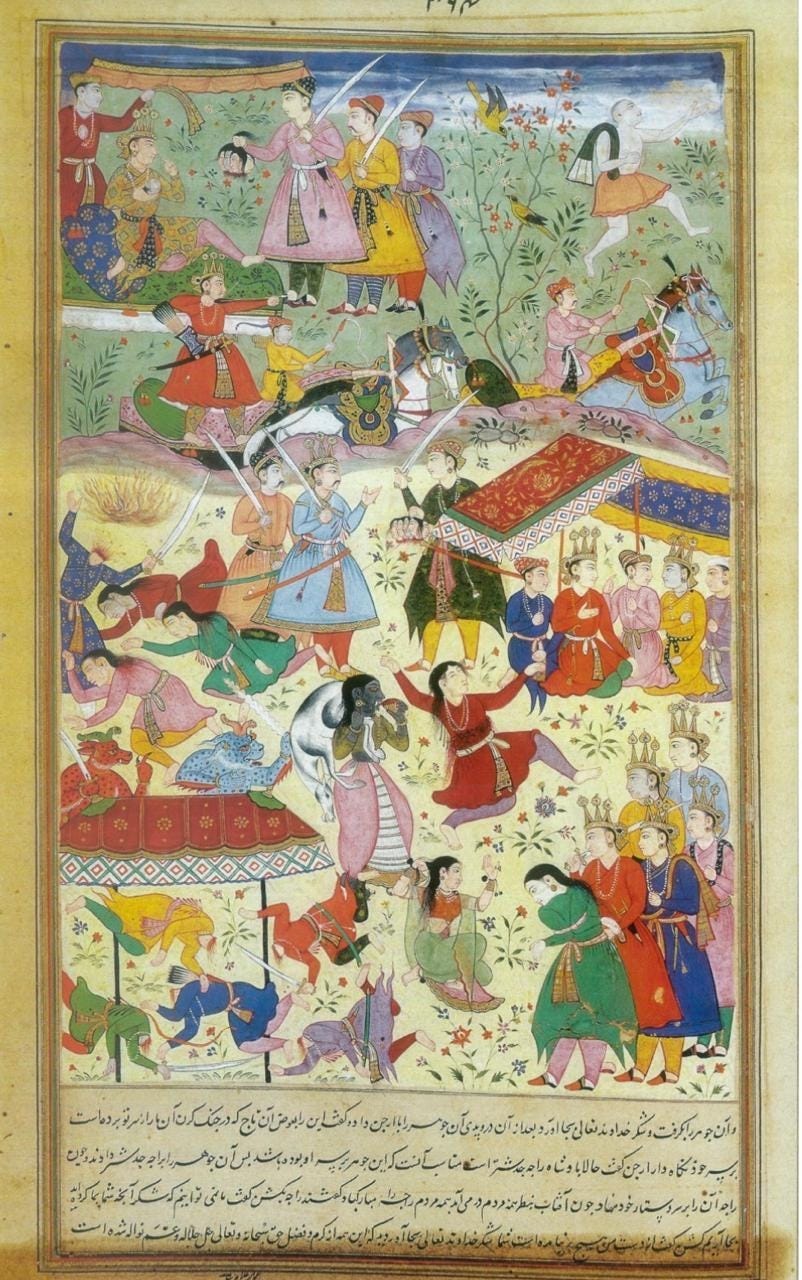
The Battlefield As Ritual Ground, The Rajput As Annadata
The first half of the sixteenth century was one of the most significant chapters in Indian history, as it saw the establishment of the Mughal Empire by the fugitive prince-turned-conqueror Babur. After twenty years in Kabul, Babur made his foray into the Indian subcontinent, crossing the Khyber Pass and marching into the plains of India. It was no ordinary raid, but rather an empire-building project materialised by Babur. In 1526, Ibrahim Lodi, the Sultan of Delhi, was defeated on the fields of Panipat, and the immediate threat, the scourge of the Sultanate, Rana Sanga of Mewar, was tamed at Khanwa. After Babur passed away in 1530, the throne of the newly established empire at Delhi was inherited by his eldest son Humayun. Still, his second son and Humayun’s brother, Kamran Mirza, retained his governorship of Kabul and Qandahar and embarked on an enterprise to expand his control in a bid to gain an independent power base. This would bring the ambitious Mirza into a confrontation with the state of Bikaner.
Khet Singh, the Thakur of Bhatner, also known by its modern-day name of Hanumangarh in Rajasthan, a fortress of rather proven antiquity on the banks of the river Ghaggar, had already perished performing saka (The ultimate suicidal battle) against the formidable Mughal army. The fortress of Bhatner, which withstood the onslaught of Timur himself, was eventually brought down as a bird’s nest struck by lightning. Kamran Mirza now stood at the gates of Bikaner. The city had already been evacuated, and the fighting men had retreated to the inaccessible terrain of Jangaldes (encompassing the modern districts of Bikaner, Churu, Ganganagar, Hanumangarh). What followed was a protracted affair of sieges and attempts to relieve it, before Rav Jaitsi, the then ruler of Bikaner, led his Rajputs on an ambitious assault upon the Timurid camp at night.
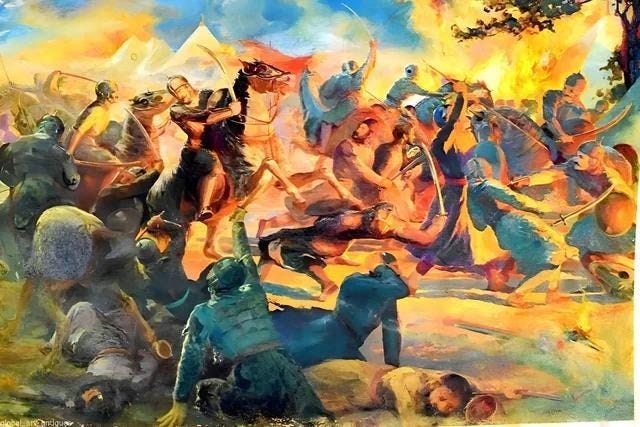
Bithu Sujo’s Rav Jaitsi ro Chhand, a sixteenth-century Dingal poem, recounts this ambush in vivid, gory detail. It mentions that it was a great victory in the annals of the illustrious Rathores. Still, it’s not the technicalities of the military tactics, but rather the supernatural contestants of the battle that concern us: the scavenging beasts, the flesh-eating spirits, and the divine and semi-divine beings who descended upon the battlefield to engage in a feast. This essay does not seek to examine the political and military realities of medieval warfare. Still, it aims to explore the psychological and cultural dimensions and how the memory and interpretation of those events were shaped by religious and cultural symbolism.
The question of how to deal with death has been an ever-present one in most warrior-aristocracies of the world. Throughout history, various groups have tried to provide ideological underpinnings to justify a violent life lived literally on the sword’s edge, not knowing today if one would live tomorrow. Of these, perhaps the most elaborate, and certainly the one that most impelled the aristocracy to acts of unbelievable bravery, was that of the Rajputs. The mental universe it created of fearsome warrior spirits, bloodthirsty ghouls and bravery-loving Apsaras, as well as the promise of heaven for the fallen no matter what their deeds in life may have been, created a worldview in which death was actively waited for with bated breath, rather than feared. A long tradition of narrating heroic past stories, whether from professional bards (Charans) or even the warriors’ own mothers and fathers, instilled this ideology of complete fearlessness at a very young age. At the same time, camaraderie, codes of honour and social expectations sustained it in adulthood. This essay is an attempt to understand the psychology behind the medieval Rajput warrior’s embrace of death in battle.
“O Kesava, behold the earth strewn by me with the heads of kings cut off by the force of my arrows! [Tomorrow] I shall gratify all the cannibals.”
— Mahabharata, Drona Parva, 7.76, Arjuna’s vow to avenge Abhimanyu
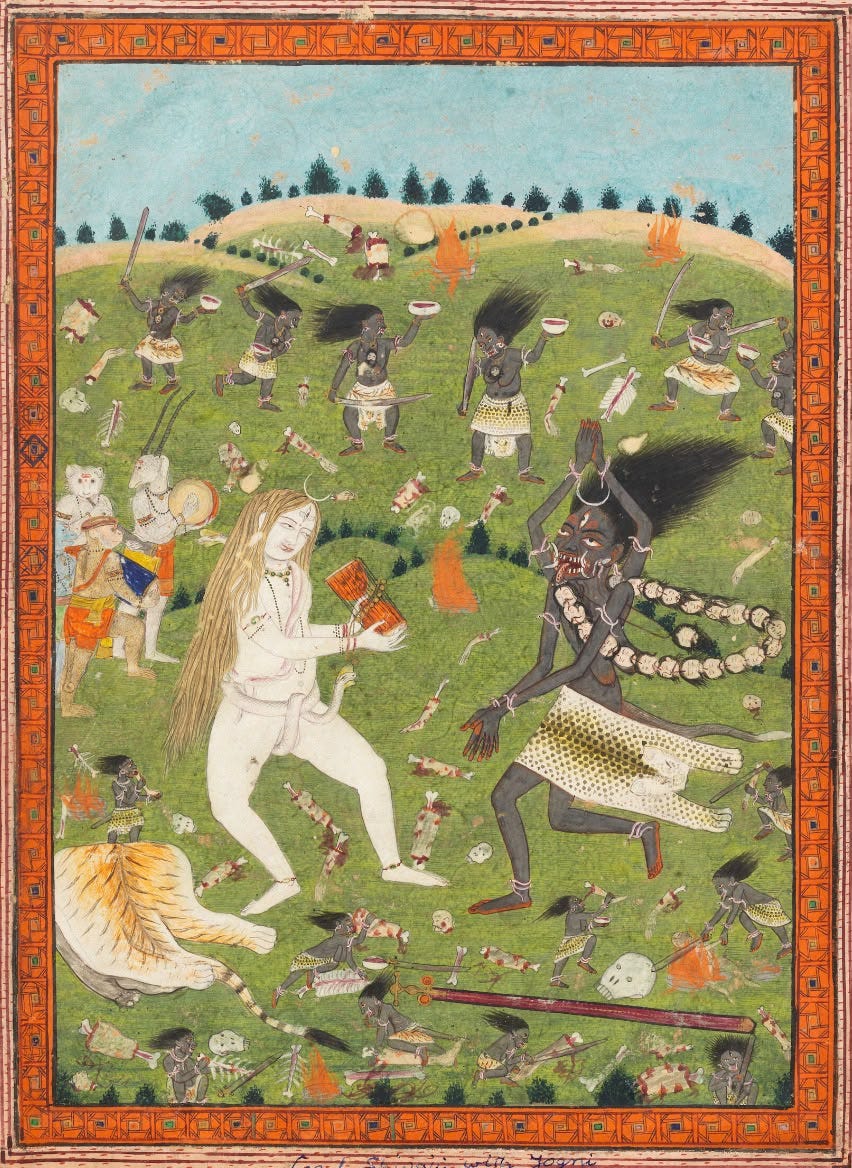
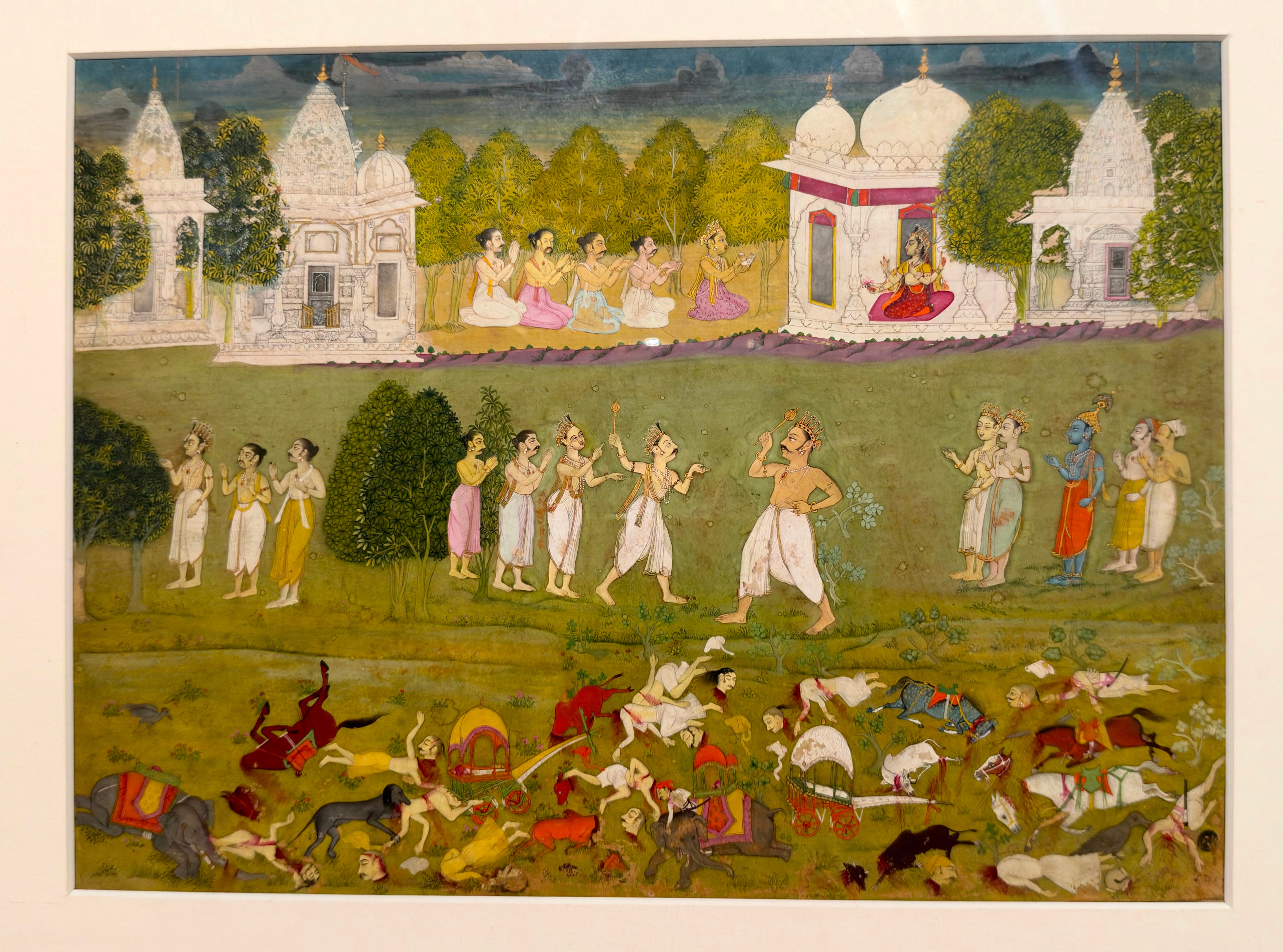
The text recounts that the battlefield at Rati Ghati was strewn with bodies of slain warriors, full of roving hyenas, jackals, and vultures, all feasting upon the bodies. The fearsome yoginis, vetalas, the terrifying attendants of Shiva, pisacas, and pretas descended upon the battlefield to enjoy the delicious feast. They drank blood and devoured flesh and howled in merriment. Goddess Katyayani filled her bowl with the blood of the fallen warriors and drank her share of the “sacrifice.”
The conflict, known as the Battle of Rati Ghati, was more than a military engagement between two contesting armies. It was a sacrifice: a ritual through which Rav Jaitsi’s men offered their lives and that of their enemies at the altar of the Divine and the Terrible, who followed them into battle. Their blood was the celestial wine, and their bodies the oblations thrown in the sacrifice, the sacrifice through which the land of their ancestors was nourished.
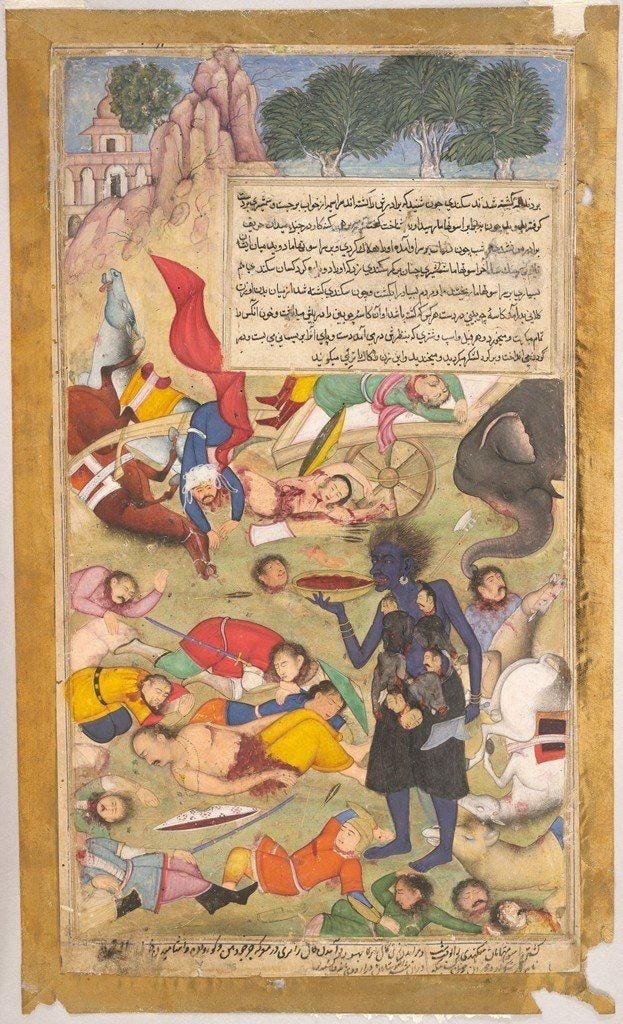
The Rajput warrior never went to war alone. He was accompanied by a host of terrifying divine and semi-divine beings and battlefield scavengers that gathered wherever men of sword fell.
Among the duties of the Kshatriya was the willingness to satisfy these beings with a feast. As master of his subjects, the Kshatriya was expected to provide them with grain. Still, he was also committed to feeding the semi-divine beings and, ultimately, the fierce forms of the Goddess, who delighted only in the blood and flesh of those who perished on the battlefield. This made it a duty for the feudal Rajput to sacrifice himself in war, and in doing so he justified his death to himself, since it gave him fulfilment and a cause to which he could devote his life. Therefore, the Rajput’s violence on the battlefield was not merely a sanguinary act of political settlement; it was also an offering to the Goddess of War and her retinue of terrible beings, who presided over the supernatural.
Interestingly, this imagery was not confined to the Rajputs of the late medieval period alone. The roots of this psyche could be detected before the medieval times too. In an inscription celebrating the exploits of his ancestor Keyuravarsa, the Kalachuri ruler Yuvarajadeva commemorated a battlefield strewn with the bodies of defeated enemies, where voracious vetalas drank blood. Kumarapala, the Calukya ruler of Gujarat and known for his Jaina proclivities, boasted of having “intoxicated the Goddess Candi with the gushing blood of his rival [Arnoraja],” propitiating the Goddess. The supreme irony here is that not even a ruler who, as per the testimony of the Jain scholar Hemachandra Suri, supposedly prohibited meat for his earthly subjects could not afford to neglect feeding the Goddess the flesh of his enemies. That said, while the rudiments of this warrior ideology were popular throughout India, finding expression even in, say, the Tamil martial epic Kalingattupparani or the inscriptions of the Kakatiya ruler Ganapatideva, the highest refinement and peak of this occurred only in North-west India, especially among the Rajputs of Rajasthan.
Yoginis, Gods, And The Feast Of The Fallen
The Prithviraj Raso, a 16th-century bardic epic recounting the tale of the ill-fated Chauhan emperor, recounts the abduction of Sanyogita, daughter of Jaichand Gahadavala, by Prithviraj Chauhan. This episode deepens the enmity between the two monarchs. As Prithviraj escapes with his newlywed bride and a group of loyal retainers, Kannauj’s army pursues them. Bands of his men decide to remain behind, holding off Jaichand’s forces long enough for their lord to reach safety.
Kanak Bargujar, one of Prithviraj’s closest retainers, resolves to fight till death, declaring that he will continue until his sword shatters and his severed head adorns Shiva’s necklace of skulls. The battlefield is eventually turned into a lake of blood, the flesh of the slain is the mud, the severed limbs are the fish swimming in its waters. Yoginis and vultures descend to feast upon the fallen. Kanak, having fulfilled his duty as a Kshatriya by dying in battle in service of his master, is rewarded with a place in Vaikuṇṭha(heaven).
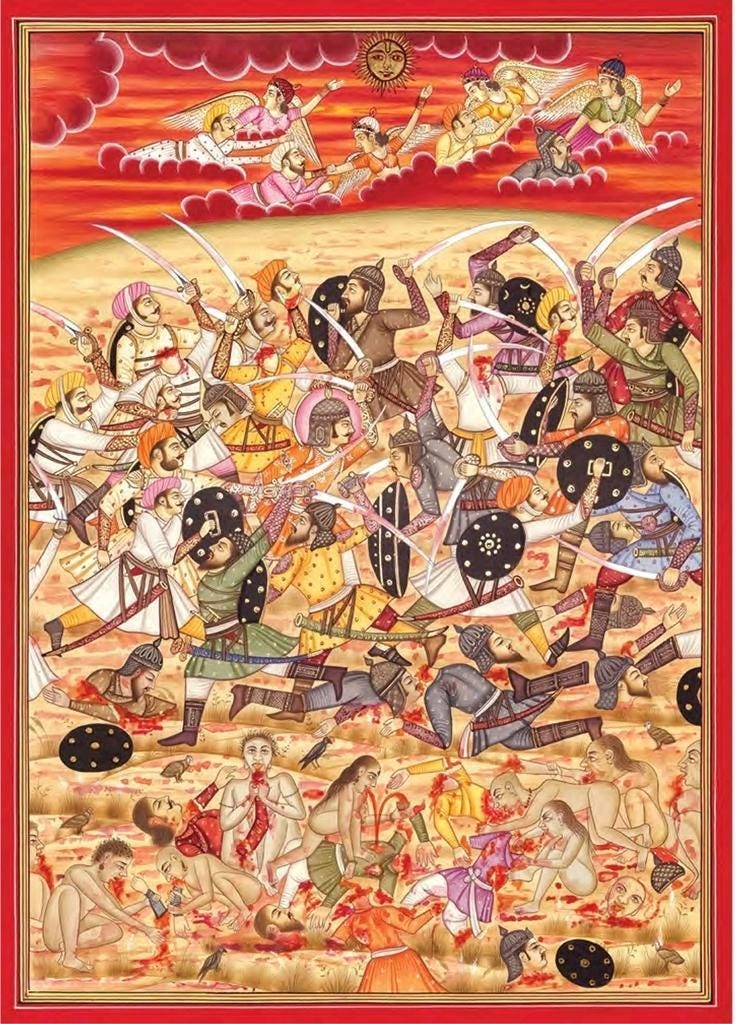
The Raso brings together several motifs that recur throughout Rajput martial imagery. The battlefield becomes a ritual space, the feast of the supernatural; the warrior’s body is an offering; and death in battle opens the path to the highest reward of all for a Kshatriya: a place in Vaikuntha.
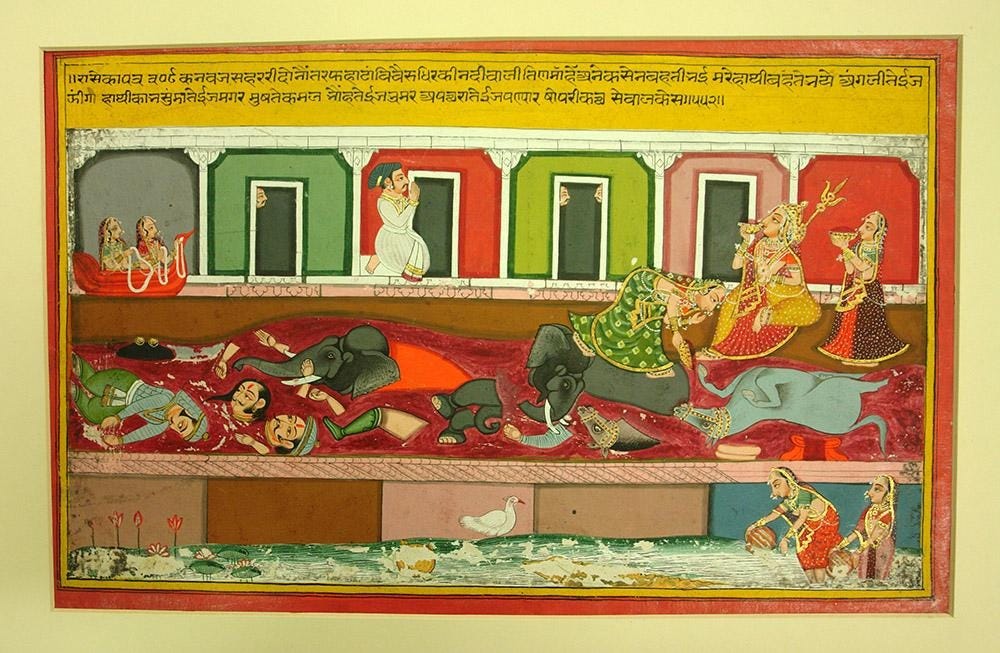
“Filling her begging-bowl, Shakti drinks the warriors’ blood, while countless Khecaris devour the demons. Several Khecaris delight in digging out the eyes of demons, and fill their stomach by clawing at the demons’ flesh and eating greedily.”
— The Epic of Pabuji
The Epic of Pabuji, an oral folk epic from Western Rajasthan centred on Pabuji, a Rathore Rajput warrior from Kolu, a village in the Phalodi district, celebrates the life and, most importantly, the heroic death of the deified warrior-hero. It furnishes us with explicit, graphic details of this war imagery. The narrative recounts the exploits of Pabuji, his transformation from a vagabond warrior to a venerable hero. In the middle of his wedding, he is reminded of his duty as a Kshatriya to protect the cows; he abandons the wedding to fulfil his obligations, setting off to fight the rustlers, rescue the cows, and eventually sacrifice his life in the act. This supreme act of sacrifice is matched by that of his companion, who voluntarily slits his own intestines to provide a meal for vultures and Khecaris, but continues to fight for Pabuji and wins for him a victory, only to collapse immediately after. Such acts of supreme sacrifice have earned Pabuji and his companions not only a place in the pantheon but an entire tradition of narrative storytelling centred on painted scrolls, and this fame, in the worldview of the medieval Rajput, is what it all is ultimately for.
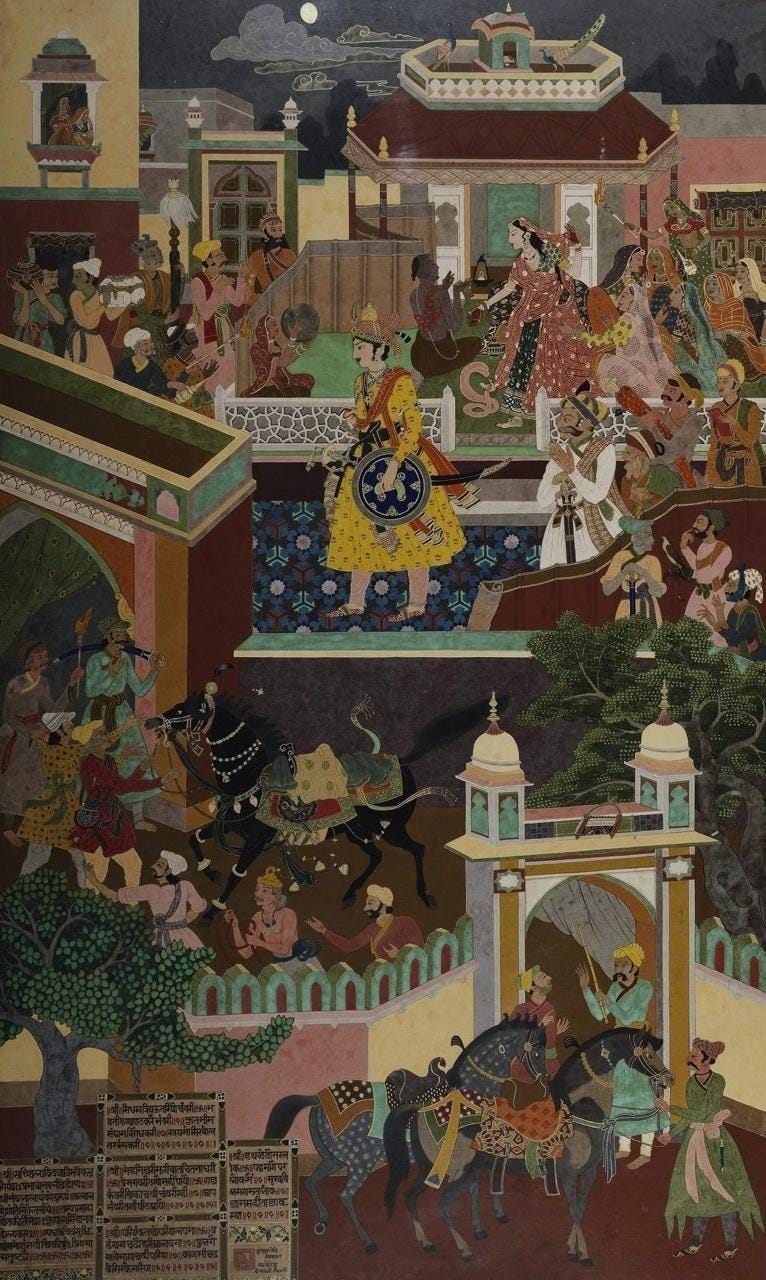
As Pabuji wages a battle against his nemesis Jindrav Khichi to rescue the cows of Carani Deval, the poet Ladhraj describes the exuberance of the Goddess and her retinue of fearsome yoginis and khecaris. The Goddess’ bowl is compared to the vessel carried by a water woman; the warriors’ blood becomes the water with which it is filled. Narada expresses his delight—who appears in Rav Jaitsi ro Chhand too, where the warriors are likened to the mischievous rishi. Shiva joins the foray, collecting the skulls of warriors who had smeared themselves with ashes before battle, imitating the God himself. The yoginis tear into the bodies of the fallen warriors.
The 17th century Rajasthani poet Ladhraj writes in his famous Pabuji ra Duha:
“The sound of the Nagaras of both armies filled the air, and the vultures looked forward to a feast and smiled in their hearts. The hunger of the carnivorous birds is satiated; they eat and gulp down juicy meatballs.”
The poet equates the warrior's bodies with "juicy meatballs," likening it to the funerary symbolism of pinda: a ball of rice, ghee and sesame offered to the departed ancestors. His blood mingles with the soil, with earth, and his body returns to the land from which his ancestors ruled.
This symbolism finds a striking mention in traditions concerning Rav Champaji Rathore, son of Rav Rinmal Rathore, the ruler of Mandore (Present-day Jodhpur). After Rana Mokal of Mewar was assassinated at the tender age of 24 by his paternal uncles, Chacha and Mera, his mother, Hansabai, summoned her brother, Rav Rinmal, to Mewar to assist her and protect her chosen successor, her grandson, the famed Rana Kumbha, then aged nine. Ranmal was no stranger to interference in the affairs of Mewar, having already served Mokal as a regent and helped him overcome all his enemies, be they from Nagaur, Gujarat, Malwa or Delhi. He was, however, a rather notorious character at the Sisodia court due to the Marwari influence on Chittor that accompanied his help of Mewar, so the ensuing resistance could hardly have been a surprise to him.
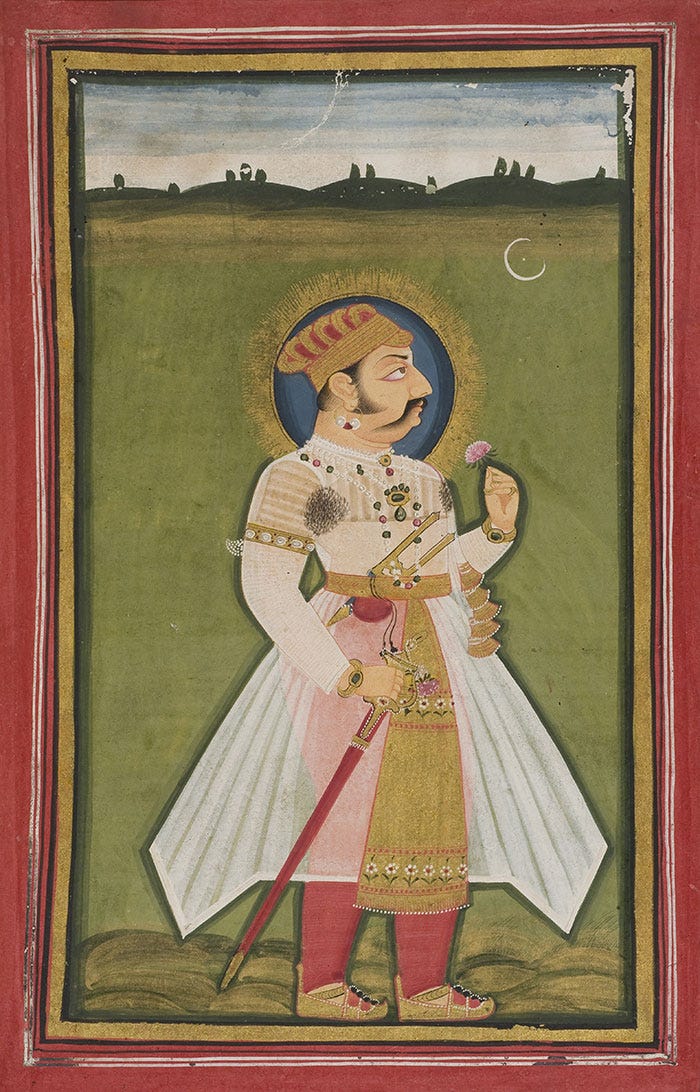
Champaji accompanied his father, along with his brothers, including Rav Jodha, the founder of Jodhpur, to Mewar, but soon returned to Mandore to manage the kingdom's daily affairs. Sisodia nobles eventually murdered Rav Rinmal under the auspices of the young Rana Kumbha, and Champaji would spend the next fifteen years fighting the Sisodias to reassert the Rathore authority over Marwar. After the Sisodias were driven out, Rav Jodha proclaimed his kingship over the land and began a furious expansionary campaign, of which Champaji was an eager participant. Champaji finally fell in battle against the Sindhal Rathores at the age of sixty-seven. Before breathing his last, he made an offering of his flesh and blood to the land he lived and ruled.
Likewise, Khimvo Udavat, the Thakur of Girri in Marwar, celebrated as the “Kamdhaj Rathore who drove his enemies from his territory,” is said to have satisfied the dakinis with pindas made from the flesh of his slain enemies.
Khimvo’s brother, Jaitsi Udavat, inherited a feud from his uncle Shekhoji as he lay dying after the battle of Sevaki, fought between the then ruler of Marwar, Rav Ganga, and his paternal uncle, Shekhoji, who was supported by Daulat Khan and Sarkhel Khan of Nagaur. Shekhoji summoned Jaitsi, calling him “an excellent Rajput, who pursues old vairs (vendettas).” The Chauhan Raja of Suracand, a town 200 kilometres southwest of Jodhpur, had sacrificed a servant of Shekhoji. Jaitsi agreed to take revenge, and set off for Suracand along with twenty-five Rajputs. Arriving at a village a few kilometres from Suracand, they encountered a woman drawing water from a well, whom they asked to serve them. After obliging with their request, the woman, to everyone’s shock, asked which one among them was Jaitsi. Believing her to be a Goddess, Jaitsi introduced himself. Already aware of his vow to avenge the feud, she warned the men that the Raja of Suracand was surrounded by hundreds of Rajputs, and advised them to take up a false identity, with Jaitsi as her nephew. The plan worked, and Jaitsi would go on to disguise himself and infiltrate Suracand, escaping the notice of the Raja, until one day the latter was about to perform another sacrifice with a human victim to the Goddess. A bloody battle ensued, and Jaitsi is said to have built a tower of skulls—interestingly, called Babar-kot, named after the Mughal Emperor—as an offering to the Goddess.
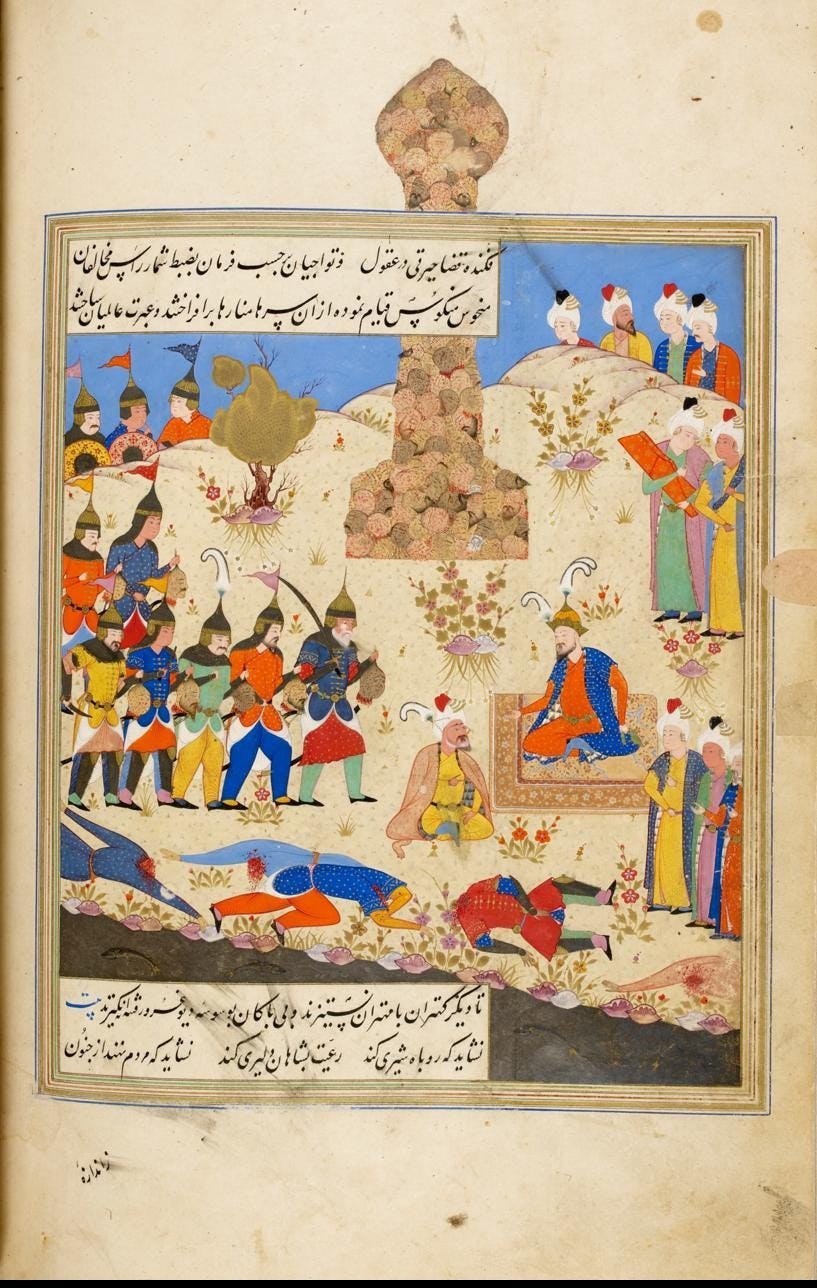
Going beyond the warrior’s own death: the bodies of his enemies were offerings too, through which the Rajput sustained the temporal and the supernatural world. The warriors’ bodies that lay on the battlefield were not just the human toll of a military engagement, but an offering to the Goddess, the ancestors, and the land itself. The death and destruction of life on the battlefield was an act of giving.
The Rajput As Datar: The Giver Of Life
Medieval Rajasthani documents frequently describe the Rajput as a datar—literally, a giver, a provider. The Rajput was a giver of gifts to Brahmans and Charans; he protected his dependents, upheld the social order, and defended his land, whether inherited or conquered.
The Rajput tradition extended the idea of “giving” beyond generosity and patronage by a king. The Rajput was also a giver of life, which signified his ultimate act of generosity. The Rajput’s death in battle was not the throwing away of life in a military engagement, but rather the final fulfilment of his Kshatriya duties: an offering to the Gods; a sacrifice for his Master—temporal or the Divine; and a way of securing everlasting glory and fame.
During a defensive war, saka was a usual phenomenon among Rajputs, when the defenders, having abandoned any hope of victory and in the face of imminent defeat, resolved to fight to the death. The Rajputs donned saffron robes, renouncing the prospect of survival, just like the sannyasis who renounce the material world. The saffron was expressive of not merely the readiness to embrace death, but the Rajput’s belief in exchanging mere survival for something more, and greater: honour and heaven.
"Rajvat (the quality of a Rajput) has a simple test. There is no Rajvat in a man who wants to preserve his life at all costs. Rajvat is where there is readiness to give up life for a worthwhile cause. O Sakhi! A Rajput does not don a chatra and a canwar; a real Rajput is he who lays down his life for the sake of his country."
— Vir Satsai (19th-century poetry collection compiled in the wake of the 1857 rebellion)
An English officer serving under the French mercenary captain serving the Marathas, General Benoit de Boigne recorded, in great amusement and awe, the charge of the zard-kaprawala—literally the wearers of saffron robes—at the Battle of Tunga-Lalsot, fought between Mahadji Shinde and the combined forces of Jaipur and Jodhpur, describing how bands of fifteen or twenty Rajput horsemen would charge against infantry numbering in the thousands. Even in the face of insurmountable odds, these men refused to place mere survival above honour. Death in battle was an objective in itself, not because life was without value, but because the end determined the quality of life.
The chronicles employ the term kam aya, literally “was useful” or “came to use,” to describe a warrior’s death in battle, meaning that the Rajput’s life, devoted to war, had reached its proper culmination. The warrior’s death was useful because it fulfilled his obligation as a Kshatriya.
To die of old age, of natural causes, was an ignominious fate for a Kshatriya, a fate much dreaded. To die in battle, to die at the edge of a sword, was to exercise one’s agency over the final moment of life: to give oneself in the service of his master, or for a cause, rather than to an unremarkable end.
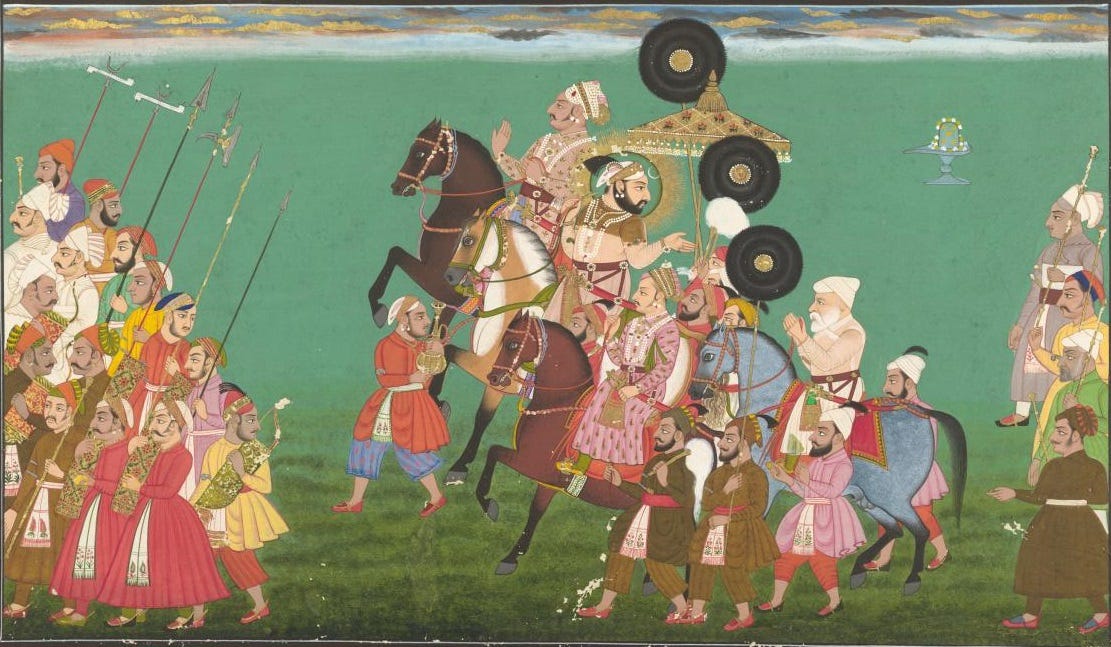
According to Manusmriti:
"But (a king who feels his end drawing nigh) shall bestow all his wealth accumulated from fines on Brahmanas, make over his kingdom to his son, and then seek death in battle.
The Bhati traditions detail the life of Rav Chach of Pugal (Bikaner district), son of Rav Kelhan Bhati, which preserves the most striking example of the above-quoted verse of the Manusmriti. Chach spent much of his life engaged in brutal frontier warfare and raiding, repeatedly fighting the Langah Sultanate of Multan and feuding with various Rajput clans such as the Rathores, Johiyas, and Khokhars over land and cattle.
Following a major victory over the Langahs, in which a certain Bahram Beg was killed, Chach was afflicted with a serious illness which spread throughout his body. Recognising that his death was near, the Rav summoned his sons and noblemen. He had enjoyed a long and remarkable life but now the moment demanded that he fulfil his one final obligation, that of a kshatriya, to seek a glorious end, death in battle. To die of illness in bed was a nightmare. It was demanded that he seek a favourable destiny after death.
Having entrusted his kingdom to his sons, he sent a letter to the Langah Sultan asking him, as a fellow king, to grant the gift of battle. The Rav declared that he would come with a diseased body and a small contingent.
Seven hundred Rajputs joined him on this final expedition, a mahaprasthana, a great departure. Chach ultimately fell fighting the Sultanate’s forces. His sons would later pursue the vendetta that arose and avenge their father’s death.
“Never think of me for a moment even in death. We are sure to meet in heaven. One has to die only once, but a hero’s honour is precious. If you can buy glory at the cost of life, the deal will be a profitable one. Kshatriya dharma is the highest of all faiths.”
— Kasmod’s wife, Khumman Raso, a work of heroic poetry traditionally attributed to the ninth century, celebrating the exploits of the rulers of Mewar.
The Rajput as a giver, gives gifts to the priests and the poets, protection to his dependents, service to his master and his life to the battlefield. Turning the field of battle into a feast and seeking a heroic end were both guided by the same principle: giving.
Heroic Death And The Promise Of Vaikuntha
But the Rajput’s oblation of blood was not purely for the sake of supernatural entities. Just as the Yajamana of the Vedic sacrifice receives his own benefit from his sacrifice, however, it is addressed to and meant for the deities, so the Rajput warrior was promised the ultimate reward for his sacrifice. It was believed that the Apsaras, celestial nymphs and the dancers of Indra’s court famed across the three worlds for their beauty, personally descended to the bloodstained field of battle to choose the bravest of warriors as their companions and take them to the world of the immortals.
As Pabuji (whom we have encountered before in our story) exhorts his companions to join him in his campaign against Jindrav Khichi, he admonishes those who display insufficient martial enthusiasm. He suggests it would be a terrible fate for a kshatriya to grow old and die in his bed, “for what a man will do who lives forever?”
Pabuji’s companion Dhembo, the “opium-drinker”, declares, before giving his life in battle, that they shall meet again in the court of Rama. The bodies of the slain were the stairs to another realm, to a warrior’s heaven.
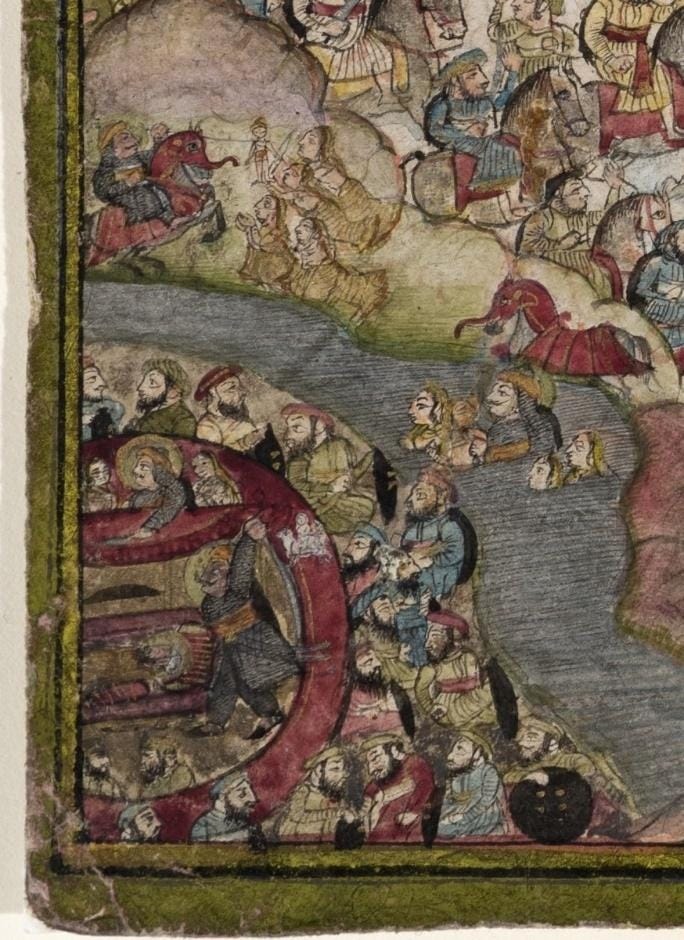
In the account of the battle, described in the Prithviraj Raso, that is fought in the aftermath of Sanyogita’s abduction, as Har Singh Chauhan falls while defending his sovereign from the Kannauji pursuers, he is welcomed by heavenly nymphs with garlands, and they convey him to heaven in a divine chariot. The apsaras had picked him as a husband.
“We have arrived at the ashrama called battle, a sanctuary of hostility, touchstone of valour and the site of pride, where warriors assemble in battle to be chosen as bridegrooms by Apsaras, the house of manly prowess, the heroic death-bed of kings, a burning-sacrifice of lives and the ladder for kings to heaven.”
— Bhasa’s Urubhanga 4 (2nd century CE drama, one of the earliest extant example of a Sanskrit play)
Important to the narrative is a Jadeja tradition recounting the story of Jam Lakhaji Jadeja and his nephew Rakhayat, whose father, Lakhaji, had himself been killed. One day, noticing that the Jam appeared rather sad, Rakhayat inquired the reason for it, arguing the Jam had no excuse to be so, for he enjoyed great power and prosperity. Lakhaji answered that he’ll let his nephew know when the time is appropriate. A few days later, Lakhaji took his nephew to the ocean, placed him on a boat, and let the waves carry him away; the nephew disappeared. Rakhayat eventually reached a distant mystical land inhabited by the heavenly apsaras, where he was cordially received and hosted for a night in the apsaras’ palace. The next morning, Rakhayat returned. Upon receiving his nephew back, Jam Lakhaji asked if he witnessed anything extraordinary, to which Rakhayat replied with what he saw: a land inhabited by the celestial nymphs and their beautiful palaces. The Jam then explained that those Rajputs who sacrifice their lives while avenging their father’s death and fulfilling their obligations to their Master attain those heavenly abodes. It is this realisation and conscious awareness of the afterlife that sometimes saddens the Jam.
Rakhayat would eventually betray the secrets of Lakhaji’s strength to a powerful intruder to avenge the death of his father that the Jam had brought, but he showed up to fight beside Lakhaji during the final battle, to fulfil his obligation to his master. Both of them were killed in this final engagement and received svarga:
“Lakho proceeded to those mansions in the lofty palaces of gold and bejewelled battlements. And Rakhayat went to the mansions of the lower palaces of silver and gold battlements.”
This promise of heavenly reward appears again in the Vacanika Rathore Ratan Singh Mahesdasot ri, a seventeenth-century work of Dingal poetry that celebrates the exploits of Ratan Singh Rathore, founder of the kingdom of Ratlam and cousin of Maharaja Jaswant Singh of Jodhpur.
The poem centres upon the Battle of Dharmat, where imperial forces loyal to Shah Jahan and heir-apparent, Dara Shikoh, clashed with the rebellious princes Aurangzeb and Murad. As the battle turned against Jaswant Singh, his loyalists urged him to withdraw rather than squander his life away, for he must survive to fight another day. Ratan Singh, however, asks for the reward of battle:
"Give me the honour of dying in battle, allow me the honour of death, and the Kingdom is for you."
The Vacanika describes the ferocity of the battle and the hero's eventual martyrdom. Ratan Singh is then received by the Gods—Indra, Vishnu, Surya, Brahma, and Shiva—and ascends to heaven in a divine chariot. He then requests Lord Vishnu to grant a place in Vaikuntha to his fellow Rajputs who fell in battle: Mukund Singh Hada, Arjun Gaur, Sujan Singh Sisodia, Dalthamb Jhala, and the many others. United in death as they were in the carnage of Dharmat, the heroes now reigned in heaven. As the Vacanika puts so memorably;
"The warriors slew their enemies, the path to Vaikuntha was a river of blood."
The Fear Of An Ordinary Death
"It is not Right that a Kshatriya should die upon his bed, coughing up phlegm and bile, weeping pitifully. When a Kshatriya approaches his demise with uninjured body, then those who know the olden times do not praise his deeds. Son, it is not approved that Kshatriyas die at home-for proud men to do so is not manly, is not Right, is wretched…. Having suffered a death in battle that is celebrated and honoured in the world, having gained abundant Merit for himself, he goes to the same heavenly world that Indra is in."
— Mahabharata, Shanti Parva 12.97
If death in battle was in itself salvation, death of old age presented a rather more scary and troubling prospect. The fear of dying in bed threatened to deny the Rajput the opportunity to fulfil his one final obligation and secure for himself the much-celebrated death, barring him from the celestial rewards and the glorious afterlife, besmirching his name for the generations to come.
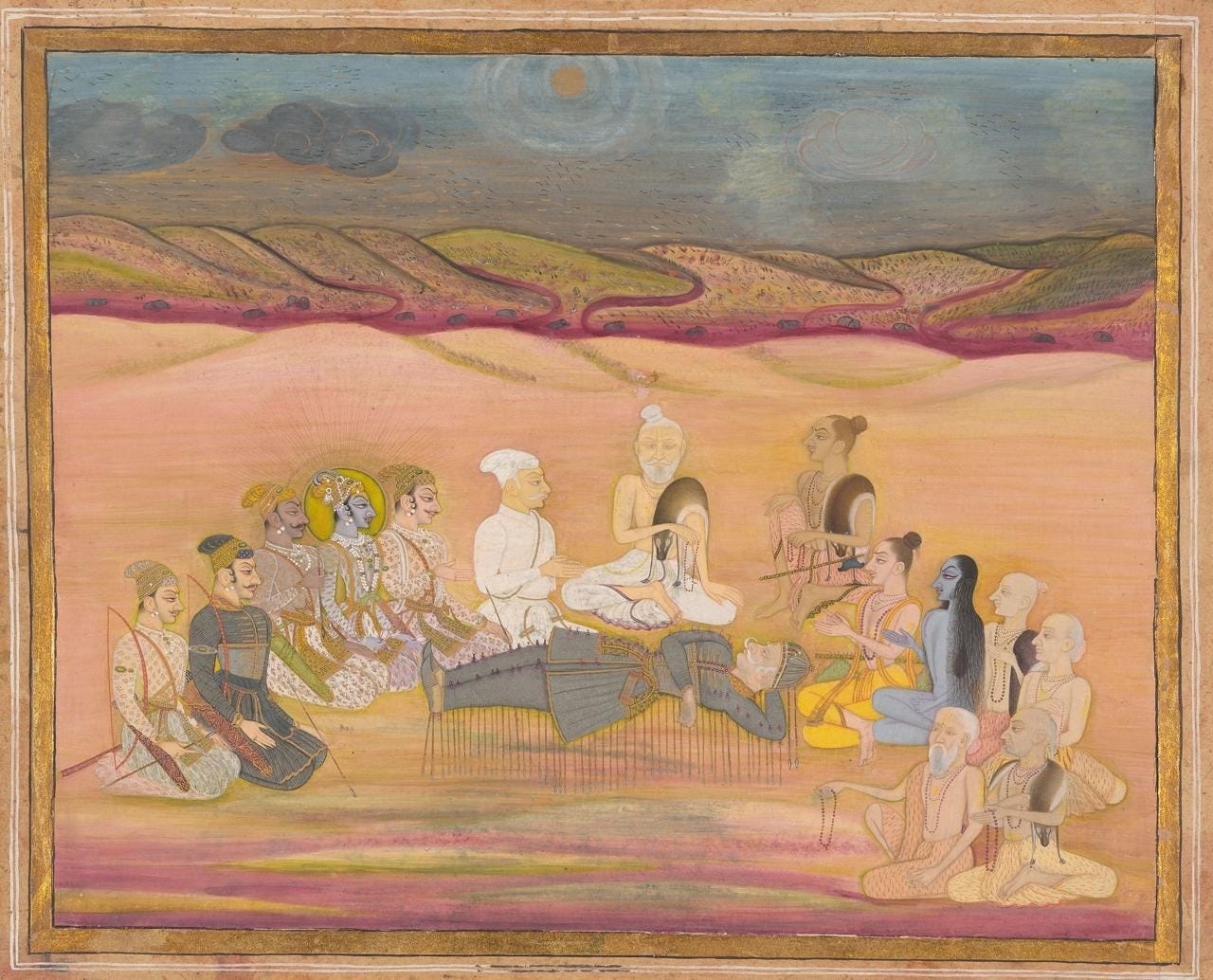
The Bhati genealogies preserve an interesting episode about Raval Dudo of Jaisalmer. One day, while looking in the mirror, Dudo noticed several grey hairs in his beard. The sight confronted him with the reality of old age and eventually of death. To die of natural causes was haunting. Something, therefore, had to be done.
Dudo and his brother Tiloksi, therefore, decided to provoke a conflict that would allow them to die in battle, just as their famed predecessor Raval Mulraj and his brother Ratansi who perished performing saka against the forces of Ala al-Din Khilji. The Bhatis launched repeated raids into the territories of the Langah Sultanate. They killed a Baloch chieftain named Kangro and plundered his massive herd of horses. Their raids extended as far as Lahore, massacring local Gujars there. The camp of Sultan Firuz Shah Tughluq at Ajmer was raided, and his prized horses, including the Sultan’s personal favourite, were carried away.
These depredations eventually provoked a full-scale invasion of Jaisalmer by the Delhi Sultan. Dudo and Tiloksi finally fell in battle while performing saka. Among those who died was a fifteen-year-old Rajput who, before the battle began, appeared rather despondent, believing that his unmarried youth might prevent him from attaining heaven.
The traditions present the Raval’s fear of an unremarkable death, death of old age, as a force capable of causing major political ramifications, and the invasion of Jaisalmer by the Tughluq forces was one of the bloodiest chapters of Jaisalmer’s history.
These narratives should not be read as the blanket truth of the historical events that unfolded; rather, their significance lies in the beliefs and traditions they sought to preserve. The stories offer valuable insight into how the people understood and interpreted their past, articulated the ideas of honour and sacrifice, and helped shape and sustain the collective memory and moral and cultural ideas.
The Sacrificial Body And The Yajna
The self-sacrifice of the Rajput warrior in the field of battle may be read alongside the Purusha myth, the sacrifice of the primordial being that gave birth to the known universe. The Rajput’s violence and eventual self-sacrifice give birth to or sustain the political and social order. The fallen warrior’s blood nourishes the land; his death preserves the order he defended.
In the story of Dhebo, Pabuji’s companion, he offers his liver to the vultures and promises them the rest of his body after his imminent death in battle. The vultures, understood as the theriomorphic manifestation of the Goddess, become the recipients of his final act of giving, the receivers of his sacrifice. Attaining immortality through his self-sacrifice, believing his entrails would birth a Khejari (Prosopis cineraria, Persian Mesquite) tree.
Shrivara’s Zaina Rajatarangini reads: “the Rajput princes laid down their lives in the sacrificial fire of battlefield…making a bilva fruit of their body.”
The warrior’s body is an oblation cast into the sacrificial fire. The Rajatarangini likewise mentions two Rajputs, Suvarna and Sihanagra, who were like shri fruits cast in the smoke of a yajna. The severed heads of soldiers are the morsels for ever-hungry Yama, the lord of death.
The battlefield is not merely a site of military contest, but a ritual ground. The warrior is both the sacrifice and the sacrificer, and through his acts the cosmic order is sustained.
The Monk, The Ghazi, And The Persistence Of The Motif
The belief that the battlefield was a site of feasting enjoyed by divine and semi-divine beings was remarkably persistent throughout Indian martial literature, even surviving changes in political and religious affiliations.
The Himmatbahadurvirudavali of Padmakar Bhatt (1790 CE) celebrates the life of the warrior-monk Himmat Bahadur Anupgiri Gossain. This remarkable man was an orphan adopted by the militant warrior monks who roamed North India in the 18th century, and after rising through their ranks, transformed them into a 20,000-strong, full-fledged army that played kingmaker in the power politics of the region. Describing the battle between Anupgiri and his nemesis, the Bundela Rajput warlord Arjun Singh, the poet details, in typical Rajput martial literary fashion, the appearance of Chandi, yoginis, vaitalinis, and bhutas on the battlefield; dancing, eating, and drinking the flesh and blood of the dead while gathering skulls for a garland for Shiva.
Padmakar Writes:
“Chandi screeched; she took her piece, she swelled and radiated with pleasure. She brought her demon-girl-gang; they clapped to the beat, cracked-chewed the bone marrow. The gathering of yoginis, full of grim delight, gorged themselves on the meat. Filling the skull bowls with blood, they revelled and danced about.”
The antagonist of the poem, Arjun Singh, consecrates his sword with incantations to Chandi and ties a small Shrimad Bhagavad Gita around his neck as he makes preparations for the battle, urging his followers with promises of celestial rewards, declaring “when these prime Rajputs fall in battle, they have their pick of heavenly brides.”
As the battle rages on, Arjun dispatches several of Anupgiri’s men to heaven on “celestial chariots,” attaining immortality through their actions: death in battle, death in service of one’s lord. Finally, the Anupgiri himself confronts Arjun Singh, and succeeds in killing him:
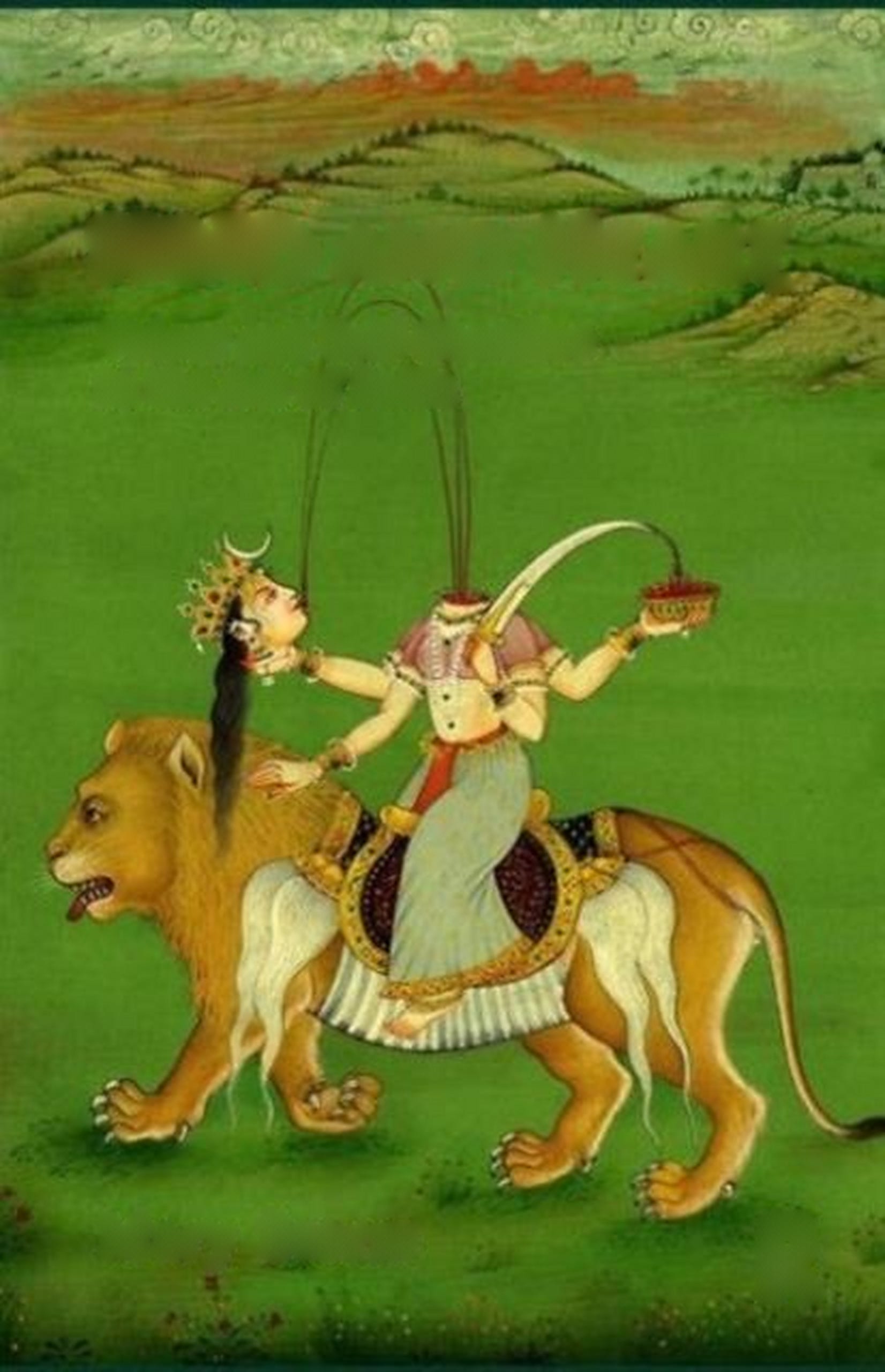
“He offered his foe’s body to the Earth, and took its head and offered it to Shakti, taking Arjun’s head, Parvati strung it and began to dance indescribably”
The battlefield here again is a theatre of divine celebration; the body of the slain is an offering to the Gods and the Earth. Related motifs appear in the Qaimkhani Rasa, a 17th-century bardic poem authored by Nyamat Ali Khan, better known as Jan Kavi. The Qaimkhanis, originally a Chauhan Rajput group were forced to adopt Islam by the Delhi Sultan Firuz Shah Tughlaq, nevertheless retaining their rich Rajput traditions of bardic tales and culture of unthinking heroism. The work, at one point, celebrates the deeds of his father, Alif Khan, who distinguished himself and the Qaimkhanis at the Battle of Kangra, fought on behalf of the Mughals under Jahangir in 1620 against the Katoch Rajputs.
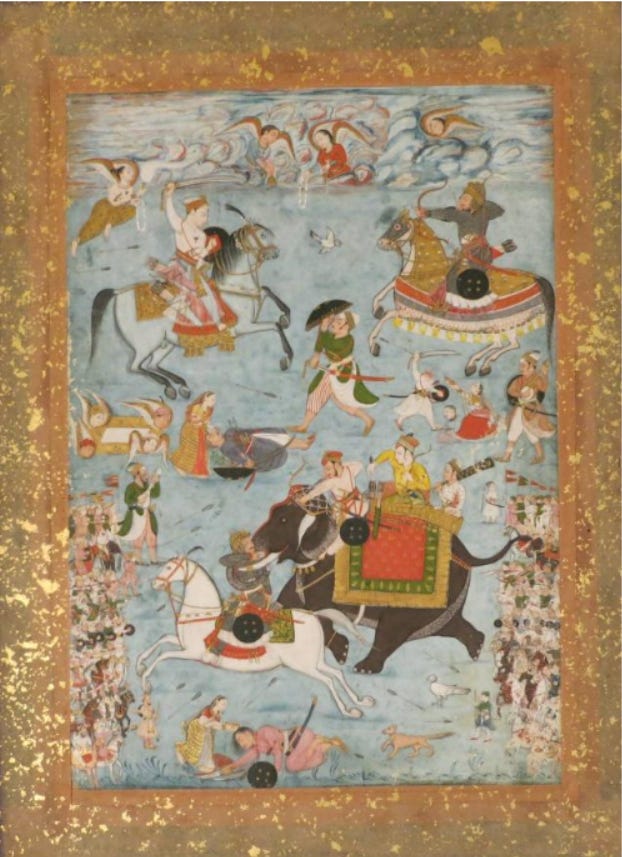
So fierce was the battle and so great was the human toll that yoginis were drinking from an ocean of blood while collecting skulls, whose weight eventually bowed them down. Shiva was seen dancing amidst the slaughter.
When Alif Khan, celebrated as a ghazi, fell in battle, he ascended to Vaikuntha, the heavenly realm of Lord Vishnu, the abode of immortal warriors.
A Feast Of Blood, A Gift Of Life
In March 1565, Jodhpur was besieged by the Imperial Mughal army led by Husayn Quli Khan. Following the consolidation of the badly shaken Mughal state by Akbar, the Mughals decided to take no chances but to bring the entirety of Rajasthan under their influence one way or the other. After reconciling with the rising power of Amber, the Mughals turned their eye to Marwar. They had already seized some outlying territories like Nagaur in the last days of the once formidable Maldeo. Rav Chandrasen, the son of the illustrious Rav Maldev, had spent considerable time preparing for the expected invasion. The siege was a long-drawn affair; the two sides would go on to engage in many skirmishes and artillery duels for the rest of the year. Finally, in December of 1565, the Rav came to terms with the Khan. Abandoning the fortress with a select few retainers, the young Rav left on horses and camels provided by Khan’s mother. As Husayn Quli Khan and Rav Ram Singh, Chandrasen’s half-brother, took possession of the fort, they were confronted by eleven Rajputs who had decided to remain in the fort and die in its defence. The Rav, on the other hand, would go on to wage a brutal insurgency against the occupying Mughal forces for more than a decade.
The stories at the heart of the essay do not tend to obscure the practicalities of medieval warfare and politics, where retreat, submission and cutting deals were often the norm. The poetic narratives do not necessarily celebrate the practical realities of politics and war. Still, rather, the importance of these stories lay in the ideals through which they were remembered and represented.
In the heroic medieval Rajput tradition, the field of battle was more than a site of settling a political or territorial dispute; it was rather a ritual ground, a sacred space. Death in battle was not merely an inevitable outcome of war, but rather a transformative act; it paved the way to transcend the mortal world and ascend to the highest heavens. At the heart of these traditions lay the transformation of the Rajput from a soldier into a giver, a donor; the warrior’s body into a sacrificial oblation; and the slain warrior, through his death in battle, into a deified hero.

Shashwat Singh is a data engineer and an independent writer. His interests include history, sociology and anthropology of religion with special attention to Rajput and Islamic history.
Further Readings:
Bithu Sujo, Amar Singh Rajvi. Chhand Rao Jaitsi Ro.
Ronald M Davidson. Indian Esoteric Buddhism
Bihani Sarkar. Heroic Shāktism: The Cult of Durgā in Ancient Indian Kingship
Cynthia Talbot. The Last Hindu Emperor: Prithviraj Chauhan and the Indian Past, 1200-2000
Janet Kamphorst. In Praise of Death: History and Poetry in Medieval Marwar
Richard D. Saran and Norman P. Ziegler. The Mertiyo Rathors of Merto, Rajasthan: Select Translations Bearing on the History of a Rajput Family, 1462–1660
Norman P. Ziegler. Action, Power and Service in Rajasthani Culture: A Social History of the Rajputs of Middle Period Rajasthan
Dr. Hiralal Maheshwari. History Of Rajasthani Literature
Munhata Nainsi ri Khyat
Sourav Ghosh. Scrambling for Glory: Assessing ‘true’ Rajput identity in a Mughal war of succession (1657–1659)
Kaushik Roy. Hinduism and the Ethics of Warfare in South Asia
William Pinch. War and Succession: Padmakar, Man Kavi, and the Gosains of Bundelkhand
Vasudha Dalmia, Munis D. Faruqui. Religious Interactions in Mughal India
Discussion about this post