

Summers in India’s mid-Gangetic plains have always been remarkably unforgiving. Nearly two centuries ago, when air-conditioned travel and other modern conveniences were unimaginable, undertaking a long journey in the summer heat was something to be avoided unless necessary. Yet, towards the end of March 1858, an octogenarian Bihari chieftain from Jagdishpur, Arrah, had taken a detour all the way through Lucknow, before marching into Azamgarh and briefly wresting it from the rule of the British East India Company Government. More significantly, he wasn’t done yet.
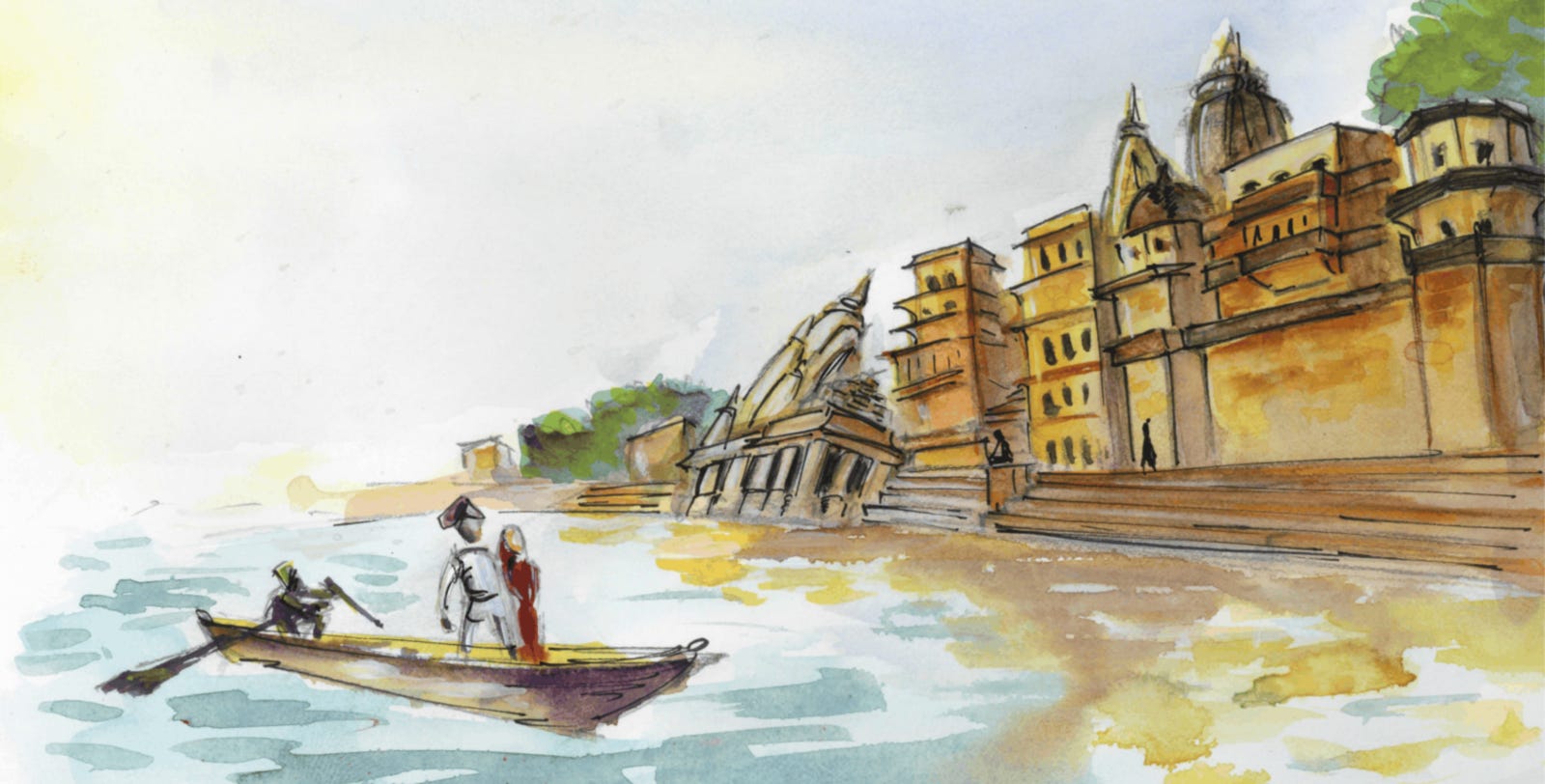
The Last Boat at Sheopur Ghat
Babu Kunwar Singh, the renowned Ujjainiya Parmar Rajput King of Jagdishpur, Arrah (then Shahabad District), had his eyes set on a homecoming. He was headed to a turf that had become too disturbed in his absence for anyone to lay proper claim to it. The British wanted Jagdishpur desperately to salvage their pride, but Kunwar Singh had left behind a brother who wouldn’t let them have it so easily either. Between Azamgarh and Patna, every individual, whether or not a part of the administration or an active part of the rebellion, knew of his plans to return home. It was almost as though Kunwar Singh had thrown down a dare to the Empire: catch me if you can!
Were they able to intercept him?
Yes.
Shoot and wound him?
Yes, but it was only his decision to take the last boat after letting his men cross Ganga first at Sheopur Ghat (on the Ballia-Bhojpur border), which allowed that one bullet from an English gun to penetrate his arm. Did that kill him? Eventually, but not before he chopped off that wounded arm with his own blade and went on to recapture Jagdishpur, ‘single-handedly’. Almost, because he did it with one arm and a brother who was initially reluctant to even start the war.
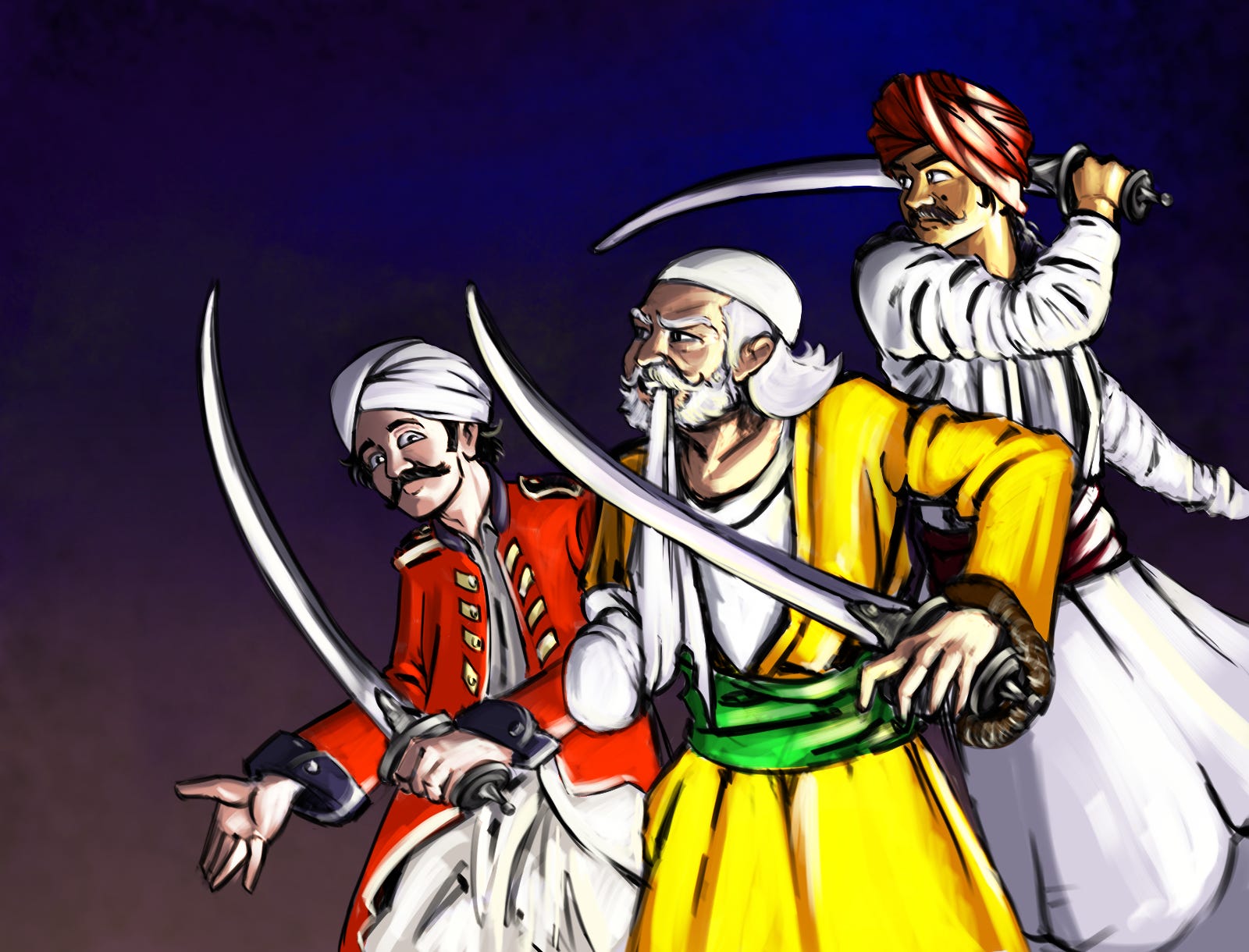
That younger sibling is fondly remembered by Bihar and the rest of the nation as Babu Amar Singh. These lines, often recited in Bhojpuri Birha tradition in his honour, aptly capture the confidence he inspired in his people:
“हाथ काटि गँगा में देहले कुँवर सिंह, माई के अकिंचन उपहरवा हो ना।
तबो अँगरेजवा के मुँहवा भइले करिया, जब बगल में अमर सिंह तानले तलवारवा हो ना।”
Translation:
Even as Kunwar Singh severed his hand and offered it to Mother Ganga,
The British faces turned dark with fear as Amar Singh raised his sword beside him.
A Decade of Simmering: Cartridges, Jails and a Pamphlet
In January 1857, the East India Company introduced the new Enfield rifle, and word soon spread that its cartridges were greased with beef and pork fat. Resulting in a mutiny which erupted at Barrackpore on 29 March, as Mangal Pandey of the 34th Native Infantry openly fired on British officers. He was captured and executed soon after.1 The authorities thought they had crushed a minor disturbance before it turned into something larger and beyond their control.
For at least a decade by then, the native population, both Hindu and Muslim, had been seething with conversion rumours popping up every time the government tried to push lifestyle changes that interfered with their customs and rituals. Around 1845-46, the jail administration began a series of innovations in the messing system that ran against local customs and caste beliefs, giving rise to an anti-British plot that manifested itself in jail disturbances. This was another coordinated pushback that Kunwar Singh was later discovered to have been part of.2
In 1855, a Christian missionary circulated a pamphlet urging Indians to embrace Christianity, and it caused a huge stir. Since most of its recipients were part of the educated gentry serving in government jobs, many came to see conversion as an obligation that the servant owed his master. The pamphlet argued that the world was coming closer with the advent of railway, electricity and telegraph, making it paramount that the people united under one religion and had similar wants, sorrows and anxieties. On 27 June 1855, W. Tayler, the Commissioner of Patna, was compelled to write to the Secretary to the Government of Bengal urging the Government to issue a proclamation distancing itself from missionary activities.3
Meerut Reignites the Revolt
On 24 April, eighty-five out of the ninety sepoys of the 3rd Bengal Light Cavalry stationed at Meerut refused to use the greased cartridges and were subsequently dishonourably discharged and sentenced to ten years of rigorous imprisonment. On 9 May, their sentences were read out, and their uniforms stripped off their backs, with all native and European soldiers in attendance. Sepoys who had been loyal to the Company a moment earlier were stripped of their rights and dignity without mercy.
Forty miles north-east of Delhi, the forces stationed at Meerut Cantonment included one Native Cavalry unit and two Native Infantry regiments, all three feeling deep empathy for their disgraced comrades and the keys to the gaols where those comrades were imprisoned. On the other hand, Meerut also happened to be home to the strongest European force anywhere in the erstwhile North-Western Provinces, in what is now Uttar Pradesh.
Instead of serving its original purpose of acting as a deterrent, the humiliation inflicted upon the dissenting sepoys further infuriated the remaining Indian sepoys, pushing them beyond the tipping point. The remaining members of the 3rd Cavalry led the charge the following day, freeing their comrades, as well as several others locked up alongside them. Even those with criminal charges were out on the prowl. The 20th Regiment joined immediately, but the 11th hesitated. While they were still being counselled by their commanding officer, Col. Finnis, a member of the 20th shot him dead. Left with no choice but to pick up arms on one side or the other, the 11th Regiment immediately joined the rebellion. Knowing they were outnumbered and would eventually get overpowered, they fled to Delhi, where they coaxed a beleaguered Bahadur Shah Zafar to assume leadership of the rebel forces.4 By July, the revolt had spread to the Danapur Cantonment, nearly 7.5 miles to the west of Patna, sharing Gangaji’s southern bank.
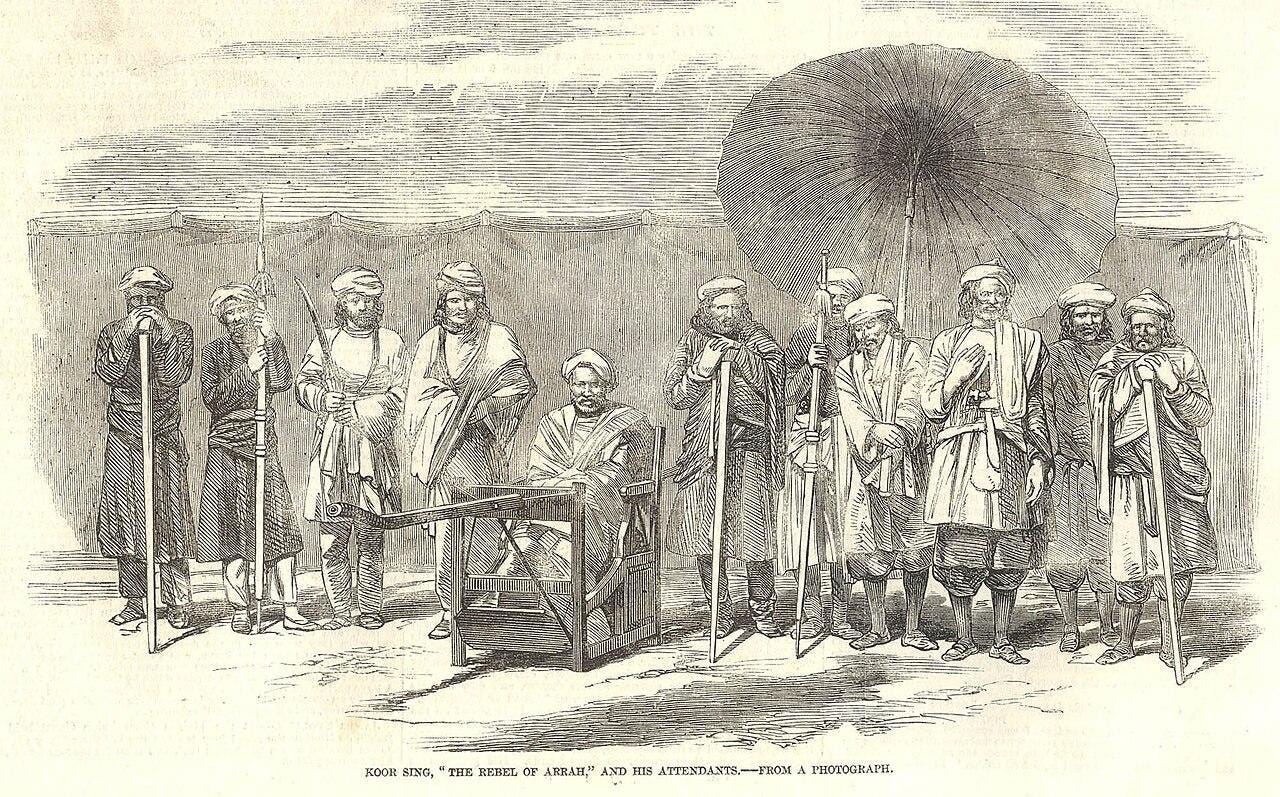
In light of the discontent at Danapur, Kunwar Singh convened a council of his most trusted noblemen, associates and an assortment of officials to discuss the viability of participating in the movement. It was here for the first time that Babu Amar Singh, his youngest sibling, made his disapproval very obvious. Even though the council was divided in its final opinion, by 26 July 1857, Kunwar Singh had assumed charge of the rebels and declared Jagdishpur independent of the Company’s rule. Over the next few days, Amar Singh reportedly remained indifferent to the frantic war preparations that followed.

The Letters He Refused To Write
It was only when the British forces drew too close to Jagdishpur that Kunwar Singh was forced to solicit Amar Singh’s services to pen letters to the Rajas of Tikari, Dumraon and Ramgarh and the Malik of Dalippur, requesting their assistance and urging them to take up arms in the name of kinship against the British. Having already rejected the idea of going to war, Amar Singh was blunt about being handed a somewhat clerical task instead. He simply refused to write those letters, stating those houses lacked the resources, not the intent. Yet, in a rather peculiar turnaround, he concluded the discussion by offering his own services on the battlefield instead.5
As we are about to learn, he wasn’t a big fan of the ‘work from home’ culture.
Clearly, his intent was never under scrutiny. It was perhaps just his awareness of the lack of resources necessary for the mission that framed his initial opinion. As a proud Rajput who had spent years training himself for this day, he found no reason to abstain when the war had already reached his doorstep.
Regardless of his initial disapproval, he was on the battlefield even before the first drop of blood was spilt. It can be argued that unlike most revolutionaries, he ended up laying down his life for a cause he did not even get to choose for himself.
The Warrior Who Foresaw His Fall
What makes Amar Singh’s participation in the rebellion so much more exceptional is that he always had more reasons to abandon Kunwar Singh, or at least remain inconspicuous in his support, than to put everything on the line. The fact that Babu Kunwar Singh and his brothers had their estates legally separated, even in matters of revenue collection (via a Sulehnama, mutual agreement, executed when Amar Singh was still a minor), further made this path of separation from the movement much more viable and natural. There were other noted examples, such as that of the Raja of Dumraon(Present-day Buxar), who chose to remain formally aligned to the Company while repeatedly failing to comply with its efforts to suppress the rebellion. While the separation of estates insulated him from the consequences of Kunwar Singh’s activities, Amar Singh might even have stood a chance to inherit the entire Jagdishpur estate with the white man’s blessings, had he just chosen to stay home. None of those thoughts appears to have crossed his mind even long after Kunwar Singh’s demise.
Amar Singh presumably foresaw a grim end to the path he was setting out on. His initial hesitation was evidently less about the righteousness of the cause and more about the viability of a favourable outcome in the light of their lack of complete preparedness for the challenge ahead.
Numerous contemporary British accounts concur that Kunwar Singh had long been building alliances, saving provisions (six months’ provisions for 20,000 soldiers)6, setting up weapon manufacturing and training and recruiting new soldiers, all in the anticipation of the right moment. When the mutiny broke out due to the cartridge issue, it only accelerated their long-hatched plans. This implies that they were not fully prepared to take on the deeply entrenched Company Administration at the time they plunged into the war. How far were they from their estimated ideal level of preparedness? We will never be able to tell precisely, but evidently in the eyes of Babu Amar Singh, they were far enough from having abandoned the patient wait yet. His hunches were eventually vindicated by history and the formidable British forces.
Jagdishpur In Flames
On 26 July, 1857, Babu Kunwar Singh of Arrah accepted the Dinapur (Danapur) mutineers’ plea to lead their cause and declared war on the Company government7. Three days before his participation, on 23 July 1857, W. Tayler, the Commissioner of Patna, recorded in his official letter to the Secretary to the Government of Bengal,
“Letters, anonymous and authenticated, have frequently reached me charging Baboo Kooer Singh with disaffection and conspiracy. My own knowledge of the Baboo’s honorable and straightforward character, of his loyalty towards the State, and his feeling of personal friendship for myself (a friendship which unlike most natives he never professes when he does not feel it) forbade the supposition; and although in the present eventful days, the wisest calculations have been baffled and the firmest confidences betrayed, so that no absolute trust can be placed in any but Christians, I am still strongly convinced of Kooer Singh’s fealty and good faith.”8
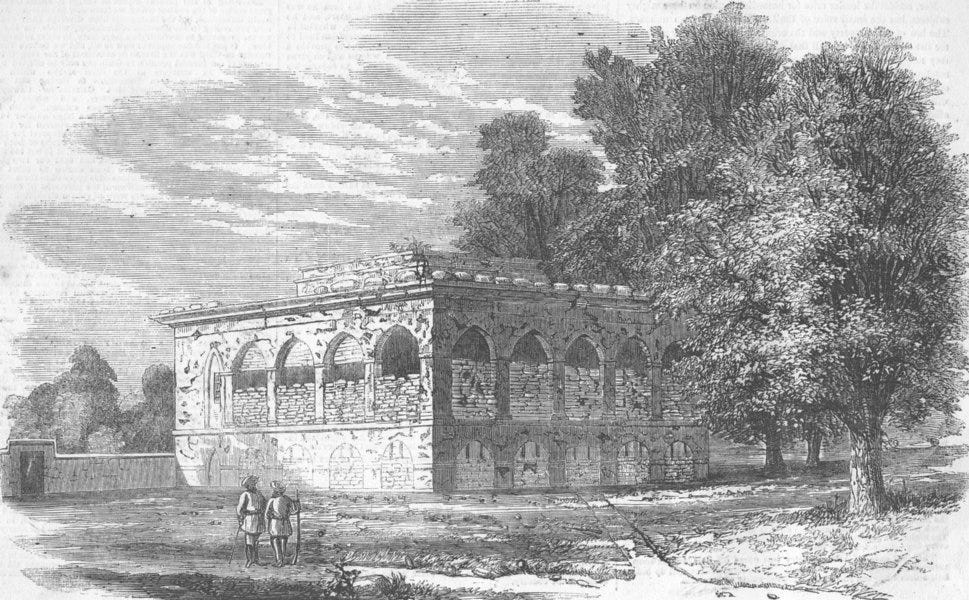

Ironically, the same Tayler whom Kunwar had so thoroughly softened up is remembered by history as a tyrant whose excesses his own countrymen later blamed for hastening the rebellion in the region, at the very least.9
More than anything, Kunwar Singh’s mere participation in the battle came as a huge shock to the local British Administration, and it had almost nothing to do with his ripe old age and everything to do with his unassailable charm, patient diplomacy and incredible guile.
At 80, Kunwar Singh travelled far and wide, inflicting numerous defeats on the British, most famously capturing Azamgarh and declaring it free from British rule, before coming back to Bihar and taking back complete control of Jagdishpur. He passed away within days of his victory, leaving his younger sibling Babu Amar Singh to shoulder the rest of the fight. Although the news of his death might have been music to the ears of the alien government, their agony was still far from over.
Tied to Kunwar Singh by a bond of brotherhood stronger than the estate’s riches, Amar Singh did not simply join the movement as a follower. His leadership in holding Bihar together, even in Kunwar Singh’s lifetime, was crucial to it. As most of the elder sibling’s exploits were to the west of Jagdishpur, in the North-Western Provinces, it was Babu Amar who stayed back and consolidated in Bihar. He dug deep in the Kaimur Hills, often coming down to attack the British supply lines on the Grand Trunk Road and assert his dominance over Jagdishpur.
The Initial Jolt
Major Vincent Eyre (a British artillery officer) happened to be on his way to Allahabad around the time the news was broken to him that Kunwar Singh had declared himself the sovereign head of the country (Jagdishpur). He hurried his troops towards Arrah, and engaged in a fierce battle with Kunwar’s forces at Bibiganj, around 2-3 August, 1857. Kunwar Singh’s party was dealt a heavy blow, and a number of them scattered in different directions, while the remaining few took up their posts, as Kunwar himself moved to his fortified residence in Jagdishpur.10
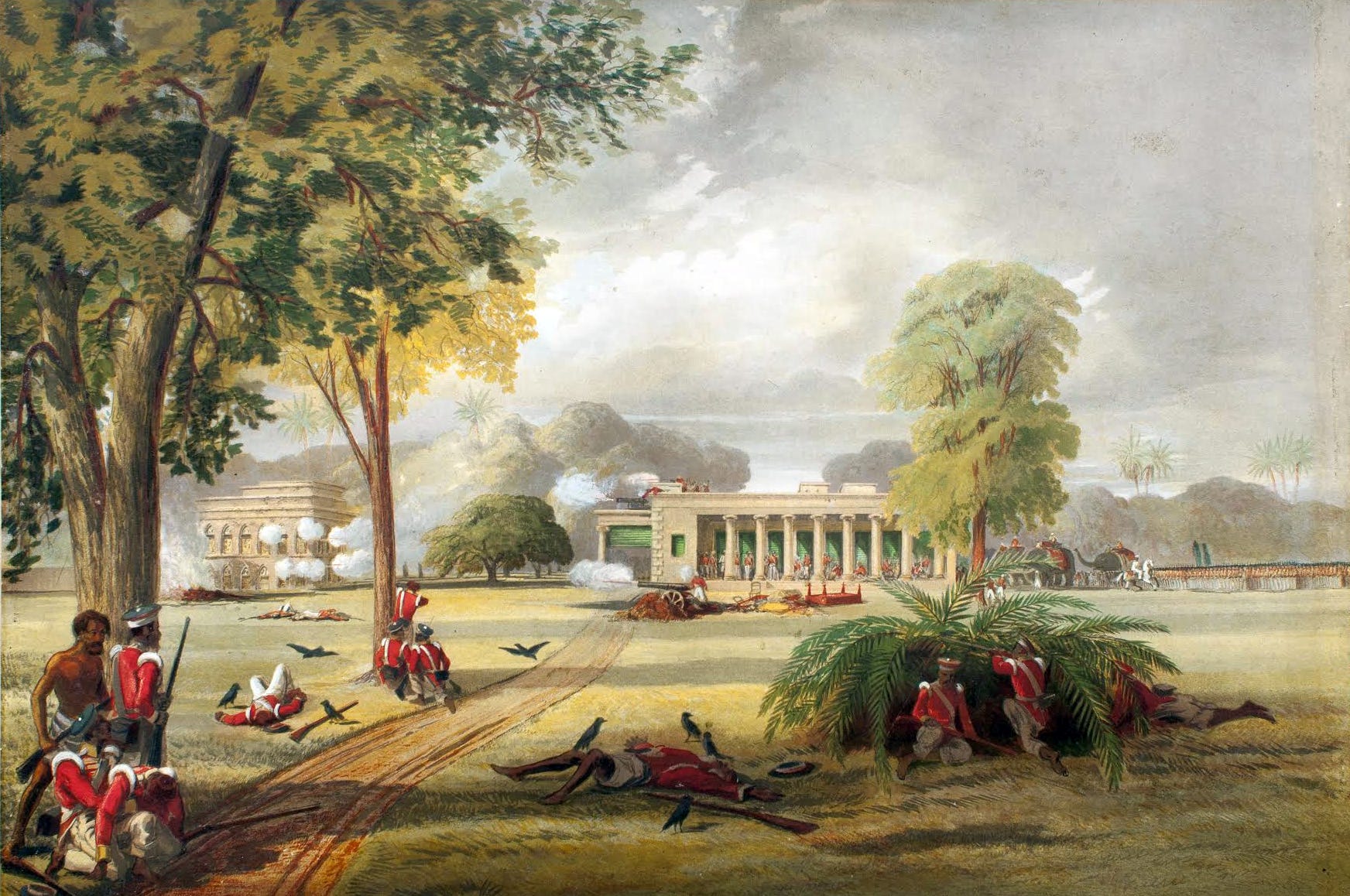

What Major Eyre and the rest of the British leadership had yet to learn was that in the Jagdishpur brothers’ book of guerrilla tactics, a retreat was never the same as defeat. In fact, it was their way of escaping that very predicament of complete decimation. Their retreat was almost always scattered, rather than a bulk, single-file movement. On certain occasions, they even feigned a retreat, only to turn around and catch their adversaries off-guard.
Soon reinforced by 100 of Captain Rattray’s Sikhs and 200 soldiers of the 10th Foot, Eyre defeated Kunwar Singh’s troops at Jagdishpur on 12 August 1857. On 14 August 1857, he sent out a written note from Jagdishpur stating:
“I am destroying the town and preparing to blow up the palace and principal buildings around it. Today I partially destroyed a new Hindu temple on which Koer Singh had recently lavished large sums. I did this because it is known that the Brahmins have instigated him to rebel. Captain L’Estrange reports having destroyed Koer Singh’s new palace at Jitowara; and Lieutenant Jackson, with the volunteers, on their way back to the camp, set fire to the residences of Oomar Singh and Dayal Singh, the two brothers of Koer Singh”.11
Major Eyre had temporarily prevailed. The British thought they were making an example of Jagdishpur, and that in razing its temples and palaces they had broken its spirit too. They had no idea what they had just created.
The Ghost Of The Kaimur Hills
Over the next eight months, Kunwar Singh became the wandering commander, the old lion moving across the Gangetic plain, coordinating with other rebel leaders and fighting battles far from home. Back home, Amar Singh ensured that the British administration in Bihar was harassed just as relentlessly, and without discrimination.
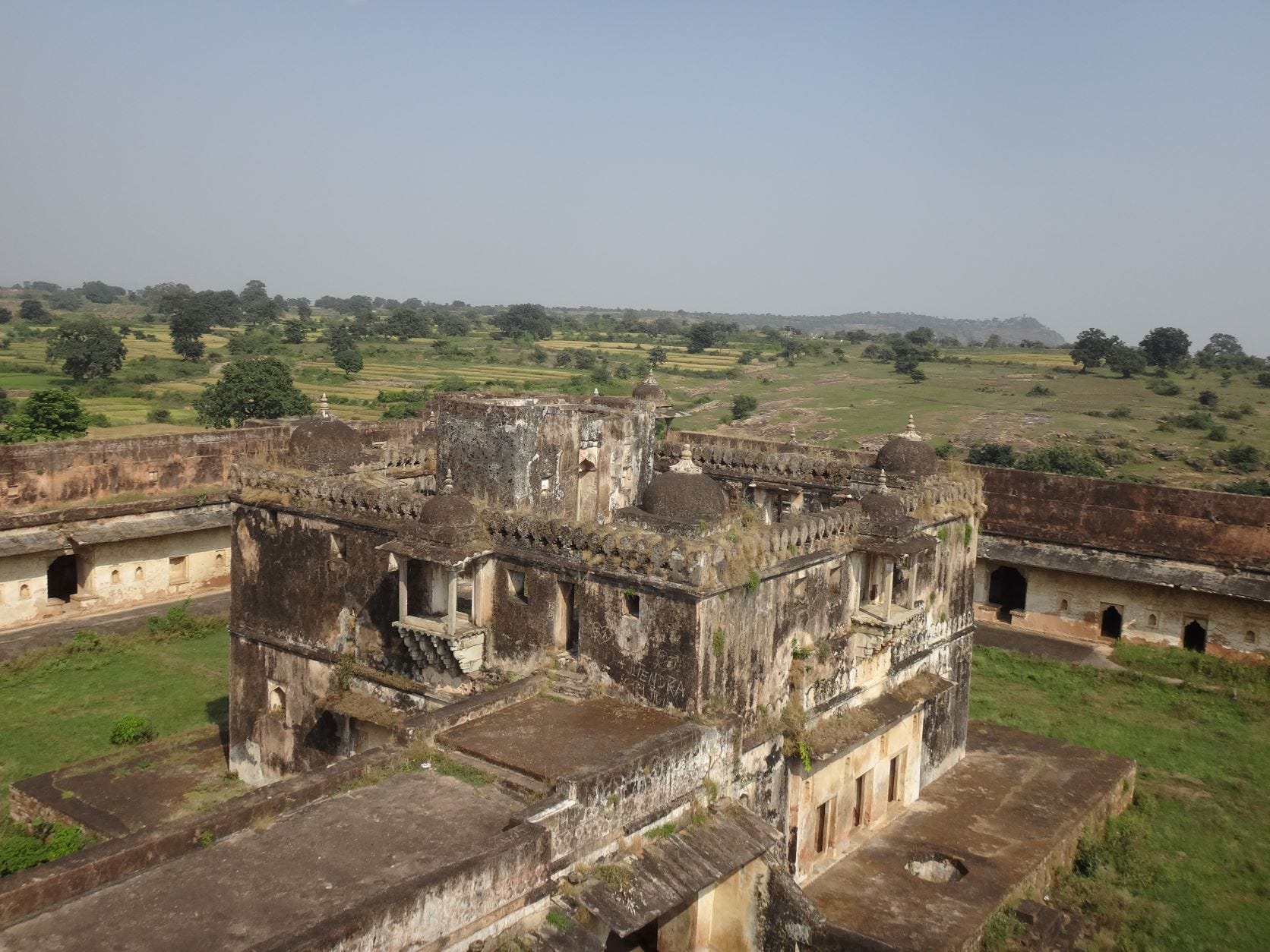
In the days of peace, Amar Singh’s preferred hobby was hunting, and just as Jitaura was Kunwar Singh’s favourite resort, Amar Singh favoured the ruins of Rohtasgarh fort and its vicinity. Renowned for his ability to hunt big beasts, like elephants, lions, wolves, bears, deer and foxes, his guns were now trained on the British commanders from the nearby Kaimur Hills. He came down so heavily with his guerrilla tactics that communication between Gaya and Sasaram was completely disrupted on the Grand Trunk Road.
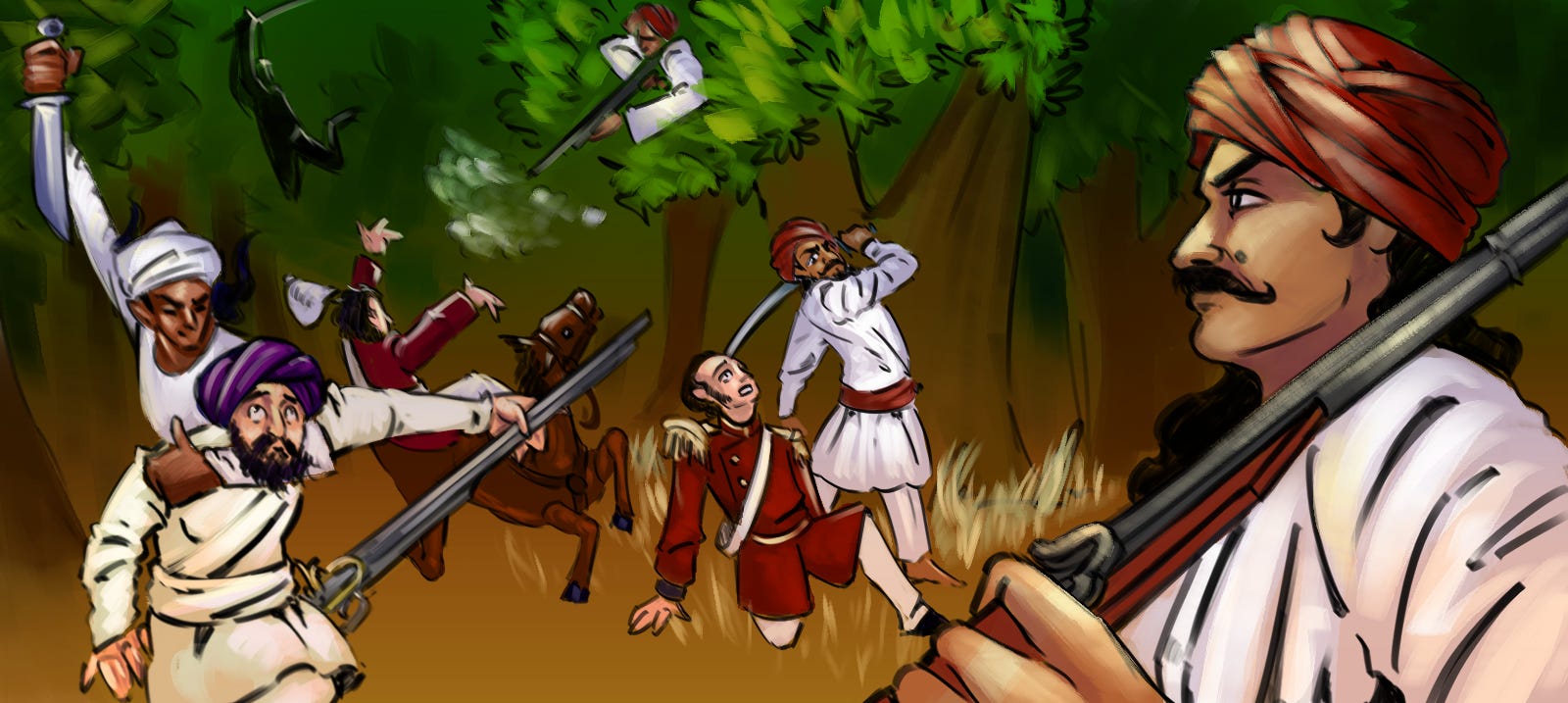
He knew the terrain, he knew the people, and most importantly, he knew how not to get caught.
By the end of August, Amar Singh was at Kuchoohur, barely 12 miles from Sasaram, and a mere rumour of his intentions of returning to Sasaram had the Commissioner of Patna trembling. In his communication to Lieutenant Stanton, the Commissioner confessed his worst fears,
“A very turbulent spirit is still shown by the villagers in the neighbourhood of Arrah and there is no likelihood of this being subdued so long as the people observe that Amur Singh is permitted to retain his position in the district unmolested and so long as they retain a hope of his return to Jagdishpur. If Amur Singh does reoccupy the country to the north of the Trunk Road and is joined by the villagers as he probably will be, the consequences not only to the Arrah but to the Patna and Gaya Districts will be most serious.”
Dak Horses, Telegraph Lines And Silent Villages
Despite huge bounties on his head, and on those of associates such as Nishan Singh and Harekrishna Singh, he kept moving and dodging arrests, finally appearing at Kurredeah, on the Grand Trunk Road, by 16 September. The Grand Trunk Road became his hunting ground. Dak horses disappeared. Telegraph lines were cut. Parties of rebels appeared, attacked and vanished. The villagers at Kaimur’s foothills were often aware of his troops’ movements, but they guarded his secrets with a fierce sense of fidelity.
He cut the British communication and supply lines first, then attacked their columns, proving his tactical superiority over the British forces. Amar Singh was everything a warrior should be, including a name that inspired his followers and shook the very ground beneath his enemies, by mere utterance.
The Bhojpuri Birha tradition keeps Babu Amar Singh’s grip on these parts alive in public memory with these beautiful words:
भैया बिनु सूना भइल जगदिसपुर नगरिया,
अमर सिंह बँधले कमरिया हो रामा।
काँपेला अँगरेज सुनिके अमर सिंह के नाँव,
गोरन के कइले नास हो रामा।
कैमूर के पहाड़िया में छुपि-छुपि लड़ेले,
जैसे लड़ेले शेरवा के छउवा हो रामा।
धन्य-धन्य माई जे अइसन लरिका जँमले,
मरि मिटले देसवा के नाम हो रामा।
जुग-जुग गाई तोहार जसवा भोजपुरिया,
वीर अमर सिंह तोहार नाम हो रामा।
Translation:
Jagdishpur, plunged into silence after losing the elder (Kunwar),But we had Amar Singh buckled up for the fight, oh Rama.
The British tremble when his name is uttered,
He has brought the white man to ruins.
Fighting from the refuge of Kaimur Hills,
Like only a lion’s cub would, oh Rama.
Blessed is the mother who birthed such a braveheart,
Sacrificing himself for the sake of the nation.
For aeons, Bhojpur will sing your glory,
Brave Amar Singh, is your name, oh Rama.
Sepoy Mutiny Or National Insurrection?
In his letter dated 25 September 1858, addressed to AR Young, Secretary to the Government of Bengal, E.A. Samuells, who succeeded W. Tayler as the Commissioner of Patna, communicated his impressions about the movement, calling it “The great Indian rebellion”, while also observing that the “movement in Shahabad had all the dignity of a national revolt, and was supported by many of the minor Zamindars and more or less openly by all the Rajput population of the district.” This is the same movement that the entire British propaganda machinery was simultaneously busy reducing to a mere sepoy mutiny, yet their own documents reveal something much larger at play, at least in the region.
Another contemporary British military officer in India wrote in his narrative:
“The crisis came. At first, apparently, a mere military mutiny, it speedily changed its character, and became a national insurrection. The Rajpoot villages in Bihar, those in the districts of Benares, Azimgarh, Goruckpore, in the entire Doab, comprising the divisions of Allahabad, Cawnpore, Meerut and Agra, in the Provinces of Rohilkhand and Oudh, shook off our rule and declared war against us.” 12
Once again, there were numerous accounts of Kunwar Singh being received with utmost love and reverence, and getting all the material and logistical support possible from locals wherever his army marched in this period. One could always ask, if all of that brotherhood and kinship would still be as vividly on display had Babu Amar Singh broken the chain right at the top? Would people still have rallied behind Babu Kunwar Singh the same way, had his own sibling refused to do so? Would people still have believed as much in Kunwar, had Amar still ruled all or some of Jagdishpur with the blessings of the Company? Would the Company propagandists have let that opportunity go at all?
Thankfully, these questions never arose, and the movement held firm, plainly because the great Babu Amar Singh renounced a kingdom to inherit a war. His sacrifices conveyed efficiently to the masses what the righteous choice was.
Harekrishna Singh: Aide, Emissary And Administrator
To be fair to the wise octogenarian, Babu Kunwar Singh was perhaps equally realistic about what he was galloping into. Yet, we must also consider that he was at an age where waiting for anything but a respectable death would be labelled a childish pursuit. He was conceivably prepared to embrace it too, but just not in the quiet surrender that most people his age would prefer. Not without giving the dream he had long been dreaming a chance to breathe. Who would have empathised with him better than his most trusted aide Harekrishna Singh? Reading the youthful pulse of the old master precisely, he had spoken in favour of a war at the council meeting despite Amar Singh’s objections. It was perhaps for this reason that Kunwar chose Harekrishna Singh to make the journey to Danapur, with the sole intent of taking stock of the situation there, right after this meeting.13
At Danapur, Harekrishna Singh is said to have acted on his own when he chose to inform the mutinous sepoys that he came with a message of Kunwar Singh’s acceptance to lead them on the path of rebellion. These words were enough to excite the thousand-odd rebels into marching back with him to Arrah, where he sent for Kunwar Singh with a message claiming that the rebels were in such an excitable state that they might even loot and ransack Jagdishpur, if he refused to lead them. Considering what had transpired in Meerut Cantonment just months ago, this was almost certainly a plausible outcome. Yet, there was indeed an outside chance that Harekrishna Singh had acted on his own once again, with the intent of pushing his aged master a step closer to his destiny. In another notable possibility, the master could also have possibly contrived this act, together with his assistant, to help justify a rather tough decision. Although that is information known only to these two extraordinary gentlemen, it can be said with great certainty that at least one of these gentlemen badly wanted a war.
Lugard Arrives: April To May 1858
It is now evident that in his dealings with the Company administration, Kunwar Singh wasn’t content merely earning a place at the table. Here, he employed his patience and his rather clever designs to enter into high-stakes dealings with them, with almost a poker-esque flair. He kept his adversaries guessing in peace and in war. Holding his cards close, he managed to save his best hand for the last. His greatest bluff was in losing a hand and surviving just long enough to win his home back. More significantly, it was only after his demise that Amar Singh, his true trump card, was revealed.
Once Kunwar Singh passed away, on 26 April 1858, precisely three days after recapturing Jagdishpur, Amar Singh was rightfully acknowledged as the leader of the movement. Sir Edward Lugard, the sitting Adjutant-General of India, who had served in the Anglo-Afghan War as well as both the Anglo-Sikh Wars, but more significantly had commanded a division in the capture of Lucknow, marched immediately towards Arrah upon receiving the news of Kunwar Singh’s demise, hoping finally to extinguish the rebellion in Bihar.
An Independent Government In Jagdishpur
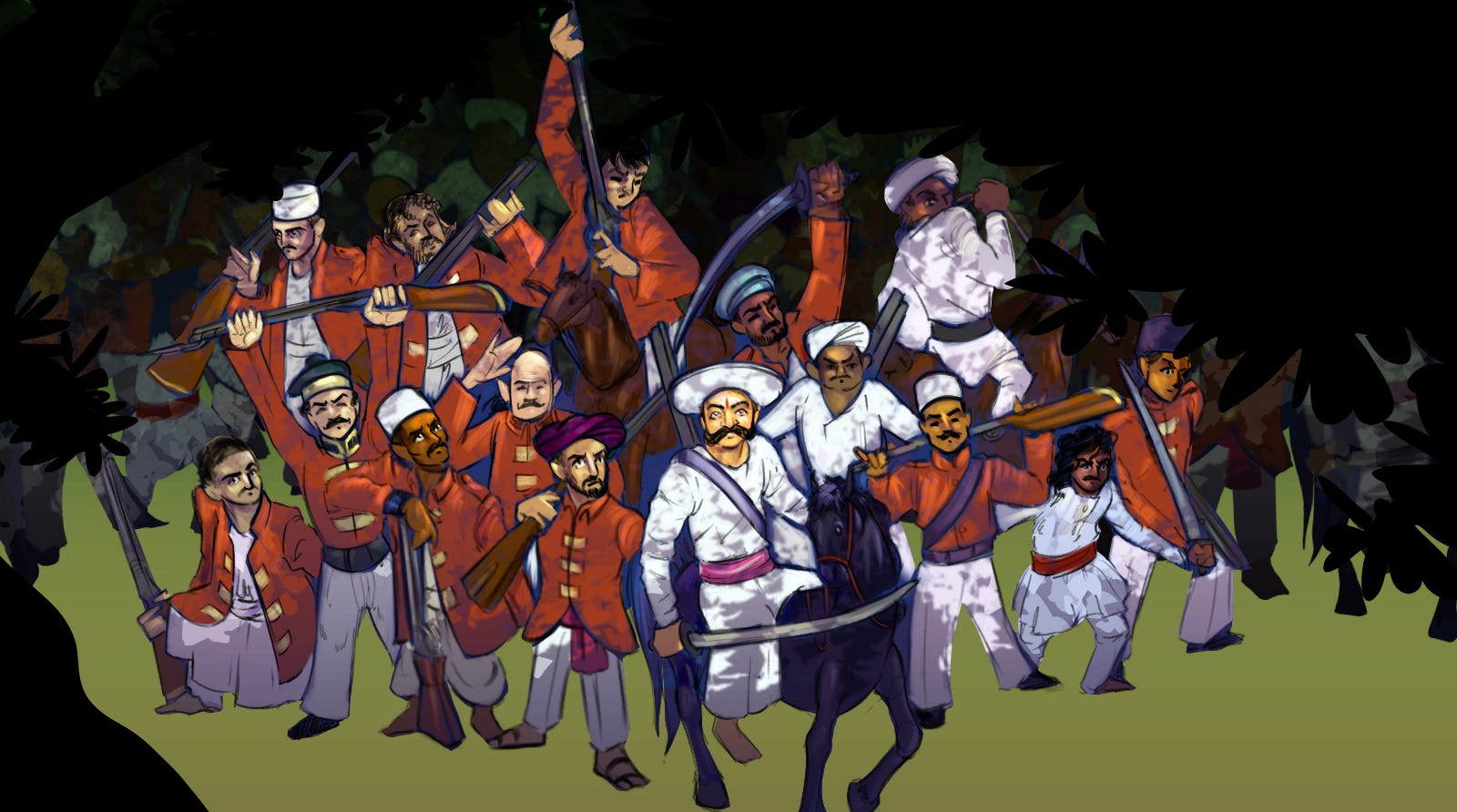
Beginning 5 May 1858, Lugard entered an extended period of repeated skirmishes with Amar Singh’s rebel army. Far from conceding a tame defeat, Amar Singh used this period of extreme violence to run a parallel government in Jagdishpur, with ample help from Harekrishna Singh. In an unprecedented role reversal of sorts, Amar Singh put himself on the battlefront, while elevating Harekrishna Singh to the administrative role, showing how little he desired kingship, as well as his complete disregard for basic human insecurities. In this period, Harekrishna Singh was presiding over courts each day and issuing parwanahs (written orders) in the name of Amar Singh, while the latter chased glory on the battlefield.
Ironically, it was Harekrishna Singh who originally yearned for a war and Amar Singh who advocated against it. Harekrishna Singh was closer to Kunwar in his lifetime, but trusted equally by both the brothers, and whatever new challenge or responsibility they threw at him, he discharged them with valour.
About the key characteristics of the rebel government, the Commissioner of Patna wrote on 30 July, stating,
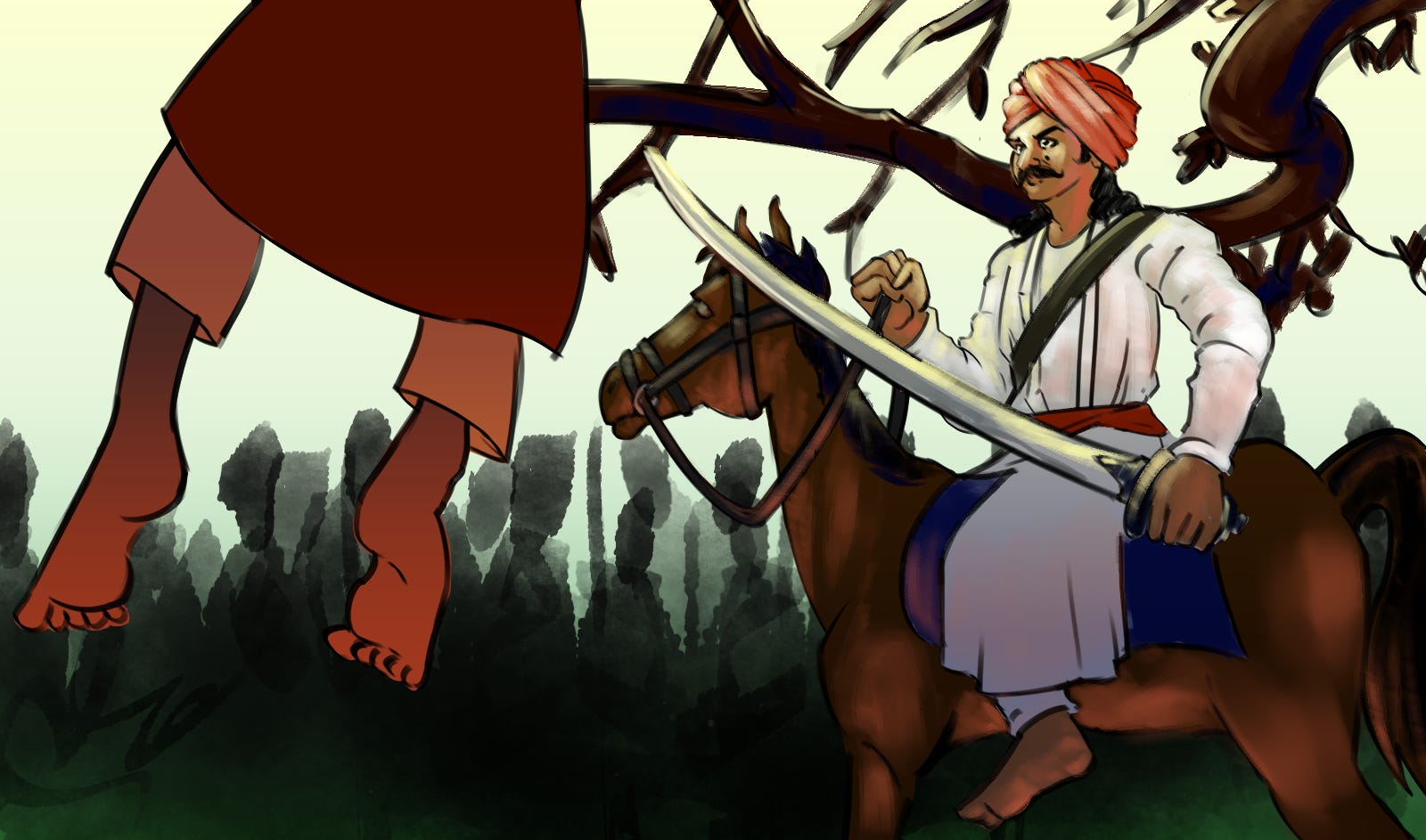
“The one main body of the rebels continues in the neighbourhood of Jugdispore, and ape our Government in the appointment of Commissioners, Judges, and Magistrates. They even copy our revenue system (which some people tell us has produced this rebellion) to the letter and sell all the estates of our friends for arrears of revenues with as much punctuality as the Collector himself could evince. Umur Singh (Amar Singh) hanged a sepoy the other day for the murder of a Bannea (Bania, a grain merchant or a shop-keeper), which shows that the rebels are compelled to conciliate the people by occasionally giving them justice, even when the offending party is one of themselves. Hur Kissen (Hare Krishna) Singh was in fact the head of the Government set up at Jagdishpur under the authority of Amar Singh.”14
The East India Company was no longer just fighting rebels. It was being drained by a rival government. Even British accounts began describing Amar Singh less as a fugitive and more as a rival authority.
Forests That Fought Back
As Amar Singh continued finding success with his guerrilla tactics, the Commissioner of Patna was pushed by Lugard into taking steps towards eliminating the Jungle around Jagdishpur that aided his manoeuvres. On 18 May 1858, he wrote to the Government, “I think it is of great importance that the whole of the jungle should immediately be cleared.” He added tellingly, “If the rebels remain in the Jugdishpore jungle in possession of our guns, baggage, etc., and our troops retire to the distant post… (it) will have all the effect of a defeat…every engine will be set in motion to fan the flame of rebellion in the Patna and Gaya Districts, and the consequences of such agitation may be very serious.” Amar Singh had the most decorated British administrators living their worst nightmare.15
Much of this jungle had been planted under Kunwar Singh’s personal supervision, and he had left hidden pathways inside it, known for the longest time to only a handful of men. Ironically, these were the same jungles where he used to organise hunting parties for the local British Officers, earning their favour and friendship while keeping his designs masterfully concealed.
The British Deserves An Empire
Lugard noted in a letter dated 14 June, 1858 that Amar Singh’s rebels moved with “rapidity and secrecy”. Closing in on the Jungle from all sides, Captain Thomas Rattray (an Army officer) was placed on the west with his Sikhs at Roopsagar, while Lugard stationed himself at Dalippur and Brigadier John Douglas (a British infantry officer) was positioned at Buxar. Yet, with all that precaution in place, on 12 June, Amar Singh managed to return to the jungle, reaching Madanpur, barely four miles south of Captain Rattray’s post at Roopsagar, and even managed to fire a few shots at his camp.
While this incident might have been a small win in the history of Jagdishpur, in the larger Indian perspective, this was merely some Sikhs scuffling with Hindustani (mainland) sepoys, the same way as these sepoys were used to subdue the Sikhs during the Anglo-Sikh wars. As far as the British ranks were concerned, they continued to rule while enduring minor losses. Even in the case of the Jagdishpur brothers, despite being able to outsmart the British on almost all fronts, the one reason the foreigners could not be overcome is perhaps summed up best in eminent historian R.C. Majumdar’s words in praise of their superior diplomacy:
“A race [British] which could successfully employ the sepoys against the Sikhs, and then the Sikhs against the sepoys, the sepoys against the Pathans and Gurkhas, and then the Pathans and Gurkhas against the sepoys, certainly deserves an empire”.
To his adversaries, Amar remained a ghost, moving swiftly across the dense forest patches and striking at will. Like the others before him, Lugard complained to the Chief of Staff in a letter dated 14 June, 1858 that “Every endeavour to obtain information from the people of the district proved in vain”.16 Even as Jagdishpur stood united, India could not. A possible national insurrection, ultimately broke down due to lack of coordination among different regions and identities.
By 17 June, 1858, tired out by Amar Singh’s forest-aided guerrilla tactics, Lugard finally resigned from his post in India and was immediately replaced by Brigadier Douglas. On the same day, the Commissioner of Patna wrote to the Secretary to the Government of Bengal expressing his helplessness, “in what a deplorable state this (Shahabad) district now is and how bold the rebels have become. Notwithstanding that there is now a garrison at Arrah of close on 1,000 men with cavalry and artillery, the rebels approach with impunity within five or six miles of the station.”17
Admitting one of their worst embarrassments yet, the Commissioner of Patna wrote to the Government in Calcutta on 18 June, 1858:
“Our troops are now confined to the stations and the interior of the district of Shahabad, Patna, and Bihar has been abandoned to the rebels…The people of these provinces have for the last six weeks seen a force of 200 men, a considerable portion of which consisted of cavalry and artillery, baffled by a rebel who never appeared to have had above 8 or 9 hundred sepoys with him.”18
In Pursuit Of An Honourable Death
Once the movement started breaking apart, and even Nana Saheb retreated into Nepal, Amar Singh followed him into the Tarai region at the beginning of October 1859, but only with the hope of taking charge of his troops. This move proved fatal as it ultimately led to his capture in the middle of December 1859, at the hands of the forces of Jung Bahadur Rana, Prime Minister of Nepal. He was held briefly at the Gorakhpur Jail, waiting as the British contemplated taking him to trial in Shahabad. The Government of Bengal observed, “in some respects the trial of Ummer (Amar) Singh in his own District would be most exemplary”.
Unfortunately, for everyone involved, Amar Singh fell sick and was taken to Gorakhpur Jail Hospital on 3rd January 1860 and died there two days later, on 5th January.
The Human Beneath The Rebel
For a man who unrelentingly haunted some of the most formidable empire this world has seen, for nearly two years straight, the portrait that survives is strangely human. Amar Singh was a devout Hindu who had the Mahabharata recited to him every night. Though his reading and writing skills were elementary, he had memorised ‘Udirant Prakash’, the family history, in full. Before the war, he did numerous pilgrimages with his wife. In particular, there is documentary proof of his visits to the Hindu temples at Chitrakoot, Rameshwaram, Jagannath Puri, Vindhyachal, Prayag and Kashi. Contemporary accounts describe him as a man of strong physique, fair complexion and in possession of a mole on the right side of his nose.19
What sets his story apart from most other revolutionaries, and even his own brother, is that he did not, by default, romanticise the prospect of war. When the time came, he even hesitated. He calculated, and then he objected. Yet he committed himself to the cause in full. Perhaps courage is not the absence of doubt. Perhaps it is what happens after doubt has had its say.
It was never Amar Singh’s desire to be remembered or validated by future generations. In all probability, he already knew the outcome of the war, and it did not immediately promise a better future for anyone involved. Yet, he marched on relentlessly, only to pursue a virtue that the generations had kept alive. This essay will not end with complaints about the lack of paintings, statues and monuments built in Babu Amar Singh’s name, because in being able to discharge his duties so well, he had already received his reward in his lifetime.
Pranav Pratap Singh is the author of Curry Summer, a travel memoir published by Paper Towns. He holds an MBA from IIM Kashipur, works as a psephologist, and writes on history, demography and anthropology.
Further Readings
Sonker, Amita. “The Contribution of Amar Singh in the Revolt of 1857.” Lucknow Journal of Social Sciences, vol. 5, 2008, pp. 45–49.
Mukherjee, Rudrangshu. Awadh in Revolt, 1857–1858: A Study of Popular Resistance. Oxford University Press, 1984.
Joshi, Puran Chand, ed. Rebellion 1857: A Symposium. People’s Publishing House, 1957.
Sen, Surendra Nath. Eighteen Fifty-Seven. Publications Division, Government of India, 1957.
David, S. (2002). The Indian Mutiny: 1857. Viking.
Datta, K.K.(1957). Biography of Kunwar Singh & Amar Singh. K P Jayaswal Research Institute, Patna. (pp.91-92)
Datta, K.K.(1957). Biography of Kunwar Singh & Amar Singh. K P Jayaswal Research Institute, Patna. (pp.72-73)
Majumdar, R.C.(1957). The Sepoy Mutiny and the Revolt of 1857. Calcutta Oriental Press. (pp. 49-51)
Datta, K.K.(1957). Biography of Kunwar Singh & Amar Singh. K P Jayaswal Research Institute, Patna
Datta, K.K.(1957). Biography of Kunwar Singh & Amar Singh. K P Jayaswal Research Institute, Patna. (pp.104-105)
Malleson G.B. (1896). History of the Indian Mutiny, Vol. I. Longmans, Green and Co. (pp. 79).
Datta, K.K.(1957). Biography of Kunwar Singh & Amar Singh. K P Jayaswal Research Institute, Patna. (pp.89)
Datta, K.K.(1957). Biography of Kunwar Singh & Amar Singh. K P Jayaswal Research Institute, Patna. (pp.90)
Datta, K.K.(1957). Biography of Kunwar Singh & Amar Singh. K P Jayaswal Research Institute, Patna. (pp.116)
Ball, C. (1858). The History of the Indian Mutiny, Vol. II, p. 127. Sir Colin Campbell disapproved of the destruction of the Hindu temple at Jagdishpur by Eyre “under a mistaken view of the duties of a commander at the present crisis”.
Anonymous. (1857). The Mutiny of the Bengal Army. (pp. 53).
Pathak, C.S. (1922) San 1857 ka Gadar ya Sipahi Bidroh ka Itihas
Letter from Commissioner of Patna to the Secretary to the Government of Bengal dated 30 July, 1858
Letter from the Commissioner of Patna to the Secretary to the Government of Bengal, 18 May, 1858.
Lugard’s letter to the Chief of Staff dated 14 June, 1858.
Datta, K.K.(1957). Biography of Kunwar Singh & Amar Singh. K P Jayaswal Research Institute, Patna. (pp.175)
Datta, K.K.(1957). Biography of Kunwar Singh & Amar Singh. K P Jayaswal Research Institute, Patna. (pp.172-173)
Tawarikh-i-Ujjainia, Vol. III (pp. 110).
It was fun working in this. A topic I’ve been carrying with me for a while now.
Great article.. we are working on a tourism documentary on these areas and would love to connect with you. Whats the best way to do it.