

A Hanging Corpse in Madurai
A disfigured and grotesque corpse of an old man lay suspended from the walls of Madurai, inviting relentless, buzzing swarms of flies around its rotting form. The corpse bore the marks of an unimaginable cruelty and torture inflicted upon the helpless old man before his breath was stolen. His flesh had been meticulously flayed from his bones and his organs were hollowed out of its abdomen and crudely stuffed with coarse straw before being roughly stitched back together. Pinned on the city walls like a horrific war trophy, it was tied with a heavy rope and left to swing mercilessly in the air.
Ibn Battuta, who stumbled upon this agonizing spectacle in 1342, recoiled in absolute horror and revulsion. Yet, beneath the flies and the straw lay a terrible truth buried in a long layered history carried by the mutilated body. This helpless skeleton was none other than Vira Ballala III, the last sovereign of the Hoysala Empire, who had perished fighting the Madurai Sultan, Ghiyath-ud-din Shah, during the catastrophic Battle of Kannanur.
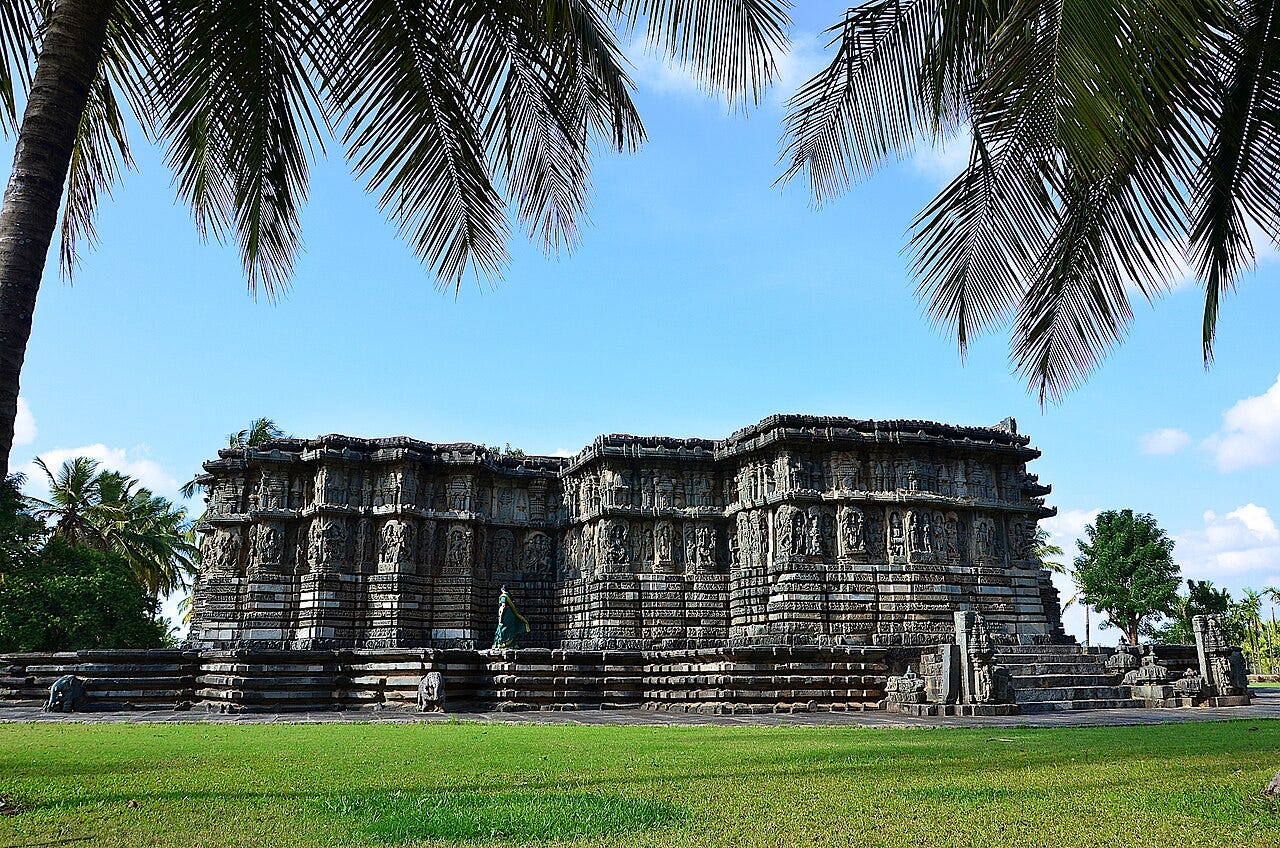
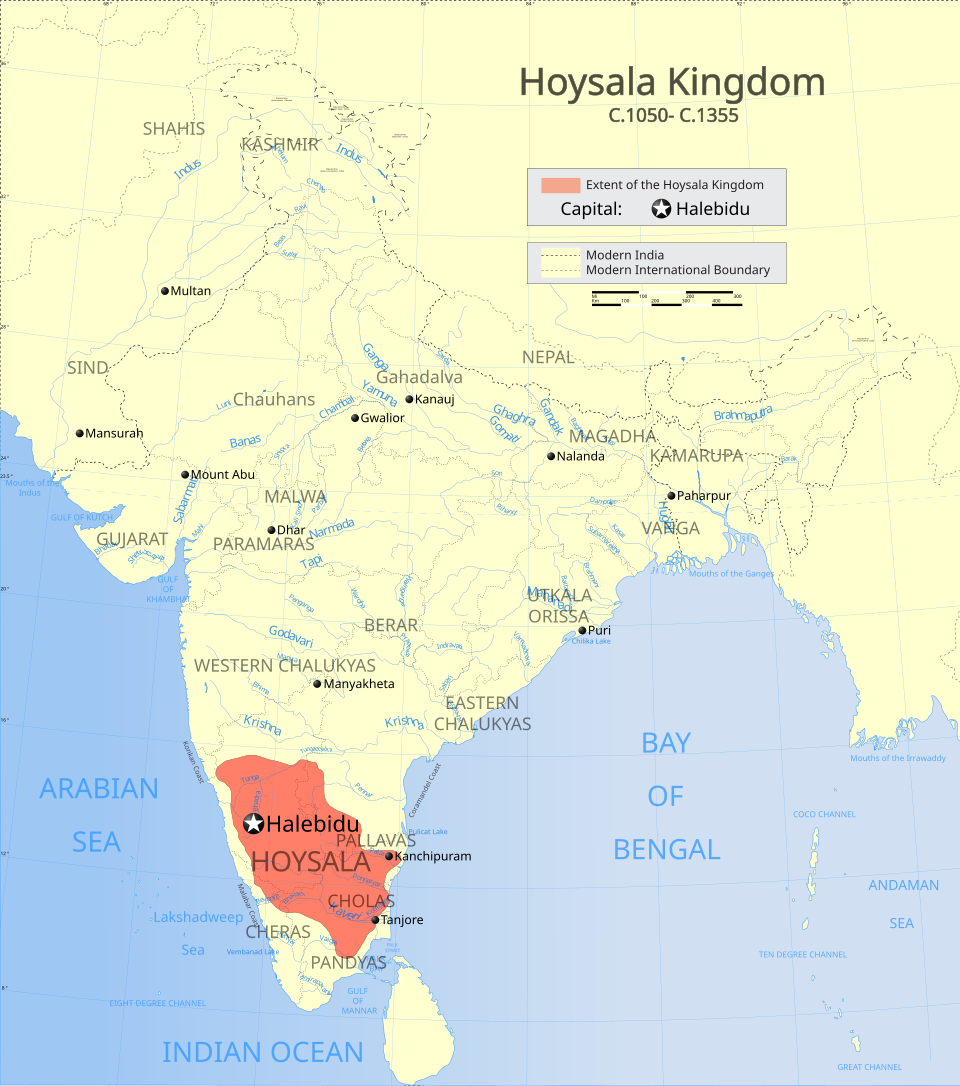
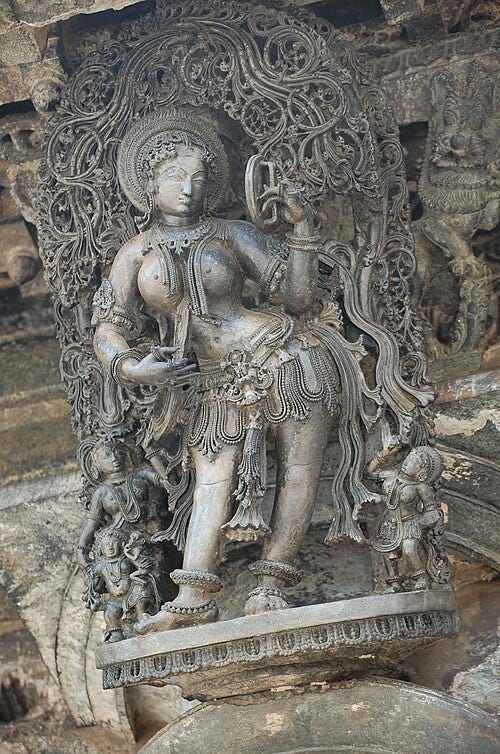
It was a shattering end for a man who belonged to the proud Hoysala dynasty, a royal house that had ruled a majestic realm stretching from the banks of the Krishna River in the north all the way down to the sacred lands of Srirangam in the south during its heydays. Yet the last great monarch of the Hoysalas was denied even a funeral pyre, his body was left hanging instead as a trophy of conquest and a warning to the conquered. The same dynasty that had raised the unrivalled temples of Somnathpura, Belur, and Halebidu, architectural wonders that no neighbouring power could match, failed to save its own king from this fate. This is the story of that fall: How the Hoysalas, for all their splendour, met an adversary sharper and more resolute than themselves, and vanished from the history of peninsular India.
Strike it, Sala!: The Origins
The Hoysalas began as a hill-dwelling group living in the Malenadu region of Karnataka. They rose into prominence during the 10th century as attraction for a settled life in the plains arose in their heart. They started taking control of the plain area, limiting themselves to the region of South Karnataka in their initial days. However, the rustic hill-leaders soon gained prominence over the local farmers and merchants of the plains. As fortune smiled on them, they claimed illustrious descent from the legendary Yadu declaring themselves as belonging to the legendary Yadava race and referred to themselves as “Lords of the excellent city of Dvaravati (Dwaraka)”.
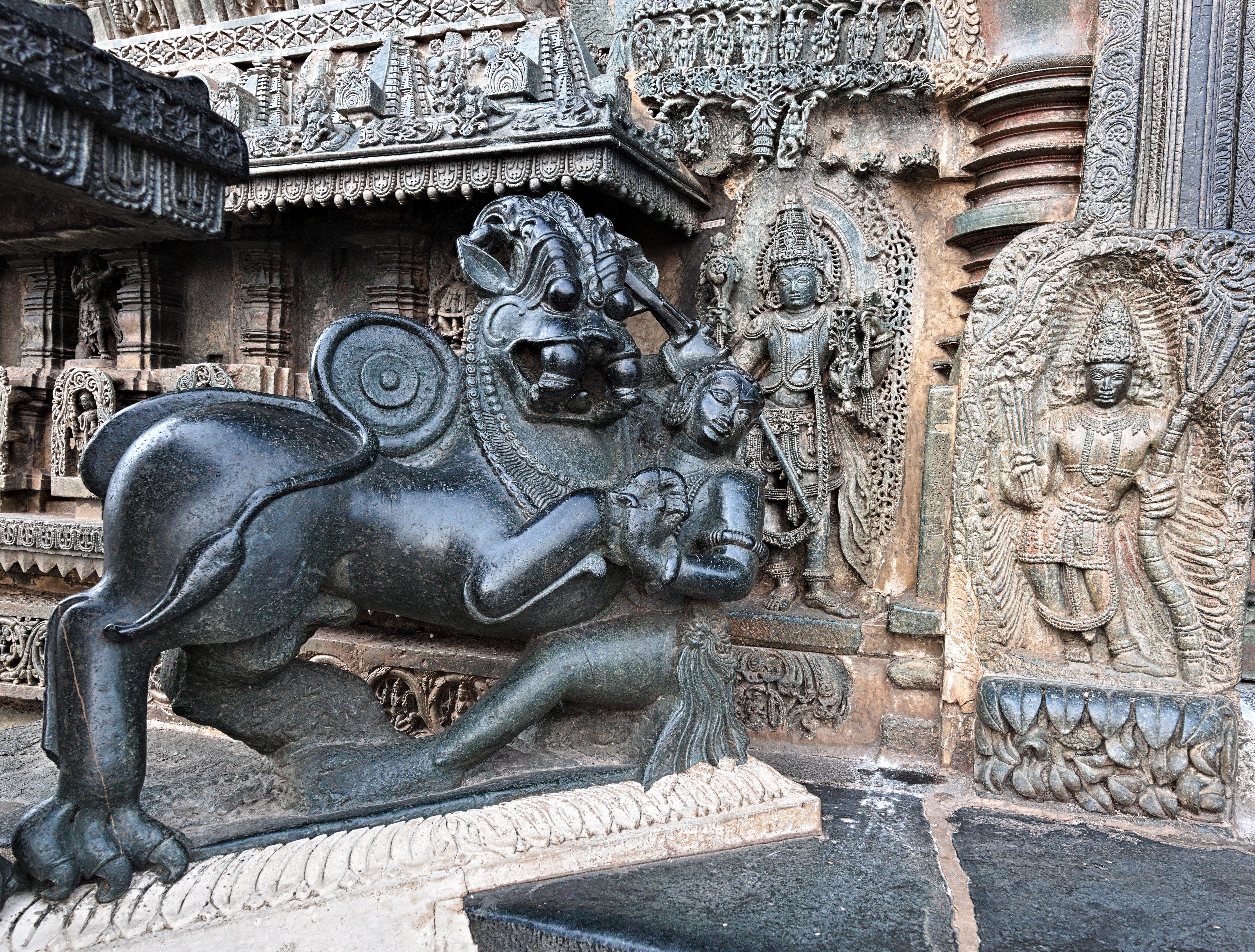
The historical record of the Hoysala’s early phase is obscure but one legend appears in every account of their origin. It went on to become the defining feature of Hoysala temple architecture. The tale is related to a heroic deed of king Sala, believed to be the founder of the dynasty. When the young prince named Sala was studying under a Jain guru at Sosavur (Saśakapura), in the modern day Chikamagalur district in modern-day Karnataka, a fierce tiger attacked the hermitage. The Jain ascetic handed Sala a rod or wand, commanding in Old Kannada: “Hoy, Sala!” (“Strike, Sala!”)1. Sala struck and killed the beast, and the family adopted this as their name and emblem. The sculpture depicting Sala slaying the tiger can be seen in almost every temple built by the Hoysalas.
The Destroyer of Dhara
After the demise of the mighty Rahstrakutas, Western Chalukyas became the dominant power in southern India under their ambitious king Tailapa. The Hoysalas served them as loyal vassals in their early years, fighting to expand their overlords’ frontiers. During these years, one of the major military feats most celebrated in Hoysala records, was sacking of the Paramara capital of Dhara, near Ujjain in modern-day Madhya Pradesh. This daring raid was led by Hoysala prince Ereyanga, son of Vinayaditya, on the orders of Chalukyan monarch Someshvara II who was facing a military threat from his northern neighbour Jayasiṃha, the successor to the celebrated Paramara King Bhoja of Malava.
Ereyanga marched his battle-hardened Kannadiga forces out of the Mysorean plateau traversing the Deccan to reach the Paramara capital of Dhara situated almost 800 miles north of the Hoysala homeland. He successfully laid siege to the fortress, breached its defences and razed it to ground. It was not a small feat as Dhara was considered an almost impregnable fortress and the ultimate “pride of Bhoja”. This spectacular exploit broke the back of the Paramara offensive and provided the absolute foundation for the Hoysala military reputation across the medieval peninsula. This daring exploit was celebrated in several Hoysala inscriptions, the spectacular triumph was echoed in an inscription, thus2:
“Trampling upon the Malava army he showed no kindness to Dhara, and burnt it; then he seized and dragged the Chola, and with violence thoroughly plundered his camp; he, the powerful one, routed the Kalinga and ruined him, so that the Lords of the Quarters heard of the prowess of his own arm: in this manner did King Ereyanga acquire fame.”
Ereyanga was crowned king of Hoysalas after the demise of his father Vinayaditya, but his reign was short-lived and he died in 1102. His death coincided with the final collapse of the old, cautious policy of remaining a passive vassal under the Western Chalukyas. Emboldened by their growing military might, Hoysalas began to entertain the temptation of being an independent and sovereign power. However, the Chalukyas of Kalyani were still strong enough to prevent any such misadventure. They grew increasingly wary of the rising Hoysala power.
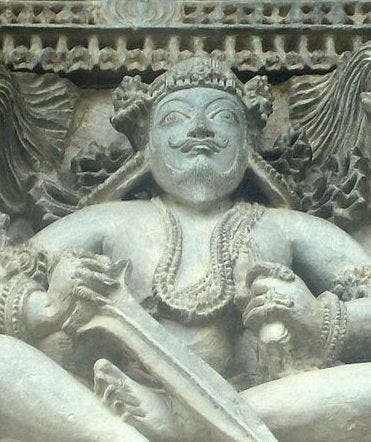
The first attempt to shake off Chalukyan allegiance came under Vishnuvardhana, son of Ereyanga, who ruled the Hoysala territories until 1142. He liberated the southern plateau of the Kuntala country from the centuries-old yoke of the Tamil Cholas in 1116, defeating the Chola forces in battle of Talakad. The Hoysala army completely routed the Chola commander and Vishnuvardhana proudly assumed the title of Talakadu-gonda (“Taker of Talakad”) and minted gold coins celebrating the victory. He marched further east and captured Avani, Kolalapura (Kolar), and Nangali expanding the Hoysala frontier. It appeared that the Hoysalas were now formidable enough to assert their complete sovereignty.
However, with the death of Vishnuvardhana, Hoysala’s ambitions were plagued by passivity and dejection. The new monarch, Narasimha I, lacked the military foresight required to carry forward his father’s legacy. His reign was a deeply disappointing period marked by internal unrest, feebleness, and deference. Naramsimha’s son, Vira Ballala II, was so annoyed by his father’s meekness that he launched a rebellion against him in 1173. He raised a massive independent militia, marched on the capital, and forced his aged father to abdicate.
The Refuge of the Entire Earth
The reign of Vira Ballala II was arguably the golden period for the Hoysala dynasty. He played a patient game of diplomacy with the Chalukyas. When the last Chalukyan monarch Someshwara IV proved entirely incompetent and feeble, the Maratha dynasty of the Sevunas (Yadavas of Devagiri in modern day Maharashtra), who were earlier vassals to the Chalukyas, threw off the vassalage and annexed their capital, driving the weak Emperor into permanent retirement.
The decline of Chalukyas proved to be a boon for Hoysalas, but they were soon threatened by the mighty Yadavas of Devagiri, under their king Bhillama V, who sought to claim sovereignty over the Kuntala country. Bhillama marched his large army towards the Tungbhadra river to seal off the northern Karnataka region. Ballala II marched north to meet them which led to a pitched battle between two former vassals of the Chalukyas near the village of Soratur, in Gadag district. The Hoysala forces completely crushed the Yadavas, and Ballala II pursued the retreating yadava general all the way till Lokkingundi, in Gadag district. Following this triumph, Ballala II crowned himself as sovereign of the independent Hoysala empire and assumed a grand title befitting an independent Emperor: Samasta-Bhuvanāśraya (“Refuge of the Entire Earth”).3 He established Dwarasamudra as the undisputed capital of the Karnataka Empire, asserting supreme rule over the entire territory spanning from the Arabian Sea across to the Raichur doab, with the Krishna River serving as his recognized northern imperial boundary.
A Kingdom Divided
The rising fortunes of the dynasty fell into slumber with the death of Vira Ballala II. The declining Chola power enticed the Hoysalas towards the Tamil plains, where they began meddling in the bitter rivalries between Cholas and Pandyas, often providing military support to the former. The Hoysala king, Someshwara, found himself so drawn to his Tamil territories that he established a new capital at Kannanur, in Tiruchirapalli district. Before his death, he divided his vast kingdom between his two sons. The Southern/Eastern Kingdom centered around Kannanur, comprising Tamil Plains was given to his son Ramanatha. Meanwhile, the traditional home-lands of the Hoysalas, governed from the old capital of Dwarasamudra, was given to his other son Narasimha III.
The division proved catastrophic for the Hoysala dynasty, triggering a prolonged civil war among the two brothers. The conflict took a toll on the empire’s military strength, prompting several ambitious chieftains to launch open rebellions. The reign of Narasimha III was marked by gradual rupture of the Hoysala authority. He died in September 1291, passing a fractured and economically exhausted kingdom to his 28-year-old son, Vira Ballala III.
Vira Ballala III, the protagonist of our story, was a youthful and resilient king who achieved the reunification of his empire. He united the Tamil plains of the Hoysalas with their ancestral region centred at Dwarasamudra without a bloody confrontation in 1301. Ballala III must have felt an immense sense of pride in this feat, perhaps believing that the glorious days of the Hoysala dynasty were finally returning. However, little did he realize that the ultimate fate of his kingdom was already being decided by a rapidly changing political landscape far to the north in Delhi.
Coming of the Storm
The new Sultan of Delhi, Alauddin Khalji had raided the Devagiri(present-day Daulatabad in Maharashtra) kingdom in 1296, acquiring enormous wealth that ultimately helped him to overthrow his aged uncle and crown himself emperor. He was informed that the southern kingdoms had accumulated vast fortunes within their temples and palaces. He ordered his trusted slave general, Malik Kafur, to launch an invasion against the Yadavas of Devagiri. Malik Kafur crushed the Yadavas and laid their country to waste, gaining enormous wealth from the defeated monarch. He again returned to Southern India in 1310, this time striking the Kakatiyas of Warangal. After a prolonged siege, the Kakatiyas(present-day Telangana), led by Pratap Rudra, finally submitted to the might of Khaljis. He surrendered his entire accumulated ancestral treasury, 100 strong war-elephants, 12,000 horses, and agreed to transmit a heavy annual tribute (Jizya) to Delhi. Malik Kafur once again marched back north with an immense booty laden on hundreds of camels.
Following the subjugation of Yadavas of Devagiri and Kakatiyas of Warangal, the Hoysalas remained the only dominant power in southern India that had not yet encountered the Khalji menace. The northern borders of the Hoysalas kingdom were unprotected and even after the fall of their neighbours Vira Ballala III failed to make any adequate preparation for the defence of his capital. He seemed to be unaware of the developments taking place in his vicinity and made no efforts to enhance either his strategic intelligence or defence. The inevitable campaign was about to come. Alauddin ordered Malik Kafur to once again march into the deep south to strip the independent Hindu kingdoms of their legendary temple wealth.
At this precise juncture, the Hoysala Emperor Vira Ballala III had marched his main army south into the Tamil plains to exploit a bloody civil war raging between the Pandya brothers, Sundara and Vira Pandya. In doing so, he displayed clear military ineptitude and was caught completely off guard. Upon hearing that Malik Kafur was marching towards Dwarasamudra, he immediately rushed back towards his capital, but it was too late. Though Ballala III managed to reach his capital in time, his main army was still stationed faraway in the Tamil plains. After a rapid 12-day journey from Devagiri, Malik Kafur reached Dwarasamudra on 26 February, 1311. He promptly besieged the local fort which was surrounded by a large protective water body. Ballala’s officers urged him to put up a fight, but the king, upon learning that the invading Muslim army had already subdued every other monarch on his frontier, decided to opt for diplomacy.
Spare My Janeu
Ballala was left with no viable choice but to surrender, knowing that resistance would mean the trampling of his temples and the potential extinction of the imperial family. Helpless, he sent his ambassador to the Muslim camp offering submission. Malik Kafur offered few terms to the Hoysalas king: they could accept Islam, or they could pay a tribute (Jizya) under the protection of the state (zimmah). If they accepted neither of these choices, they would be killed. Mortified by the idea of abandoning the faith of his ancestors, Ballala agreed to pay all his accumulated wealth and an annual tribute to the Muslim monarch. The old king, who was now nearing 50 years of age, spoke meekly to Malik Kafur, “I will keep nothing except my Hindu faith and the sacred thread (zunnar), which I wear round my body.”4 To ratify the peace treaty, son of Vira Ballala traveled to Delhi. Alauddin treated the Hoysala crown prince with leniency and returned him with robes of honour in 1313.
The primary objective of Malik Kafur was completed, he left Dwarasamudra and marched further south to Malabar, but the fate of Hoysalas was effectively sealed. This sudden raid produced abject terror among all Hindu kingdoms in southern India. Such incursions became frequent, and succeeding muslim monarchs continually crossed the Vindhyas to replenish their depleted coffers. The Hoysalas, like their neighbours, were unable to face the wrath of mobile Muslim cavalry that danced down from Delhi time and again. The obsolete defence techniques and the geographical advantage could no longer be used to protect the rich domains of the south.
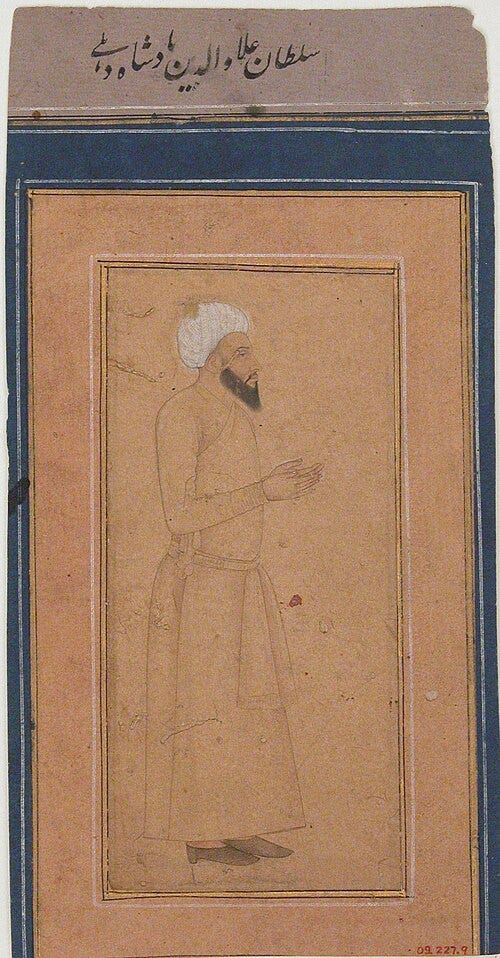
The house of Khaljis fell into great confusion after the death of Alauddin, and for some years, the troublesome raids into southern India ceased. Veer Ballala III utilized this opportunity to rebuild his capital which had faced destruction during the siege in 1311, and dedicated himself to restoring law and order throughout his kingdom. He may have believed that the northern menace was drawing to a close, but this was far from the case.
The Tughlaqs, who rose into prominence after the fall of Khaljis, could not afford to lose the lucrative wealth that Southern India promised. Muhammad bin Tughlaq ascended the throne of Delhi in 1325 and fundamentally altered the policy that Alauddin had previously maintained toward the southern peninsula. Unlike the Khaljis, who were content to leave the southern kingdoms in possession of their dominions so long as they acknowledged the suzerainty of Delhi, Tughlaq followed the policy of exterminating Hindu rule in the south. He annexed Devagiri completely and renamed it to Daulatabad. He also conquered Warangal and got rid of the Kakatiya rule bringing the Telangana region under the direct administration of Delhi. The Hoysalas remained the only prominent Hindu power left in the south that had not been entirely wiped, though considerably weakened by recurring raids.
The Skin of a Rebel
Southern India was in a state of utter chaos and tumult by this time. Muhammad bin Tughlaq had established several Muslim garrisons in all prominent cities of the region. Veer Ballala III, who was over 60 by then, must have been thoroughly exhausted as he was constantly changing his location to save himself from the imperial wrath. He exercised caution, but he nevertheless was caught amidst a political storm that directly embroiled him with the Tughlaq sultan. In 1326–27, Malik Bahadur Gurshasp, a high-ranking officer in the army of Delhi, broke into open rebellion against Sultan Muḥammad bin Tughluq. After being soundly defeated by the Sultan’s general, Khwaja Jahan, Gurshasp fled southwards across the Tungabhadra River to the mountain state of Kampli, located in northern Karnataka, where Kampiladeva received him with open arms and granted him political asylum. The Sultan’s imperial army swiftly pursued the rebel, completely investing the royal forces at the strategic hill-fortress of Kummata. Recognizing that his garrison was on the verge of starvation, the fiercely honourable Kampiladeva ordered the palace women to commit sati and arranged for Gurshasp to be conveyed via a secret route to the Hoysala court, assuring him that King Vira Ballala III would protect him.
Kampiladeva then rushed out into the battlefield to perish heroically, and his historic fortress was entirely demolished by the imperial forces. When the fugitive Gurshasp arrived at the Hoysala court, Vira Ballala III was too terrified of the overwhelming destructive power of the Tughluq army to assume the dangerous responsibility of keeping him. He knew that if he chose to offer refuge to the rebels, his clan would face complete annihilation. He arrested Gurshasp and returned him in chains to the advancing Tughlaq general. Thus betrayed, the captive Gurshasp was escorted back to Delhi where he met a ghastly and brutal end. He was flayed alive, his skin was stuffed with straw to be paraded across the provinces, and his cooked flesh was served to his own traumatized wife and children.
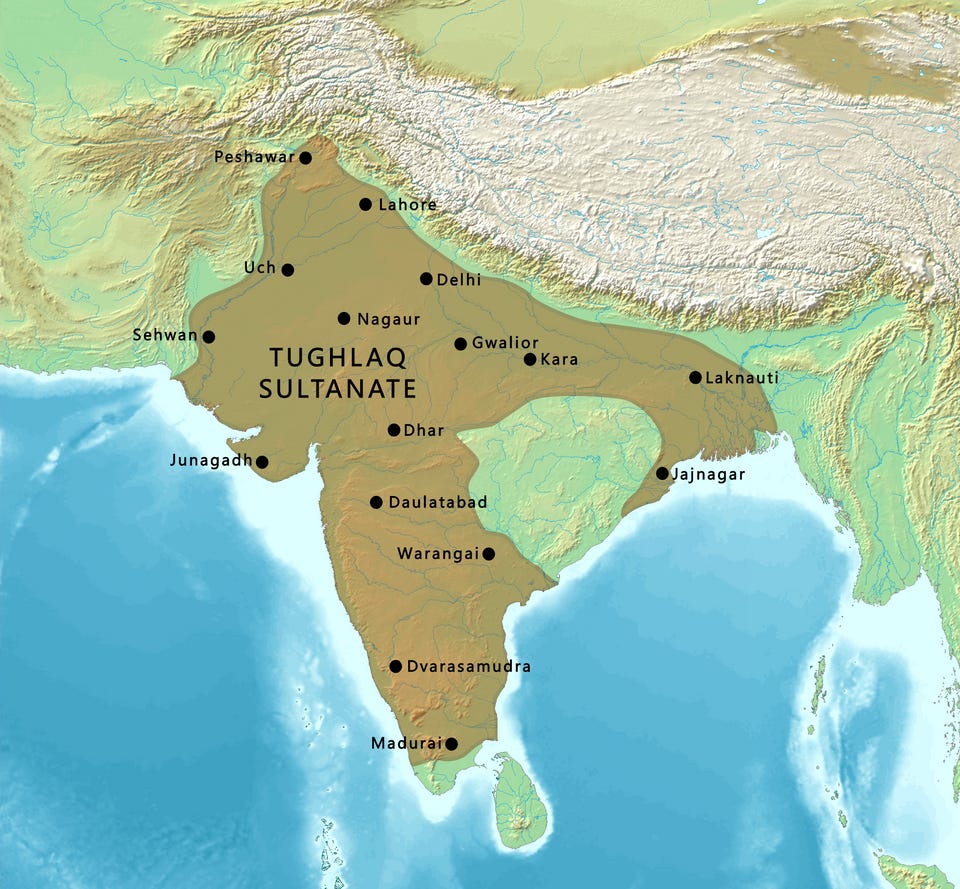
The cruel actions of Muhammad bin Tughlaq deeply terrorized his own governors, ultimately backfiring as rebellions broke out in several of his distant provinces. The powerful Muslim governor of Malabar Jalaluddin Ahsan Shah, revolted in 1335 and established the Madurai Sultanate as an independent Muslim power in the deep south. Exploiting the vast, six-month traveling distance from Delhi and the domestic distractions plaguing the Tughlaq central government, Ahsan Shah established himself at Madurai and began ruling the southernmost parts of Tamil land. This expansion brought him into direct, inevitable confrontation with the Hoysala ruler Vira Ballala III, who still controlled large portions of northern Tamil Nadu.
The Final Struggle
Ballala saw a final hope to revive the fortune of his illustrious lineage, he started making arrangements to completely banish the muslim yoke from southern India. Repeated destructive Tughluq invasions left the ancestral capital of Dvarasamudra heavily fractured and ruined. The presence of a strong Muslim garrison in Maharashtra prevented him from any northward expansion. Though now nearing eighty years of age, Ballala still dreamt of recapturing the golden days of his dynasty. He decided to leave his ancestral capital and shifted to Tiruvannamalai, in Tamil Nadu, to deal with the growing power of the Madurai Sultanate. He started making extensive military preparations to prepare for a final struggle with the Madurai Sultan. Ballala had lived a long and full life, witnessing the sudden upheavals that had taken southern India by surprise. He must have cherished the memories of his ancestors and heard stories of the great exploits of Hoysala king Ballala II. The enduring prestige of his clan was motivating him to undertake a major military expedition at the age of eighty.
Ibn Batutta provides us with a vivid description of the confrontation between Veer Ballala III and the Madurai Sultan Ghiyath-ud-din Shah, as he visited Madurai shortly after the battle. He informs us that Veera Ballala Deva laid siege to the fortress of Cobban (Koppam), one of the grandest and strongest positions the Madurai Sultanate held on the Coromandel Coast. His objective was to retake the entire coastal area from the Sultanate. Hoysala’s army heavily outnumbered the Muslim garrison inside the fort and the victory appeared well within their reach.
He is the Hindu King!
Ballala held the siege tenaciously for ten months and ultimately the garrison’s provisions had dwindled to fourteen days’ supply. The besieged defenders wrote desperately to Sultan Ghiyath-ud-din, pleading for reinforcements. Ballala, sensing their desperation, offered them a truce. He promised a safe conduct out of the town for the Muslim garrison in exchange for the peaceful surrender of the fort, granting them a duration of two weeks to consider the proposal. The besieged soldiers referred the terms of the truce to the sultan at Madurai through a letter. The letter was read out and the Muslim soldiers wept after knowing the hardships faced by their brethren at the hand of Balalla. They knew that if Ballala succeeded in capturing the fort, he would soon march upon Madurai itself. They resolved to sacrifice their lives for victory and marched swiftly toward the fortress of Koppam near Kannanur.
Meanwhile, Ballala’s vast military camp lay carefree during their afternoon rest, having sent their horses out to graze. The Hoysala soldiers stumbled out in disorder after seeing the massive muslim army advancing toward them. They mistaken the imperial army for regular robbers. The Hoysala army was quickly overwhelmed, and chaos prevailed throughout the camp as soldiers fled to save their lives. When the Madurai Sultan himself arrived at the vanguard of his force, the Hoysala army sustained the worst defeat in its history.
Veer Balalla III attempted to mount his horse and escape, but Nasiruddin, the Sultan’s nephew, overtook him and would have killed him on the spot, not knowing who he was. Perhaps such a swift end would have been fortunate for the old king. Instead, a slave yelled out: “He is the Hindu King!”5. Ballala was taken alive to Ghiyath-ud-din who received him with apparent consideration and promised his release. However, the cruel Sultan had other motives. After extorting the king’s remaining wealth, elephants and horses, the Sultan had him killed and flayed. His skin was stuffed with straw and the old king was hung upon the walls of Madurai where Ibn Battuta later saw it suspended.
The Father of Shiva
Thus ended the illustrious house of Hoysalas, a dynasty once renowned for its immense wealth and architectural splendour. Veer Ballala III was survived by his son, who ruled for a short and turbulent reign, but the execution of Ballala III dealt the ultimate fatal blow to the Hoysalas. They would never recover from this shock. Today, they are remembered primarily for their magnificent temples that continue to amaze visitors, though few are aware of the tragic fate that befell the last monarch of the family that built those sacred shrines.
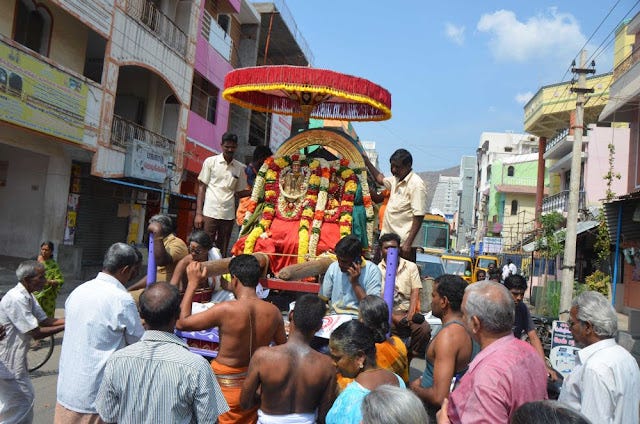
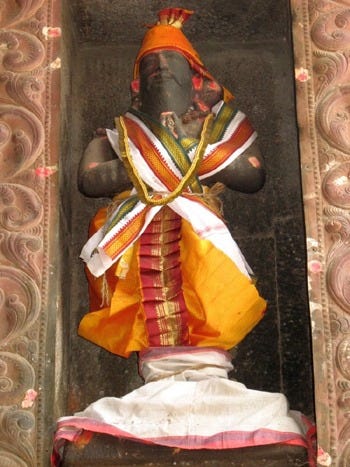
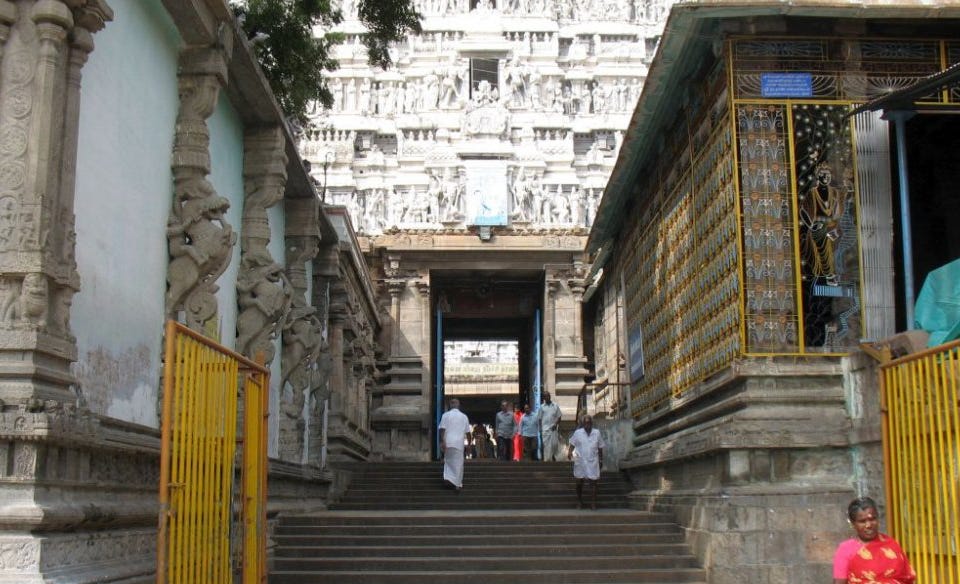
Yet, even after several centuries, King Ballala still lingers in the popular memory of the people through architecture and rituals. Veera Ballala III built the Vallala Maharaja Gopuram, an ornamental gateway, between 1328 and 1331 CE in Arunachaleshwar Temple in Thiruvannmallai. A statue of him still stands inside that gateway and flowers are offered to the great king every day. This is a remarkable instance of a medieval warrior-king receiving devotional honour.
He survived in the legendary imagination that still honours him in the environs of Thiruvannmallai. The Arunachala Puranam, composed two centuries after his death, tells that the ageing king, victorious in a hundred battles yet troubled by the absence of a worthy heir, was visited by a wandering ascetic who was Siva himself in disguise. The god, moved by his devotion, appeared briefly as an infant in the queen’s arms before vanishing and promised him: “I myself became your son. Hence, at the time of your death, I will perform the vedic ritual for you.” It is a vow the temple has never allowed to lapse. Every year, in the month of Masi (February), the priests of the Arunachaleswara Temple still gather to announce anew the death of King Vallalan, and his image is borne in procession to the village of Pallikonda Pattu, where Lord Shiva himself had once presided over his funeral rites.
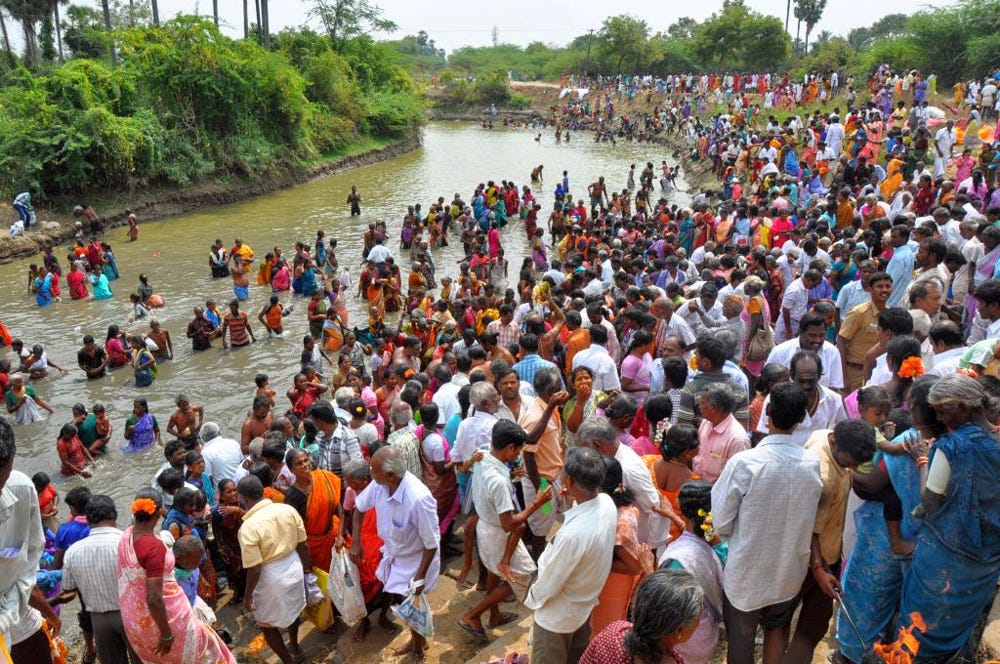
Nearly seven centuries after his flayed body hung from the walls of Madurai, the warrior-king who defied sultanates and held the dharma against the tide of empire has not been reduced to an inscription on stone. He lives in our long memory as a king so profoundly beloved that Shiva himself fulfils his ancient promise year after year, performing a father’s rites, honouring the fallen monarch amidst the same mountains and temples he died to protect.
Acknowledgement note: I am grateful to Dr. Jay Vardhan Singh, PhD in Ancient Indian History from Jawaharlal Nehru University, for his generous help in locating valuable sources on the Hoysala dynasty. His insights and fascinating anecdotes on the expansion of Muslim rule into the Deep South added considerable depth and richness to this article.
━━━━⊱⋆⊰━━━━
Pushkar Chaudhary is from Bihar, India. He is currently pursuing M.A. in Persian Language from Jawaharlal Nehru University, New Delhi. He takes a keen interest in Indo-Persian literature, socio-religious movements, identity formation, and Indic historical narratives. He has built a substantial body of research grounded in primary sources, archival study, and multilingual scholarship across Hindi, English, Urdu, and Persian.
Further Readings
South India and her Muhammadan Invaders by S Krishnaswami Aiyangar (1921)
The Early Muslim Expansion in South India by N Venkataramanyya (1942)
The Hoysalas: A Medieval Indian Royal Family by J Duncan M Derrett (1957)
The Hoysala Vamsha by William Coelho (1949)
Karnataka through the Ages by RR Diwakar (1968)
The Hoysala Dynasty by B Sheikh Ali (1972)
Khazainul Futuh, translated with notes by Muhammad Habib (1931)
History of Khaljis by Kishori Sharan Lal (1950)
History of the Rise of Mohamedan Power in India by John Briggs (1829)
The Rehla of Ibn Batutta, translated by Mahdi Husain (1953)
Footnotes
J. Duncan M. Derrett, The Hoysalas: A Medieval Indian Royal Family (London: Oxford University Press, 1957), pg 15.
J. Duncan M. Derrett, The Hoysalas: A Medieval Indian Royal Family (London: Oxford University Press, 1957), pg 29.
J. Duncan M. Derrett, The Hoysalas: A Medieval Indian Royal Family (London: Oxford University Press, 1957), pg 95.
Muhammad Habib, trans., The Campaigns of Ala’u’d-din Khilji Being the Khaza’inul Futuh (Treasures of Victory) of Hazrat Amir Khusrau of Delhi (Bombay: D. B. Taraporewala, Sons & Co., 1931), pg 91–92.
S. Krishnaswami Aiyangar, South India and Her Muhammadan Invaders (London: Oxford University Press, 1921), pg 239.
An interesting question to ask would be, who really won in the end? The invaders who came, conquered and killed, they may be remembered in dead academic interactions but not in any community memory, Or the king who may have lost , the dynasty that may have fallen but whose deeds and whose culture is still celebrated by the the people whom the ruled over under dharma centuries ago. Who really won, the living memory of militarily defeated or the caged invader in dead academic pages?
क्या निराश हुआ जाए !?