

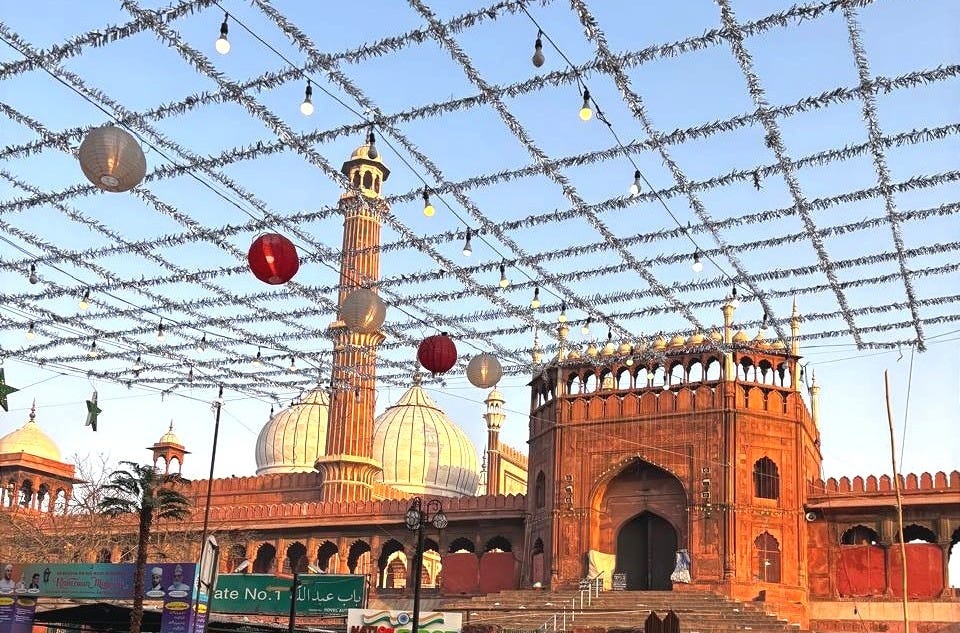
Warmth of the wet Indian summers began to wane as autumn made its onset at the ramparts of the Red Fort. The civil war of succession between the sons of emperor Shah Jahan had just ended in Alamgir’s favour. The hunt for Dara Shukoh and his loyalists was still on from the streets of the Chandni Chowk to the farthest corners of Hindustan. The Jama Masjid stood in silence witnessing the gruesome conflict for the peacock throne. A morning of a new sun had arisen on the shores of Mughal India.
This was the year of 1660.
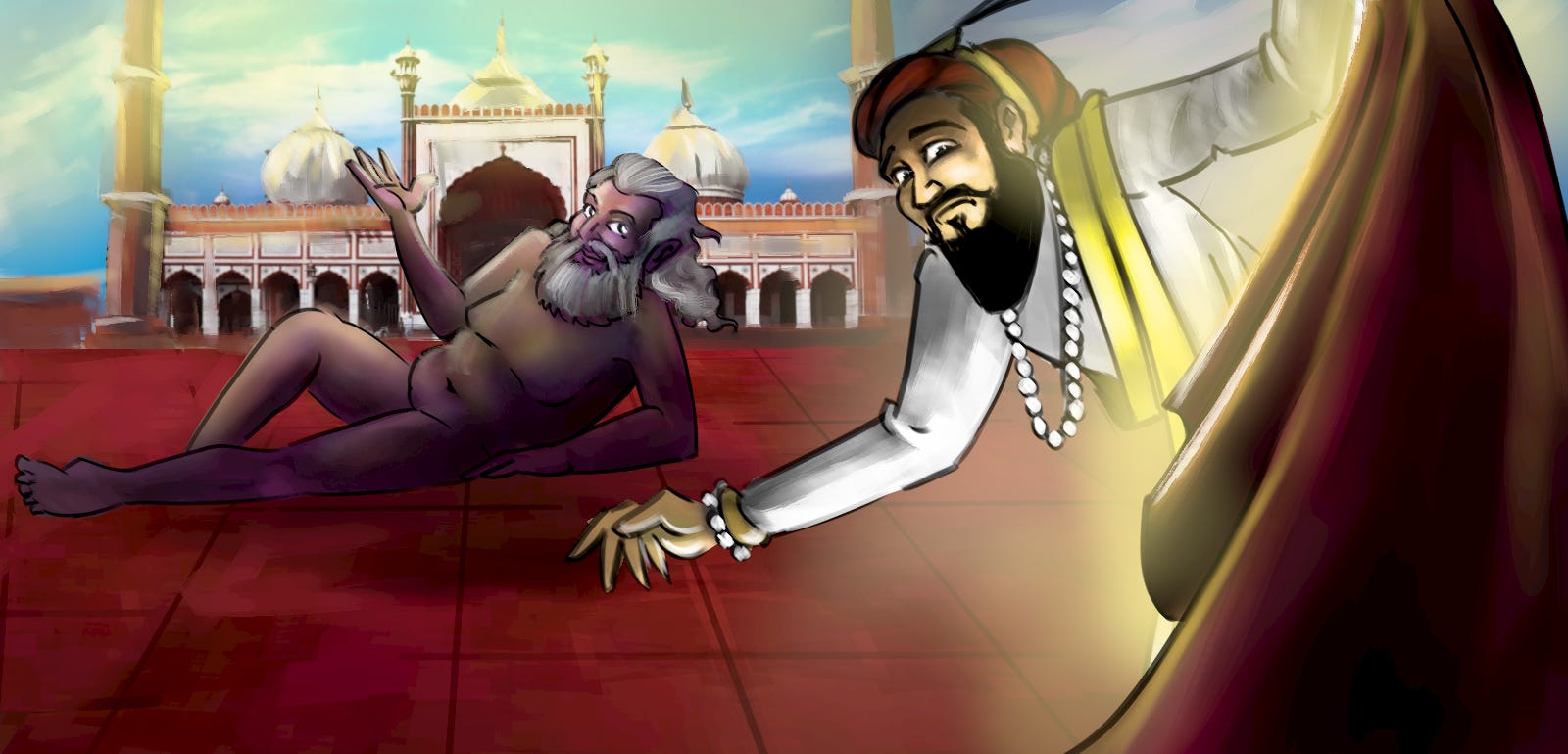
Aurangzeb, now the emperor of Hindustan, was returning from Jama masjid after attending the Friday prayers when he saw the naked Sarmad, mentor of Dara Shukoh, lying in a state of ecstasy (majnun) on its stairs. He abused Sarmad’s unholy presence defiling his pure mind of prayer and ordered him to cover himself with a blanket lying nearby. Sarmad asked him to pass the blanket to him. He picked it up.
The legend holds that to his horror, Aurangzeb saw the severed heads of all his siblings and relations killed during the civil war lying beneath the blanket, with fresh blood flowing from them. Aurangzeb never saw eye to eye with Sarmad from that day onwards.
Serai Of Serendipities
The markets of central Delhi have been abuzz with exchange of ideas, symbols, goods, and serendipity for quite a long time in Indian history. The narrow lanes of Chandni Chowk have been run down with a constant carnival of the foreign and exotic that the element of surprise itself here has acquired its own distinct shade of sepia-tainted antiquity.
The premise behind my wandering in these narrow labyrinths of Delhi was to soak myself in its urban antiquity and cure myself of an ache of a different dimension: to make myself at ease again with writing poetry despite the plethora of inspiration clogging within my head.
So many wanderers, mystics, and adventurers must have roamed across the same streets of Delhi in pursuit of giving a meaning to a journey that was supposedly going nowhere. Yet, when they did make something out of peregrination of finding purpose, the city that was supposed to be a serai in the journey became a home to their newfound meaning.
The social geography of Delhi underwent roughly seven epochs of urbanisation under the reign of various dynasties, from the Pandavas to the British. The contours of such transition were, however, shaped by these serendipitous settlements of these enlightened strangers who continued to shape the dynamics of culture and its symbolic forms through their interaction with the common folk and people of prestige alike.
I heard a faint humdrum of collective voices a few lanes away from me as I sat beside the qibla of Jama masjid to take respite from Indian summers. I did not need to see to confirm that it was a prayer in session. Albeit of a different kind.
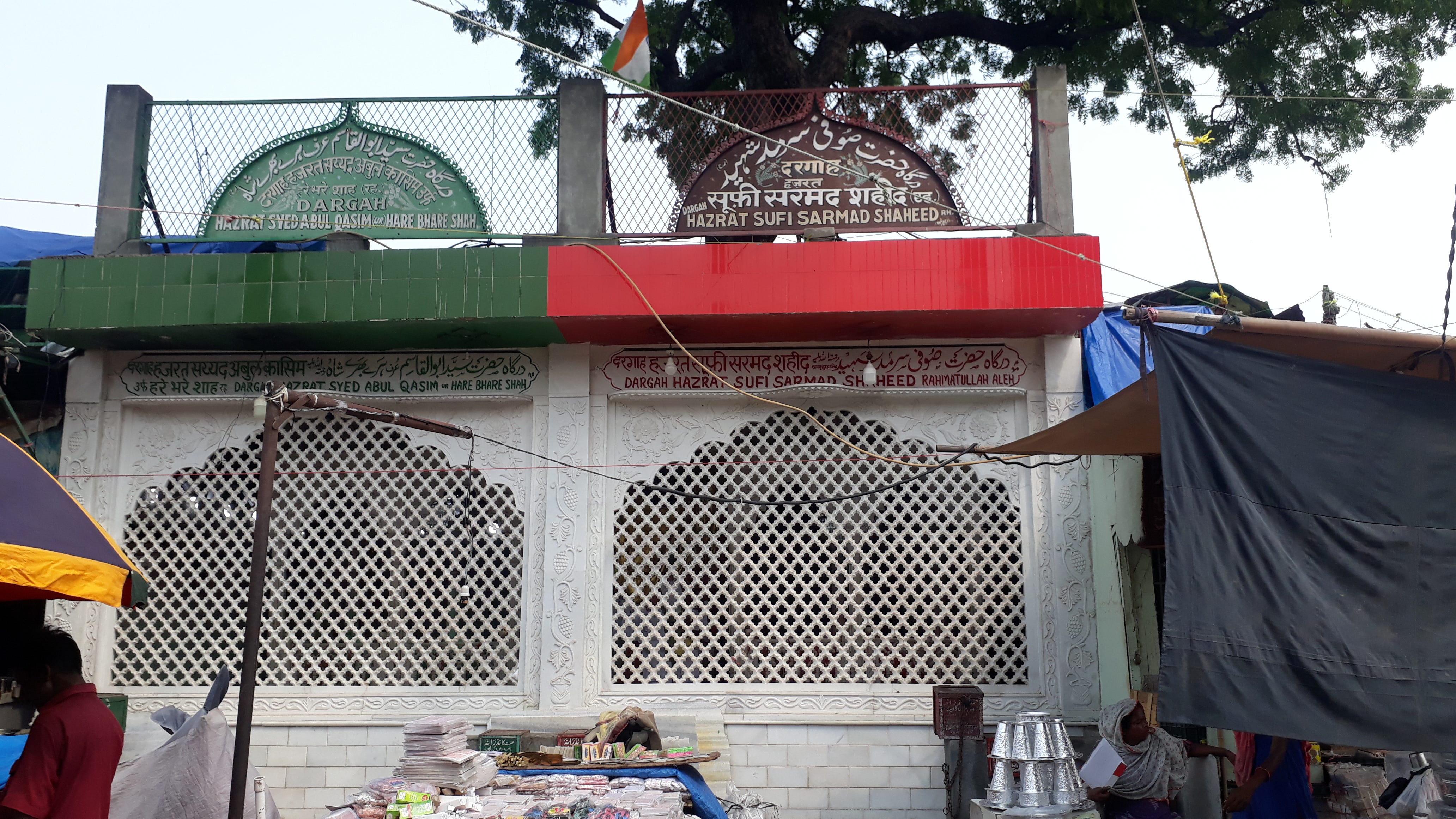

Before I knew it I was staring at the flamboyant red dargah of shaheed Sarmad with a colourful commotion of voices and people around it. Rehman, a nearby shopkeeper, just took it as his cue and came to offer me a chance to look at his worn-down collection of translated rubaiyats of the man of the ungodly hour.
The Singer of Half Shahada1
Although hundreds of friends
Have become my foes,
The friendship of One
Has given security to my soul.
Rejecting many I have embraced the One–
At last,
I am He and He is me.
Warm evening of a waning loo on the streets of Delhi. People have flocked together to watch the spectacle at the city square with fingers between their teeth. After issuing several farmans to comply with the religious diktat but to no avail, emperor Aurangzeb had finally ordered a man’s execution right in public display. A council of qazis stood in stern disgust as one fakir, completely naked, walked briskly towards his own executioner.
For the final time, the qazis asked him to finish reciting the Shahada with the promise of obtaining amnesty from the imperial court. An uncomfortable silence ensued for some time before the fakir uttered: La Ilaha.
There is no god!
An incomplete phrase of the verse La Ilaha Il Allah, meaning there is no god except Allah. This is the verse of Shahada which is a fundamental oath of every Muslim towards practicing Islam. The wrath of maulanas came with complete fury on the destitute fakir. They asked him why he couldn’t just finish it and let go of the matter itself.
The fakir replied,
“As of now I haven’t yet found mercy of his existence in my soul, so I sing the half shahada. The day I’ll find him, you won’t need to do any of this. For in the name of God it is good to live with one’s conscience rather than to lie and live in denial.”
Maulanas gave the go-ahead to his execution, one swift blow decapitating Sarmad’s head with immediate effect.
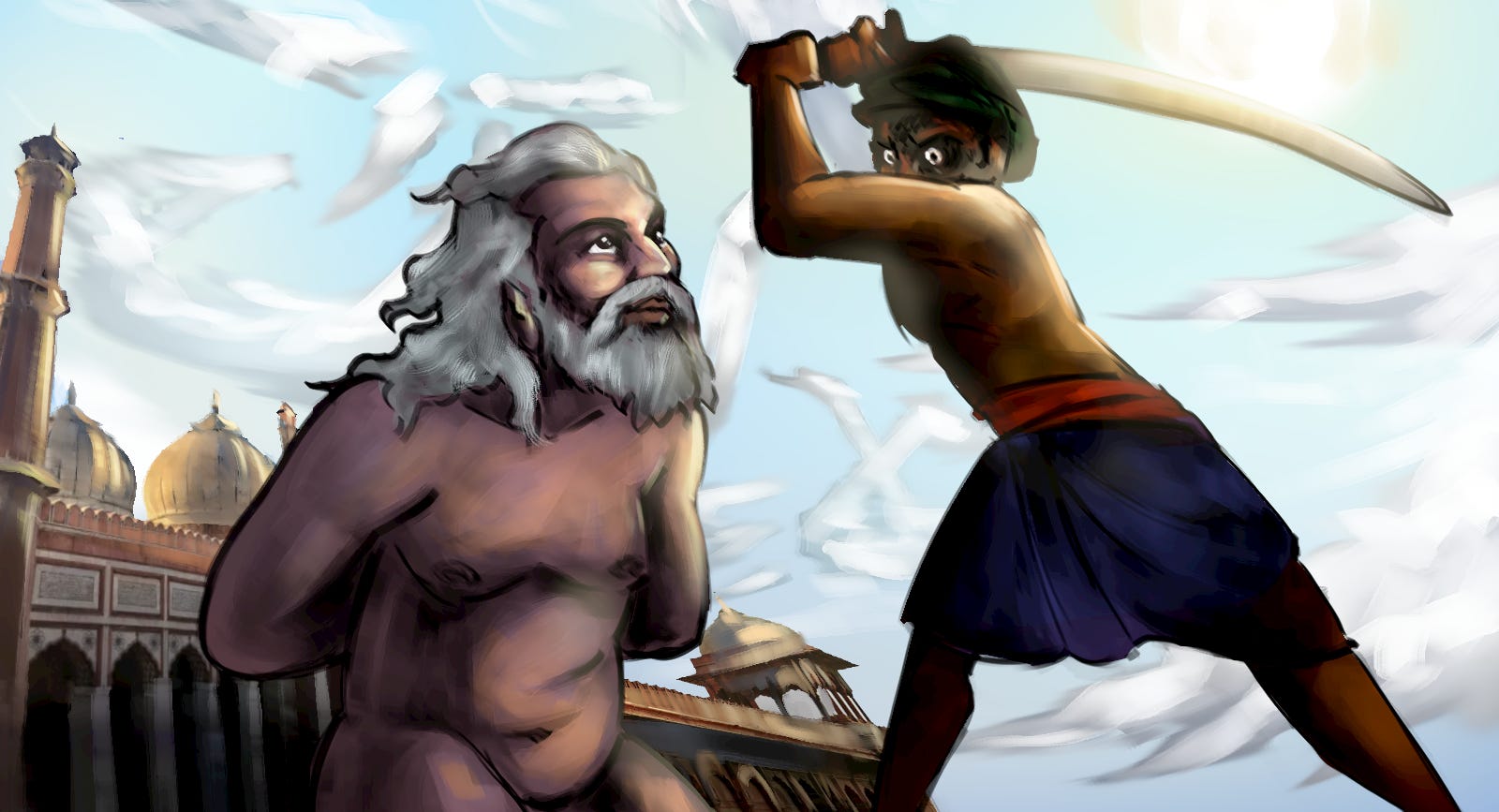
There are several iterations of what happened ahead in the poems, lore, and memories of people that continue to live around Jama Masjid to this day. One prominent version is that Sarmad’s head continued to finish the shahada as the body was carried on the steps of the Jama Masjid before being buried in the flamboyant red dargah not very far from there.
This was the year of 1661, two years after the conclusion of the great war of succession for the peacock throne.
The Struggle For The Throne
In 1659, prince Alamgir moved decisively against the crown prince Dara Shukoh in the imperial capital of Shahjanabad and proclaimed himself the next emperor of Hindustan. His military genius and the politics of court aside, Alamgir’s victory represented another undercurrent brewing within the Islamic thought in India: the question of maintaining orthodox Islamic sanctity in the face of rising syncretic figures and cross-culturalism in India. Projecting himself to be a champion of Islamic orthodoxy, Alamgir pitted his war of succession against his brothers and most importantly, against Dara Shukoh as the necessary jihad to put the house of Islam once again in order.
Several influential members of ulema in Delhi, Lahore, and Agra thus helped Alamgir in this holy war against his father Shah Jahan and Dara Shukoh. In the aftermath of it as the next emperor, Alamgir went as far as inviting some of the most prominent Islamic scholars of the Muslim world to Delhi to augment the compilation of the ideal text to run, maintain, and govern an Islamic state in Hindustan, the Fatawa-Al-Alamgiriyyah.
In the first session of this vast council of maulanas, prince Alamgir who had now become emperor Aurangzeb, proclaimed total death to the enemies of the faith, apostates, and spiritual imposters who polluted the minds of simple Muslims like that naked fakir who poisoned the mind of prince Dara2.
He was referring to Sarmad Kashani.
The Great Trial
One of the gravest allegations against Sarmad made by the clergy and the royal throne was spreading ideas of apostasy in the name of free thought among the royalty and subjects alike. The most prominent victim of his influence was pointed out to be the erstwhile crown prince Dara Shukoh, a royal in favour of free speech and sidelining of shariah in order to augment a new age of thought in Hindustan.
Most importantly, Sarmad was a poster boy of a profligate lifestyle which received royal patronage at the cost of hurting the modesty of religious orthodoxy, a phenomenon which Aurangzeb had considered his mission to wipe off from Hindustan.
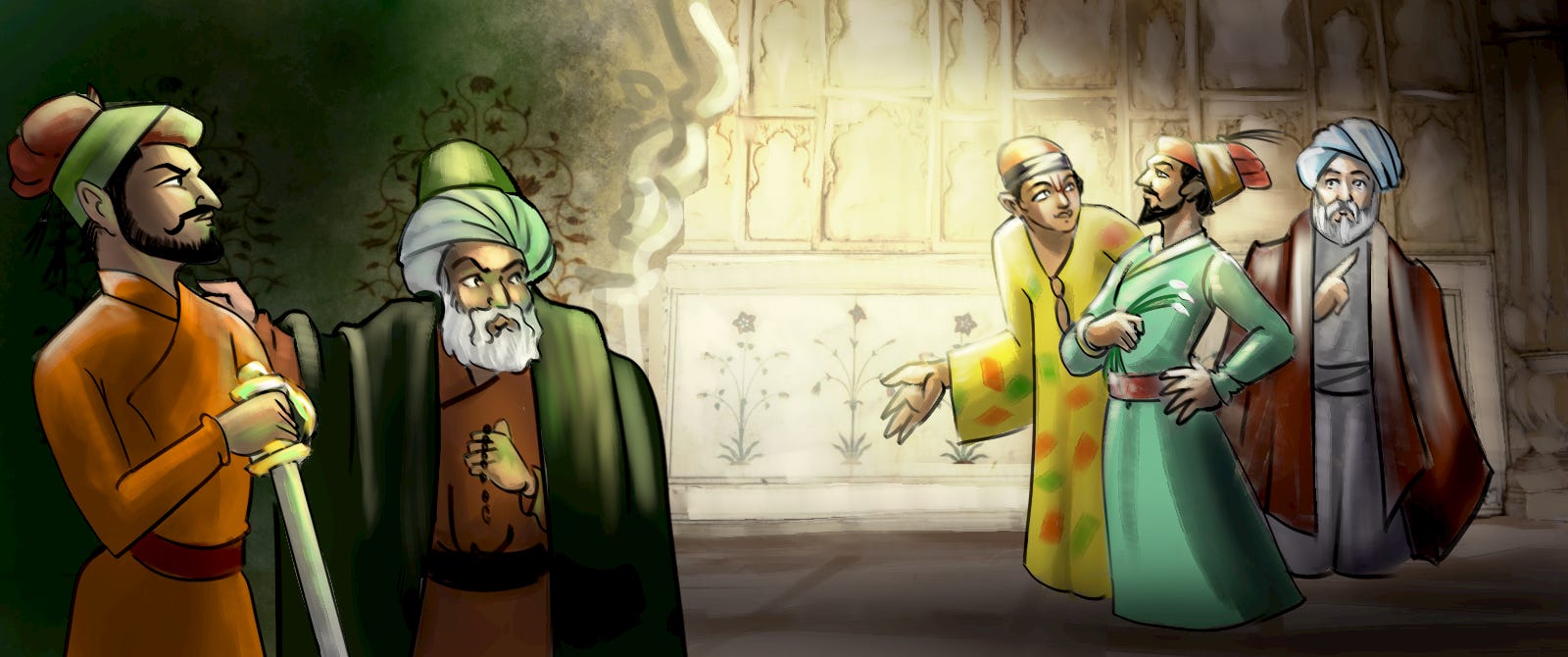
Sarmad’s association with Dara served another purpose for Aurangzeb. The long-drawn war of succession which had taken a toll on the royal treasury and upended political relationships with different political houses needed a sound justification to ensure legitimacy of the reign. It was also well-known that Aurangzeb had made a move against his father and emperor Shah Jahan, whose consent as the previous reign was necessary to ensure legitimacy of his rule.
This required on Aurangzeb’s part a deliberate attempt to stain his brother’s legacy in order to gain political sympathy for his regime so that he could acquire much-needed legitimacy. He managed to stain his brother’s image for posterity. The Alamgir-Nama’s portrayal of Dara Shukoh as a power-hungry, scheming infidel bent on destroying his brothers and Islam in India became quite influential.
Bakhtawar Khan’s Mirat-i Jahan Numa reiterates Alamgir Nama’s phrasing while discussing Dara Shukoh. The widely read Khulasat-al-Tawarikh attributed to Sujan Rai Bhandari, a Khatri munshi in Aurangzeb’s service, is more favourable to Alamgir than Dara Shukoh. Khafi Khan’s Muntakhab-ul-Lubab on Dara, takes a similar line. The one near-contemporary source to connect Dara and Sarmad is Sher Khan Lodi’s Mirat-ul-Khayal, which observes that Dara preferred the company of mendicants, madmen and lovers and therefore drew Sarmad into his circle.
Sarmad of Kashan
With the high rank of love
I was exalted.
Freed from– beseeching the populace.
In this gathering, I melted, like a candle
I burnt, until I became
An intimate of the Mystery.
Very little is known of Sarmad’s early life from historical sources. From Sarmad’s correspondence with various historical figures much later in life we learn about his Jewish faith of birth and Armenian ancestry.
Situated in the northern part of Isfahan province, Kashan is one of the oldest cities of Iran. It has been a gateway to the central Iranian deserts for several centuries. The city, especially under the Safavids, gained prestige and became one of its favored summer retreats, and a favorite of Shah Abbas I in particular. With almost eight thousand years of human settlement and a long history of commerce, Kashan became home to prominent native merchants engaged in the pan-Eurasian silk route trade, where they built the now-famed trading-cum-residency houses deeply aligned with traditional Persian values.
Sarmad’s Jewish fraternity must have emigrated from Baghdad to Kashan for fairly long by the time of Shah Abbas’s coronation, for they enjoyed access to the imperial court via special farmans and expended large sums for building public spaces and philanthropy in the city.
Thus, born into a life of relative wealth and privilege to a family of Persian-speaking Armenian Jews, Sarmad was fluent in Armenian, Persian, Hebrew and Arabic. He was formally trained in the traditional Jewish synagogue education where he went on to acquire the status of a Rabbi, a religious figure and a teacher of the Jewish law.
A Restless Rabbi
Sarmad’s life was one of interesting contrasts: He lived in a fairly cosmopolitan setting with access to people of influence and repute yet, his wanderings in the city often led him to mingle with the myriad classes of people rich and poor alike who frequented the city in pursuit of trade and opportunities. His exposure to such varied perspectives of humanity expanded his intellectual canvas but never truly came in conflict with his core education in the customs of Bene Israel, a code of ancient practices of the Talmud, a school of Jewish mysticism.
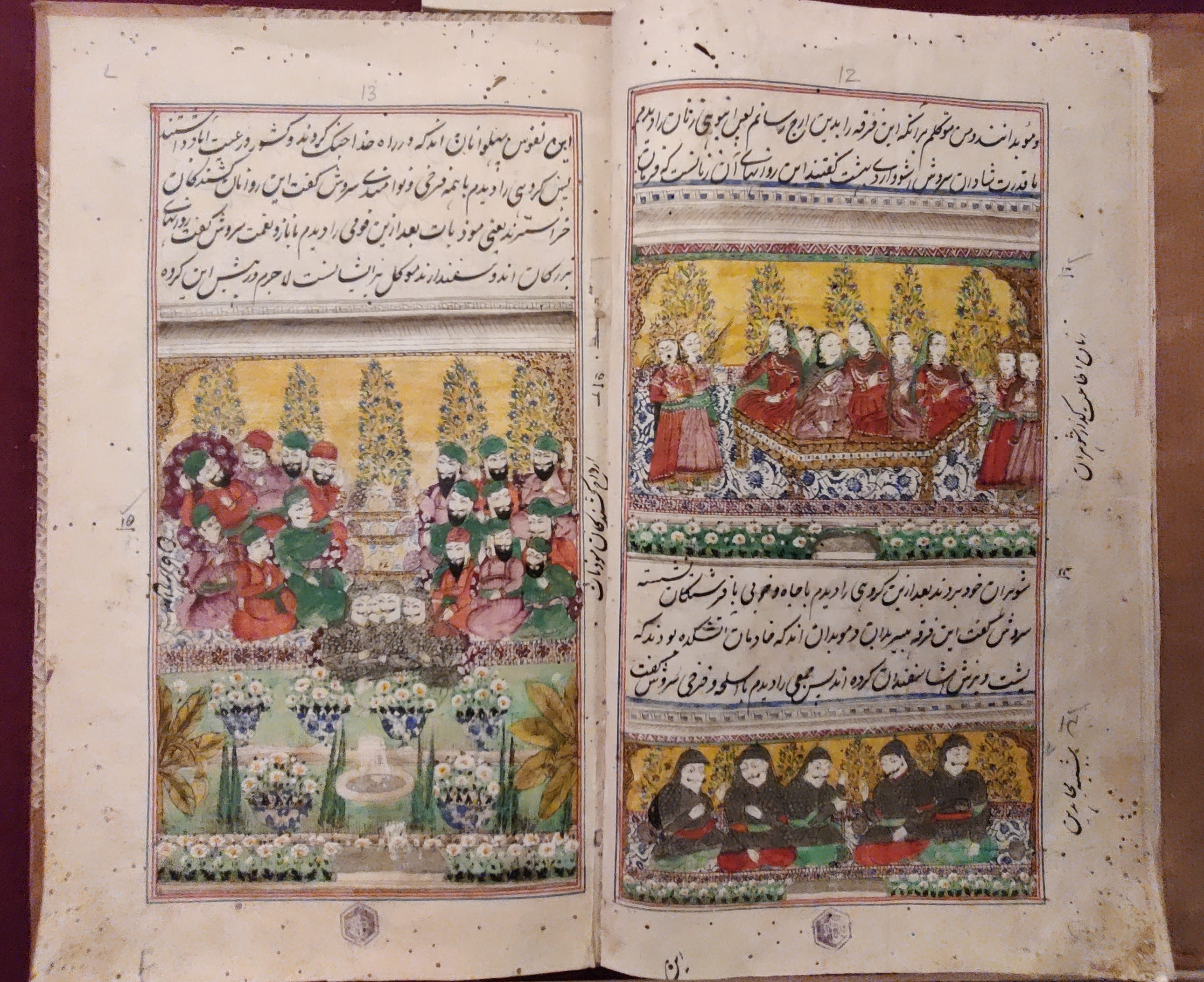
As Mir Dulfikar Ardestani would later account in his towering work on comparative religions Dabistan-i-Mazahib, “despite swornly forsaking Judaism for accepting the ways of Islam, the naked Qalandar (Sarmad) would cite the ancient Talmudic ways of Judaism as a justification of his outrageous ways of life.”
.jpg)
‘According to the Jews’, said Sarmad, ‘God is a material substance and the human body is a symbol of His materiality.’ Such a man, reflected Alamgir, had been a great friend and spiritual advisor of his brother.
Sarmad’s wandering among the rich and the wretched, and his own spiritual meanderings produced ideas which mainly got channelised in his two intellectual pursuits. First was his tendency to compare and draw parallels between his Jewish faith and other philosophies, a spectrum of ideas from Judaism, Islam, and Hinduism, and use it to compose poetry in Persian inspired by the meters of Omar Khayyam. The second was his attempts to translate major Jewish scriptures such as Torah into Persian.
Shiraz And The Sufi Light
The pursuit of trade and mysticism took Sarmad across the cities of the Iranian renaissance where he finally met Mullah Sadra in Shiraz and was surprised to know that the great thinker was already aware of few of his works. The conversations between Mullah Sadra and Sarmad were later recorded by Ardestani in Dabistan, the eventuality of which was Sarmad’s initiation into the Ishraqi school under Mullah Sadra and his conversion to Islam.
The cities of Shiraz, Isfahan, and Kashan housed some of the most prominent spiritual thinkers and cultural movements of its time, the compounding of whose influence would usher in a new golden age of thought in the country.
Iran during this period was arguably witnessing one of the deepest cultural renaissances in its history.
The era was marked by the works of Mullah Sadra, a Shi’ite alim considered one of the chief figures of Iran’s cultural renaissance in the 17th century. Contemporary scholars on eastern philosophy like Oliver Leaman have considered Sadrian philosophy to be the single-most important development in Islamic thought in the past four hundred years.
For several years, Sarmad accompanied Sadra and Mir Findiriski across cities and learned the ways of transcendent theosophy or the Al-Hikma, which he found to have several parallels with monastic ideas of Vedanta in Hindu thought and the Talmud from Judaism. A true outcast from everywhere, it is possible that he faced an exile from his community due to which he might not have married, although his trading activities continued unabated.
A young Shia convert, Sarmad was not very particular with the diktats of the Islamic clergy. His first brush with authorities came over his continuation of his translation of Torah into Persian even after his conversion to Islam, which later on became more problematic as Mullah Sadra’s safe haven for him ended due to his passing away, and his outright critical opinions of the Islamic clergy becoming sharper.
Prolonging of his woes with ulema and a general plateauing of his spiritual journey in Kashan produced in him a desire to go beyond and see more. The right opportunity came for him in the lucrative trade of high art and precious stones in Hindustan from Kashan in the light of conflict in Qandahar between the Mughals and Safavids. Sarmad didn’t waste any more time in making a move.
Evening at Sindh
Sarmad reached the shores of Sindh with his goods where soon with his guild he began to establish himself in the capital city of Thatta. Due to good understanding of Shiite customs and a command over Persian language, Sarmad made inroads into the ways of the trade and got introduced to the world of Qalandars, Mazaris, Bhakts, and Yogis in the city. Most of his guild’s trade was directed towards the Shiite sultanates of Deccan where through correspondence his reputation as a sound trader of quality goods began to get cemented. India was truly a new world for Sarmad in a sense where steep idolatry existed within the underbelly of the orthodoxy of Islamic rule.
It was in this town of Thatta where he received another epithet of ‘Shah’, due to his fondness for the company of mystics and his deep intellect. It was in one of such chance meetings with a group of Yogis where his desire to see idolatry in person prompted him into wandering around a Hindu settlement one evening.
A strange voice in the service of the presiding deity of a local temple captivated Sarmad’s attention, which he later recalled in his poems, ‘an angelic call of a divine union.’
Nothing remained the same for Shah Sarmad after that evening.
O Sarmad!
The pain of love is not given to the lustful
The passion of the moth is given to the honey bee.
It takes a lifetime to unite with the Beloved
This divine bliss is not given to everyone.
The Boy Who Sang to Vishnu
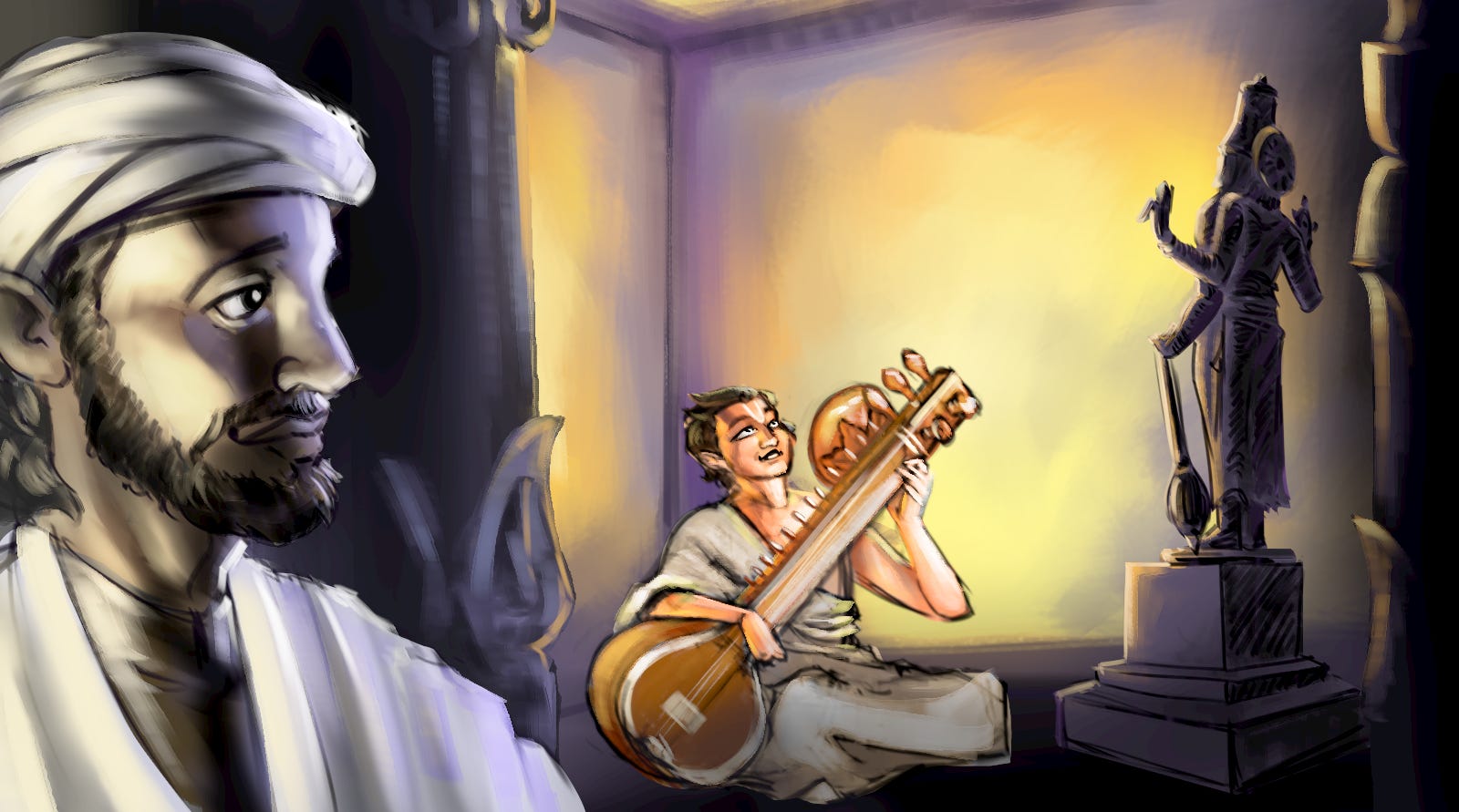
What Sarmad heard was an aarti at the local temple, where a boy named Abhai Chand sang aartis and other devotional hymns dedicated to Bhagwan Vishnu every evening. Sarmad didn’t waste any time in finding Abhai and confessing his love towards him. Although Sarmad’s fame as a foreigner of intellectual repute had reached the ears of the local populace by then, a confession of such kind was still a horrifying shock for the boy as well as his family. Sarmad would dejectedly follow the trails of Abhai to the temple every evening and listen to his soothing voice of singing bhajans in the praise of Bhagwan Vishnu. In desperation born out of his evergrowing attachment for the boy, Sarmad reached his home and asked his father for his hand in union. Horrified at the proposal, Abhai’s father threatened Sarmad of dire consequences if he raised alarm with the authorities for apostasy and homosexuality and asked him to leave Abhai alone.
Sarmad never returned to his accommodation in Thatta. The sudden disappearance of Sarmad caused problems for his associates in trade as well as concern for those who’ve come to appreciate his outlook. The search parties that went in his search found him in a state of what Sarmad himself would refer to as divine intoxication.
Completely naked, matted hair and overgrown nails, lying at the porch in front of Abhai’s house. Only seeking a glimpse of Abhai’s presence.
The Sarmad of Kashan had become a Qalandar for a boy!
The news spread like a wildfire in the city, with everyone discussing the affair. Eventually people began to flock to Abhai’s home to catch a glimpse of the Qalandar, maybe ask a few questions. Among those who came to talk to Sarmad one day were a few faces which seemed familiar to him. Abhai’s father accompanied him and came to talk to him and enquire about his intentions. The resultant conversation could be best summed up with this rubai by Sarmad which he dedicated to his protege and his love of life, a young boy who sung bhajans at the temple every evening.
I know not if in this spherical old world,
My god is Abhai Chand or someone else.
According to Dabistan, just like a sanyasi, Sarmad shed his clothes, and remained naked as the day his mother bore him. In this state of naked patience he once waited at his beloved’s door. When Abhai’s father finally realised the purity of Sarmad’s love, he let him in.
So moved was his father with Sarmad that he himself gave Abhai’s hand in union to him, blessing both of them for a sound spiritual journey, together.

Sojourns in Hindustan
Sarmad and Abhai eventually left Thatta to travel inwards into Hindustan, in pursuit of Sarmad’s trade and search for meaning. Very few accounts prevail of their journey, yet it is highly likely that they must’ve wandered in the vicinity of Sindh, in Multan and Punjab for quite some time. Sarmad used to frequent Lahore as attested by his pending accounts of trade mentioned in Dabistan.
In the attainment of his union Sarmad became so intoxicated that he could never wear any cloth or veneer of pretensions anymore. Abhai reciprocated Sarmad’s ardor and the two became inseparable.
Later in conversation with Dabistan’s author at Hyderabad, Sarmad would justify his actions by saying that the Bani Israel did not consider it necessary to clothe the private parts, and that indeed the prophet Isaiah too roamed naked in his final years. Isaiah was an early prophet in the Abrahamic faiths, author of the book of Isaiah which according to the Islamic tradition prophesies the arrival of Jesus and Mohammad.
The duo made their way across India, during which they translated Torah along with Old and New Testament into Persian, before heading towards Deccan. Sarmad had developed his fair share of repute and connections in Deccan, where he finally seemed to secure patronage from Shaikh Mohammad Khan, a senior noble attached to the Qutubshahi ruler of Golconda. Here Sarmad wrote poetry in Khan’s praise, which received acclaim in the court and gained attention of Dulfikar Ardestani, the claimed author of the Dabistan-i-Mazahib as mentioned before.
A Jew at Golconda
Curious to meet a Jew in person for the first time, Dulfikar writes about Sarmad’s superficial conversion to Islam as in his own poems he warns Jews against converting themselves. Sarmad also reveals about the source of his knowledge of Indian philosophies to be the teachings of Mir Findiriski, a close associate of Mullah Sadra who himself had travelled to India several times and interacted with thinkers here.
Sarmad seemed to develop fame for producing short-styled poetry too in Hyderabad at this time, short couplets in the style of Omar Khayyam in which he gave predictions using his mystic abilities. One such poem predicting his patron Shaikh Mohammad’s death on the way to pilgrimage in Mecca came true, which further spread his fame far and wide.
The paradox of his prophecy coming true was immense fame in the region yet the loss of his liberal patron. The time spent at the Qutubshahi court introduced Sarmad to myriad ideas of theosophy through the works of Ibrahim Adil Ali Shah, as well as oral compendiums of Sanskrit poetry and devotional hymns for various Hindu gods composed in the regional languages.
Sarmad along with Abhai spent considerable time in learning, discussing, conversing and debating various spiritual ideas among themselves and with other minds of similar inclination.
It is at this juncture that Sarmad let go of all his worldly possessions and became a faqir of true sorts. The duo of a naked faqir with a boy of dazzling beauty gradually spread through various capitals of India, often through the riveting couplets composed by Sarmad at this time where he enmeshed his affection for Abhai with the state of divine intoxication he was constantly in.
O Sarmad!
Thou hast won a great name in the world,
Since thou hast turned away from infidelity to Islam.
What wrong was there in God and His Prophet
That thou hast become a disciple of Lacchman and Rama?
An interesting point to note about Sarmad’s journey is the absence of a spiritual mentor or a sheikh in his life altogether. Although he studied extensively under Mullah Sadra and others, his Sufi metaphysics came to take shape from his own enquiries into the spiritual matters. Based on these realities and his infatuating devotion to Abhai Chand, many scholars have pointed out the possibility of Sarmad turning into a Hindu during his travels in Deccan.
Substantial Hindu influence on his poetry could be seen from here, which remained earlier only passive remarks:
In religion, o Sarmad, you have created a strange confusion,
As you have offered your faith to the intoxicating eyes [of the Beloved]
With all humility and politeness you approached
And offered all your gains to the idol-worshipper.
A Bridge to Dara
Many parts of his journeys in India are untraceable and one can only make assumptions about his stopovers before finally settling down in Delhi. One primary source of tracing it could be the correspondences as well as written reception on his poetry recorded in various cities. Even though it is unclear exactly when he visited Lahore from Deccan, one prominent nisba is registered in his name in the ‘Great Anthology of the Poets of Punjab’, Tazkira Shu‘arā’-i Punjab. Nisba is a brief sketch of a poet’s life and times attached with his poetry to give more factual context for the audience, for an immersive literary experience.
Here is what his nisba in Tazkira says about Sarmad’s relation with prince Dara:
“Despite that fact that he was a sultan and a son of a sultan, Dara studied the ‘irfān. He kept friendship with Sa‘id Sarmad and had a genuine liking and friendship with Mulla Shah Badakhshani.”
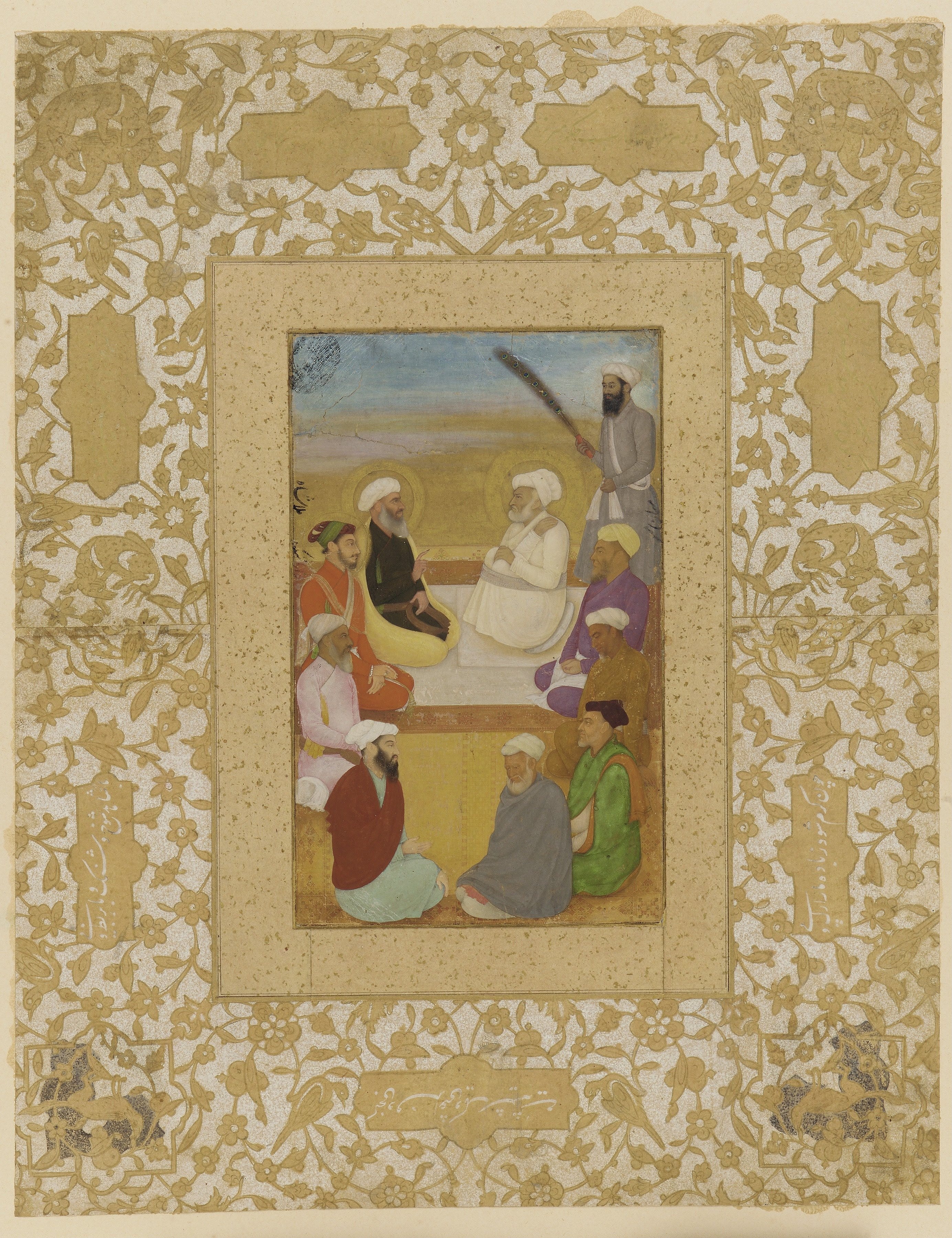

Mollah Shah Badakhshani was the spiritual head of the Qadiriyyah Silsila and was a successor to Mian Mir, one of the greatest figures in Indian Sufism. It is quite likely that Badakhshani introduced Sarmad to Dara as both of them were fellow disciples of Mian Mir.
Arriving at ‘New’ Shahjanabad
Francois Bernier notes in his ‘Voyages’ of a naked fakir who flaunted his profligate lifestyle on the streets of Delhi completely unfazed by the wrath of authorities. It is unclear when exactly he arrived in Delhi. Yet, in a very short spiral of time he gained fame as the Majzub who roamed around the staircases of Jama Masjid, often brushing with the wrong shoulders in discussing and debating religious matters before and after the times of namaz.
This was a time of relative peace for the empire, where it sought to recoup its huge expenditures incurred in massive campaigns in Qandahar, Deccan and elsewhere. Prince Dara had returned from the Qandahar campaign, dejected and lost from the heavy losses.
Prince Dara was always accompanied in his spiritual endeavours by his elder sister Jahan Ara Begum, who eventually took the role of first lady in the imperial court as emperor Shah Jahan dawned into old age. As the crown prince with many responsibilities delegated in the hands of his sister, Dara began to dedicate his energy towards fulfilment of his great spiritual vision of compiling a vast compendium of spiritual thought from all world religions.
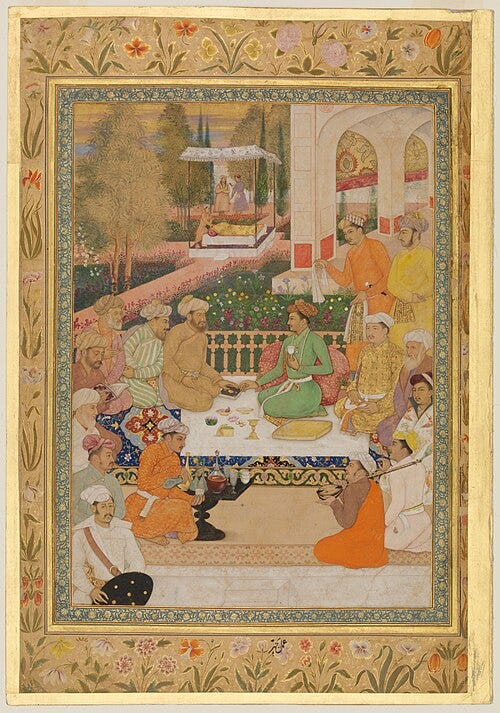

The vision of Din-i-Ilahi or ‘divine religion’, as manifested by his predecessor emperor Akbar had captured Dara’s imagination since his childhood. These universalist tendencies in Dara’s spiritual thought predictably turned him towards Al-Hikma of Mullah Sadra as well as the Vedanta from the influence of figures such as Baba Lal Das.
Dara made an exceptional decision of getting initiated into Qadri school under Mian Mir rather than the order of Chistis traditionally followed by his lineage. This decision was later considered by the faction of Alamgir as one key development in growing infidelity within Dara, as Chistis were staunch opponents of Shirk being accepted in the name of syncretism.
The Mingling of Oceans
Sarmad likely came to Dara’s attention initially as a credible source of Jewish mysticism as well as Al-Hikma due to his past with Mullah Sadra. Along with Father Bussé, Sarmad became a key teacher/source for Dara in understanding the precepts of Old and New Testament, as well as the metaphysics of Bani Israel. It was later during Dara’s sojourns in Lahore with Mian Mir and Badakhshani that he came across the Rubaiyats of Sarmad, and had hearty conversations with him on his couplets in Lahore and Delhi.
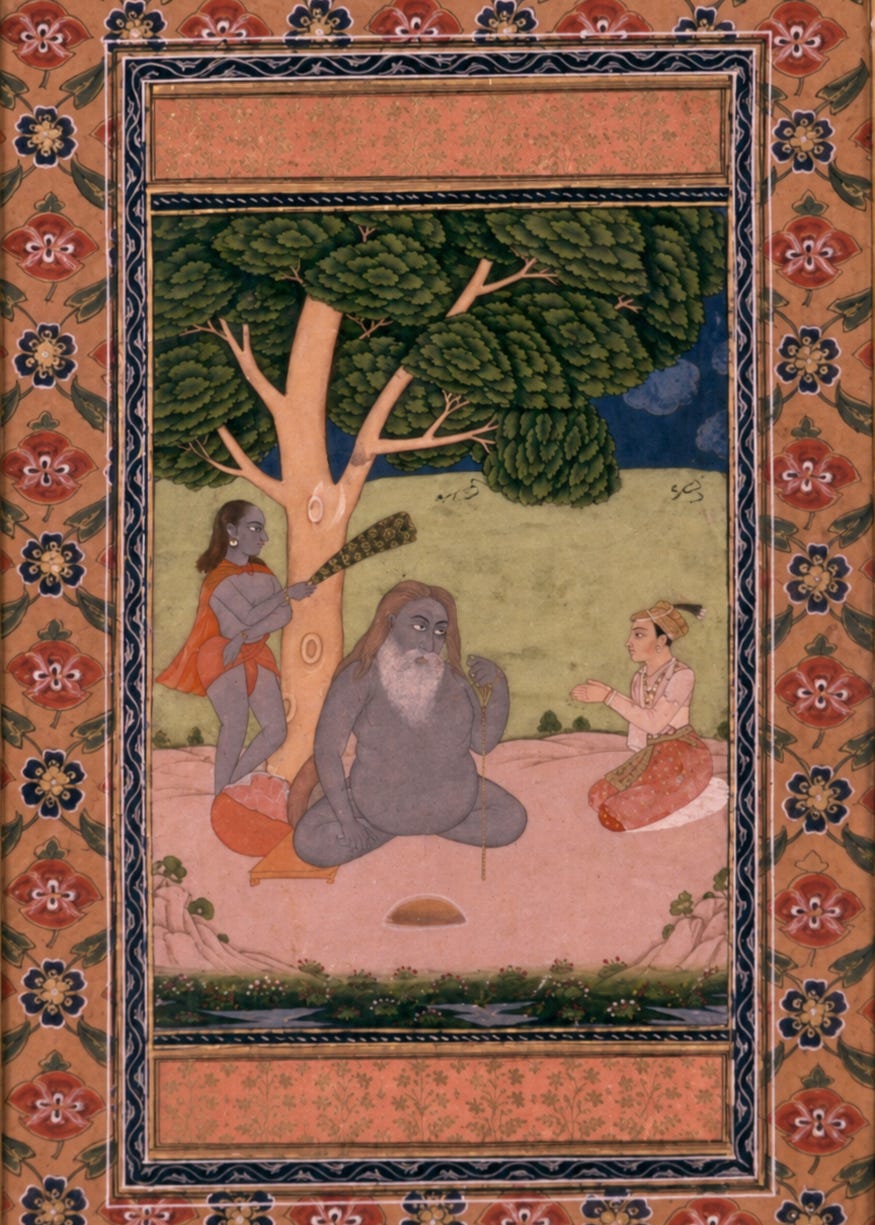

What began as an endeavour to learn Jewish mysticism soon blossomed into a close friendship, with Sarmad and Abhai becoming frequent visitors in the royal palace.
This was a time when Dara was seeking to recreate Akbar’s Ibadatkhana albeit on a much larger scale. Prince Dara with the help from his siblings Shah Shuja, Jahan Ara and approval from his father began redeveloping central Delhi with public spaces for spiritual dialogue as well as providing permanent residencies to the voices who contributed in it. Sarmad and Abhai were allotted a modest home on the banks of Yamuna during this time, and subsequently they became regular contributors in the council working for compilation of the Majma-ul-Bahrain or Samudrasangam, a towering work on world spirituality rising above sectarian and religious differences and comprising perspectives of almost all major world religions, an intellectual feat hitherto unheard of in world history.
Niccolao Manucci in his book writes:
“Dara held to no religion, when with Mahommedans, he praised the tenets of Muhammad, when with Jews, the Jewish religion; in the same way, when with Hindus he praised Hinduism. This is why Aurungzebe styled him a kafir (infidel). At the same time, he had great delight in talking to the Jesuit fathers on religion, and making them dispute with his learned Mahommedans, or with Cermad [Sarmad], an atheist much liked by the prince. This man always went naked, except when he appeared in the presence of the prince when he contented himself with a piece of cloth at his waist.”
Sarmad became a key figure in helping Dara develop his metaphysics of universalist monism, for which he remained ever thankful and indebted to him.
As for Sarmad, he proclaimed Dara to be the true reign of Hindustan in ‘both the worlds, here and there’, and went on to give prophesy of his victory in the war of succession against Alamgir.
The Fiery Aftermath
Az saqi-e-kausar mai-e-gulfam talab
Dar peeri-o-zof jaam-e-aaram talab
Ta chand griftar-ba duniya bashi
Az fazl-e-Khuda nijat z-eindaam talab.
Ayyam-e-bahar muttaqi jaam kushad
Hangam-e-khizan khumar b-ein naam kushad
Mai nosh kay sayyad-e-falak mi gardad
Har roz dar ein fikr kay dar daam kushad.
[From the saki of heaven
Ask for the blushing wine,
A soothing goblet of your advanced years,
No matter how entangled are you in this world,
From the grace of God
Ask for freedom from the snare.
During springtime,
Even the sage sips wine!
During autumn,
Intoxication lingers, but ever so slight,
Drink!
Because the keeper of Death
Waits each day
To pull in his net.]
There were several incidents between Sarmad and Aurangzeb in the aftermath of the latter’s succession. Being aware of Sarmad’s earlier prophecy of Dara’s victory, Aurangzeb left no opportunity to hurl cruel derision so as to demoralize him into leaving Delhi altogether.
Prince Dara’s beheading and a parade of his severed head across the streets of Delhi prompted Sarmad to truly leave all aspects of pretension against the orthodoxy and he began to romanticize the very idea of martyrdom for a higher truth.
A series of tragedies had knocked the doors of poor Sarmad by this time. Aurangzeb had unleashed his wrath on the sympathisers of Dara both in matters of power and spirit, whose primary brunt was borne by the followers of the Qadiri silsila and other spiritual minds which came to make Delhi their home under his tutelage.
When Abhai Vanished
Now reaching a ripe age of seventy, Sarmad might’ve considered moving out of Delhi, perhaps to Lahore to spend rest of his days in company of Mian Mir and Mohammad Badakhshani, the Qadri Sufis who were now destined to live a life of house arrest under the orders of Aurangzeb.
Before he could make a decision, his separation from Abhai Chand took the last ounce of sense from his mind and Sarmad began to live a life of majnun, or divinely intoxicated, at the stairs of Jama Masjid.
Some say he died, others claim he fled. Abhai vanished from Delhi like he never existed.
Look!
All your loved ones have become dust.
All victims of death the hunter!
They rose to the arch of heavens
But first they dwelt in the tenement of clay.
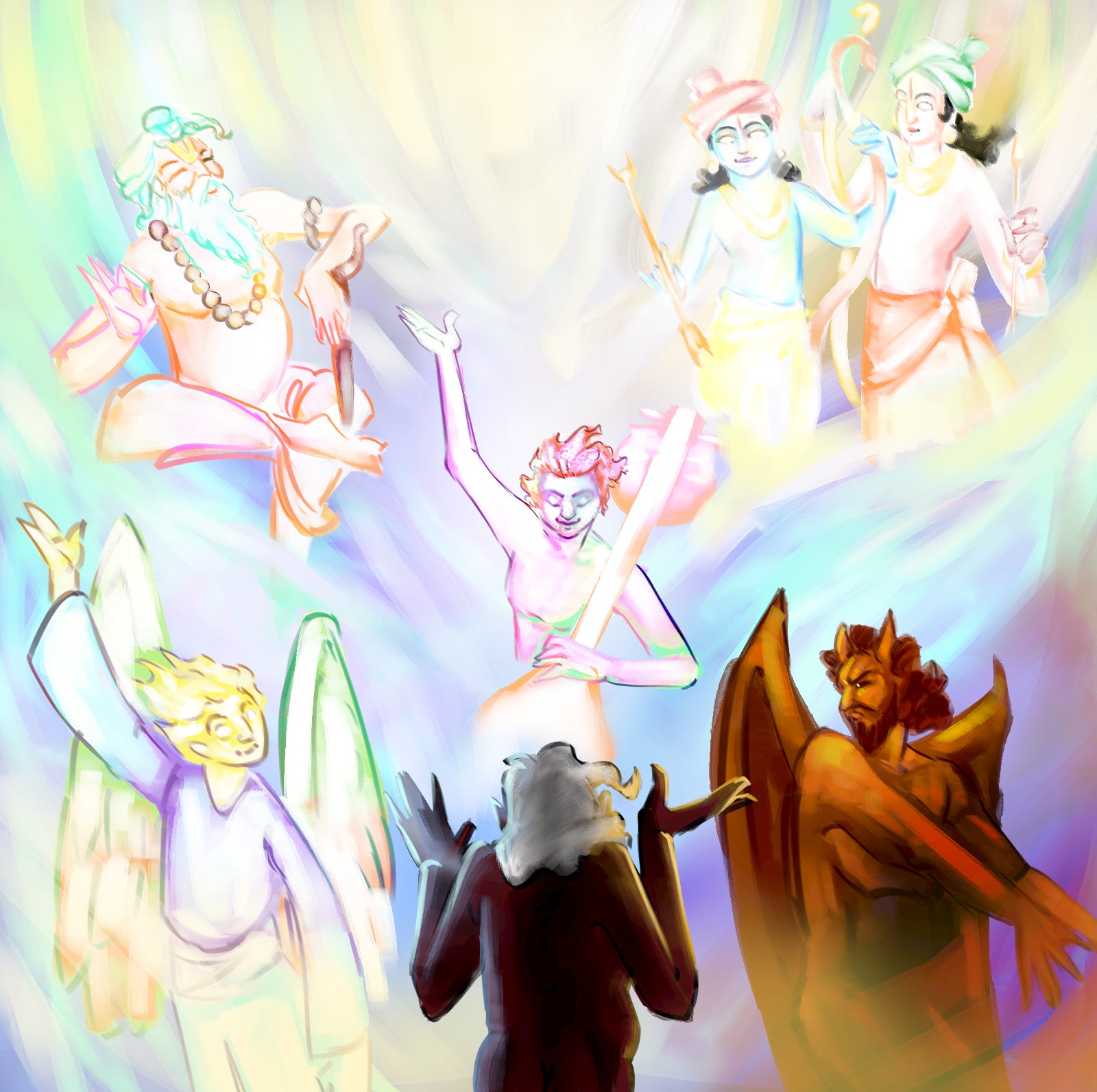
Angels. Shaitan. Bhagwan Ram and Rishi Vashishtha. Abhai Chand. These were some of the figures who began to pay him a visit in his dreams and began conversing with him, after which Sarmad would ‘wake up’ and proclaim the kind of ecstatic speech which prince Dara would surely have recorded in his works of intimate theosophy such as Hasanat-ul-Arifin, had he been alive. It was Dara’s intimate journal of spiritual utterances for personal reference humbly titled, ‘the aphorisms of the knowers of God.’
Sarmad was soon summoned to the imperial court where the charges of apostasy were read out against him in front of the Emperor, by scholars and religious leaders. When Aurangzeb taunted him with his prediction of Dara attaining the crown, Sarmad replied that he had attained the crown of the eternal kingdom.
The religious scholars were consulted since being naked in itself was not a reason for death and he was asked to recite the shahada. Sarmad responded with ‘La Ilaha’; There is no God.
Blossom of a Serai
Sword in hand, foam on lips, the headsman goes this side,
Good news! O Ghalib’s aspiration of death, good news!
A young poet of Urdu after an enamouring Mushaira in Agra was asked about the inspiration behind his writing. Ghalib took his sweet time to narrate the ordeals of Sarmad in Delhi for another hour.
Shortly after independence, as India’s first education minister, Maulana Abul Kalam Azad referred to shaheed Sarmad’s universalism as one elixir to soothe the wounds of partition and heal the young nation with compassion.
Long sojourns in search of love and meaning. Ecstasy of the spirit blurring bounds of love. Locking horns frequently with the Maulanas and Qazis. Penchant for a romantic death. Exquisite poetry.
Such attributes are attached to Mansur Al-Hallaj of Baghdad, one of the greatest sufis considered to exist in the annals of Islam. He was famously executed in the caliphate of the ninth-century for voicing himself in his proclamation Ana’l Haqq, or simply ‘I am the Truth’.
For some a sign of his annihilation of ego; for others an act of apostasy. Both Hallaj and Sarmad became influential figures in theosophical thought. Communicating ideas through poetry, posthumously. Hallaj’s Anal Haqq became key in the development of the system of ecstatical utterances or the shatiyat, a feature of classical Sufism born in the Islamic golden age. Sarmad became a bridge for the commingling of the oceans of religions, the samudrasangam.
One was crucified for Anal Haqq; the other, for La Ilaha.
Several poets, mystics, lovers have brought out the parallels between Sarmad and Mansur Al-Hallaj, and their eulogies gave rise to another title on Sarmad, Hallaj-al-Thani or Mansur-i-Sani, the ‘second Hallaj’; a majnun who let all sense flow out of him in spiritual ecstasy and sought execution in place of compromise.
In the Company of Lovers
It was in the summer of 2020 when I first ended up wandering around the crimson-red dargah of shaheed Sarmad in the hopes of curing my own drought of articulating the volley of several inarticulate thoughts plaguing my head. From Rehman’s torn copy of Sarmad’s rubaiyat, I have progressed to tracing down several of his couplets over the course of the past few years.
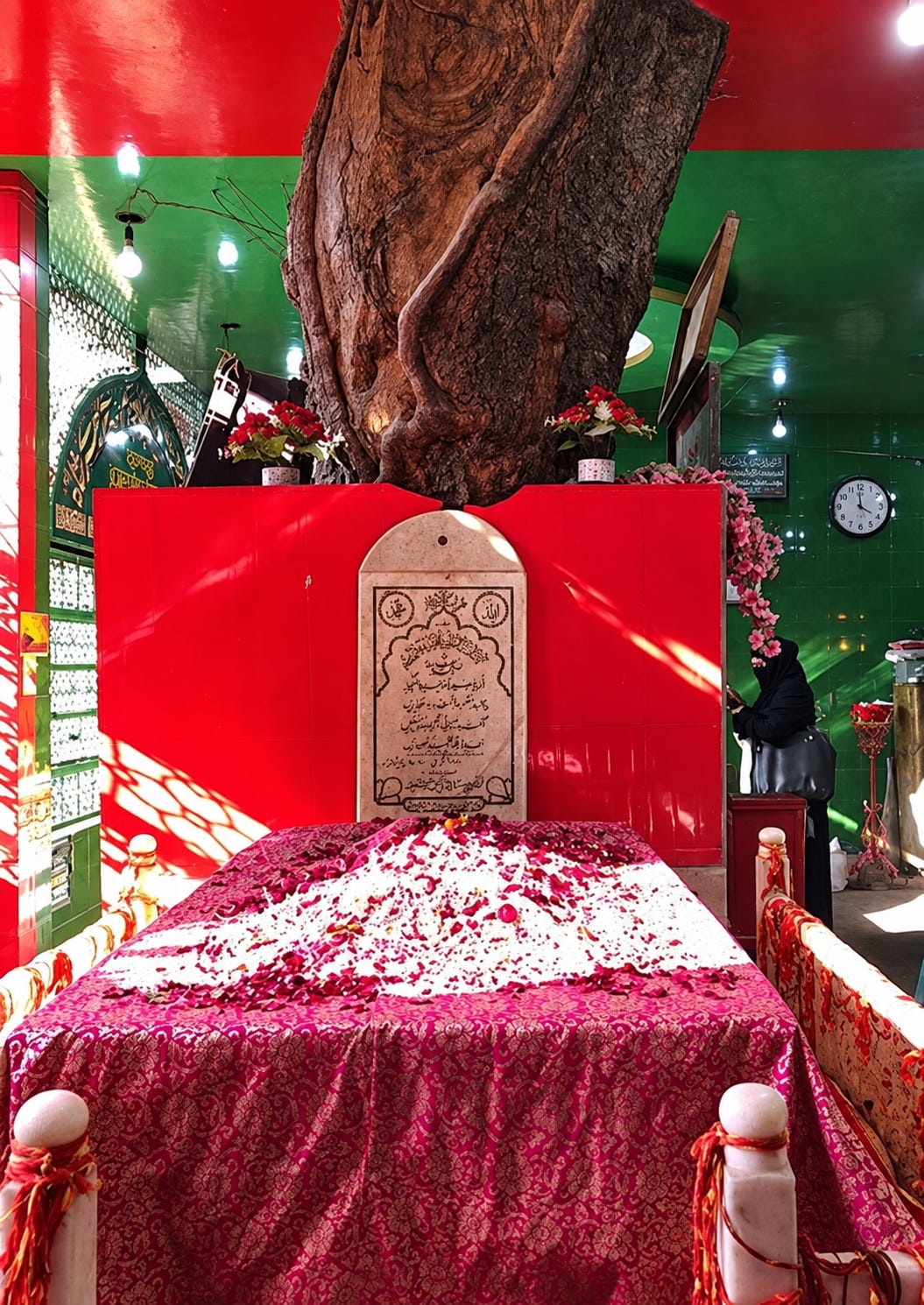
I will share here one rudimentary attempt of mine to hop in the company of all those lovers and poets across times who counted Sarmad as an inspiration.
जिसे हमनें समझा था जीने का ज़रिया
वह बिन मर्ज़े-दर्द बनता गया
जो नूर सब पर सहसा ही बरसा
वो फ़ितरत-ए-सबा बनकर
रिस-रिस कर हममें घुलता गया
रौशन तो अब भी है ज़नाना
है गुल-बदन वो गुल-बदामा
कतरा-कतरा बिन मर्ज़े-दर्द बनता गया
चमचमाते गुल-ए-बाज़ारों में
बस हमारे दिल पर कर्ज़ बढ़ता गया
[That which we took to be the means of living
Has turned into a pain without remedy
The light that suddenly showered upon all
Turned into the nature of the morning breeze
And seeped into us, drop by drop
The women’s quarters still glow with radiance
That rose-bodied one remains the rose in bloom
Drop by drop, it has turned into a pain without remedy
In the glittering rose-gardens of the bazaars
Only the debt upon our hearts keeps mounting.]

Aditya Raj Sinha is an independent writer, poet, and entrepreneur based in New Delhi. He has worked in screenwriting and research, and has served as a creative voice behind several visual projects catering to digital audiences. His interests include the intersection of religion, philosophy, and history in shaping cultural narratives.
Further Readings
Dabistan-i-Mazahib, various authors
Shaheed Sarmad, Maulana Abul Kalam Azad
Rubaiyat-e-Sarmad, translated by Syeda Saiyidain Hameed
Sarmad: Life and Death of a Sufi, Natalia Prigarina
The Emperor who never was: Dara Shukoh in Mughal India, Supriya Gandhi
Dara Shukoh: The man who would be King, Avik Chanda
Aurangzeb and his times, Zahiruddin Faruki
Dara Shukoh, Kalika Ranjan Qanungo
Travels in the Mogul empire, Francois Bernier
A Venetian at the Mughal Court: The life and adventures of Niccolo Manucci, translated by Elisabetta Gnecchi Ruscone
Mirat-ul-khayal, Sherkhan Lodhi
Riaz-ul-Shua’ra, Ali Quli Valeh Daghistani
A History of the Sikhs: Volume I, Khushwant Singh
The Shahada is the fundamental declaration of faith in Islam, meaning “I bear witness that there is no god but God, and Muhammad is the messenger of God”.
Maasir-i-Alamgiri, translated by Jadunath Sarkar
Good one