

The Palace Turned Prison
The year was 1731. She tried to shriek, but the sound died within her, trapped in a body that no longer obeyed her will. She felt that her own body had become a prison, an unfathomable whirlpool, where her soul was entrapped, slowly giving way to the commands of the universe.
No cry could pierce the thick walls of the palace and reach the world beyond her own fractured consciousness. The illness had claimed her completely. Each passing minute was getting tougher. She felt the stone walls of the royal chamber closing in, as though the palace itself sought to swallow her whole. She pondered the irony of her situation. The same palace that had once been a living dream for her, every day of which she had cherished, had now become worse than any gaol (Jail) in hell.
Feeble and weak beyond recognition, she lay there, a shadow of the woman she had been in all her forty years. As she waited for death to swallow her whole, her mind went back to the time when she was a dancer, and to the day when she met Swargadeo (a title meaning “Lord of the Heavens” adopted by Ahom monarchs) Shiva Singha, the day when he made her the Chief queen and the day of her coronation.
What a spectacle it was to behold! The air in the Rang Ghar (the royal sports and cultural pavilion of the Ahom kings) grew thick with incense and expectation. She walked in all her majesty, draped in a white silk Sador Mekhela (traditional two-piece attire worn by Assamese women), bordered with intricate motifs of gold. She looked nothing less than the Goddess after whom she would fashion her own name: Pramateswari – for she was considered as fierce and powerful as Durga herself.
She could still feel the weight of the Sador (the upper garment) embroidered with pure gold, and the heavy gold ornaments against her neck. The nobles, attendants and subjects all bowed before the new Queen: Bar Raja Phuleswari.
Phulmati And The Dance Of The Divine
Phuleswari, also known as Phulmati, was born in the Nat caste of dancers and is referred to as one of the Natis or temple dancers, similar to the Devadasis (women historically dedicated to the lifelong service, worship, and artistic traditions of a temple deity). She used to dance in a temple dedicated to Lord Shiva. Life was tough, and rewards were few, but she was a fighter.
She was considered to be the most beautiful woman in her community. They used to say that even the Gods would be captivated by her charm. Mortals and Gods alike, they would say, would be spellbound by the power in her eyes and the effortless grace of her every movement, as she danced and swirled.
It was a full moon night. She was dressed in yellow, her youthful body bejewelled in heavy gold ornaments, each piece intricately carved with patterns of vines and lotuses that caught the moonlight and flashed with every breath she took. Beads of sweat gathered along her slender neck and shone with a pure white brilliance that made them look like a living garland of pearls. With deep reverence she prostrated fully before the Lord, her forehead and palms pressed to the cool stone floor; then she rose only far enough to bow once more and touch the earth in the sacred Bhumi Pranama. And then began the dance of the Divine.
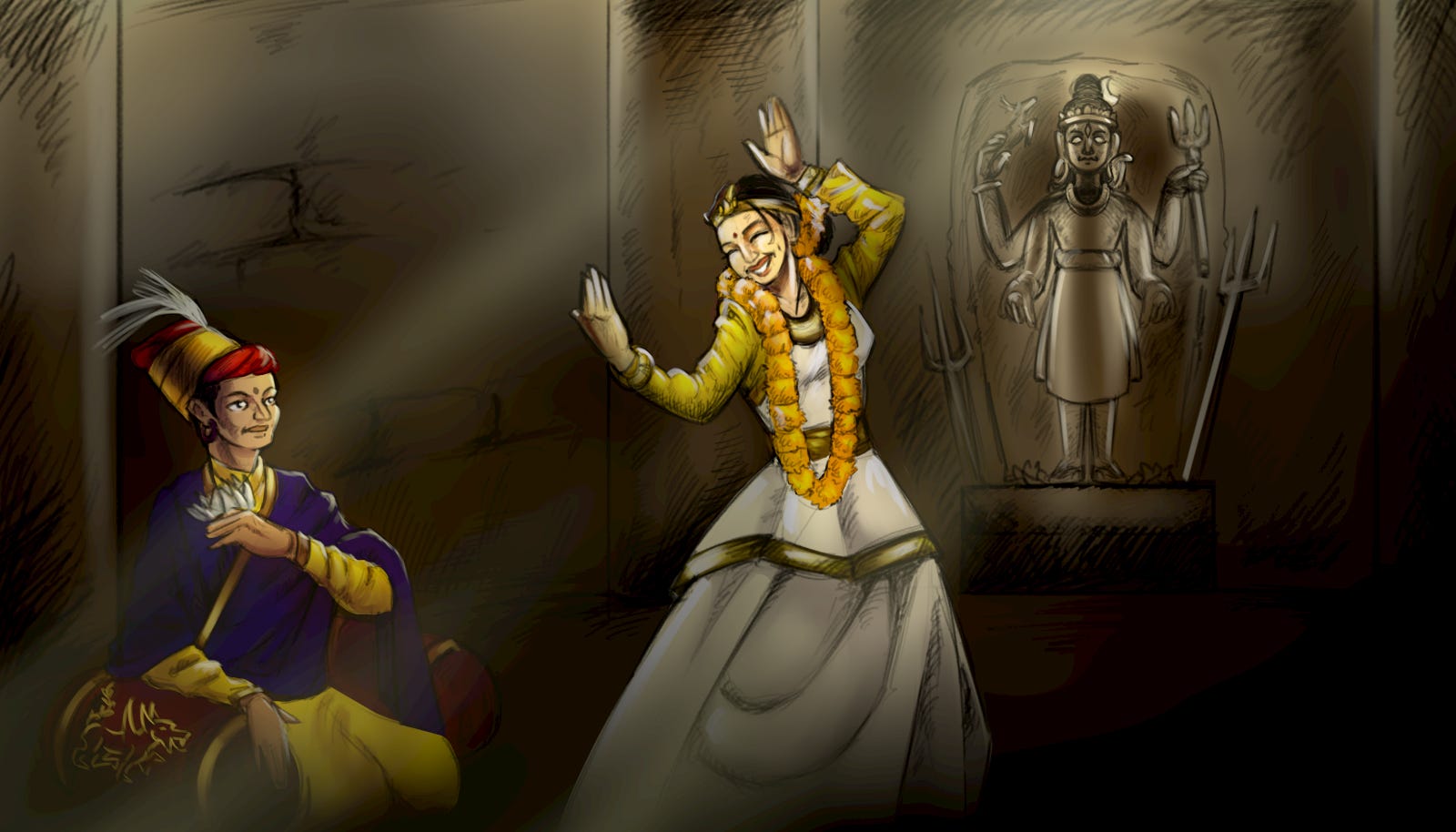
The beats of the Dhol and Nagara, coupled with her impeccable dance moves, created an ambience of divine exhilaration. Each soul who witnessed it fell into a trance. It was otherworldly, beyond comprehension.
Among those mesmerised by Phuleswari’s grace was the Ahom Swargadeo, Shiva Singha himself.
Shiva Singha, eldest son of Swargadeo Rudra Singha, ascended the Ahom throne after the death of his father in 1714. He devoted great energy to the spread of the Devi tradition, elevating the worship of the Goddess to a central place in the spiritual life of the kingdom. Under the guidance of Parbatiya Gosain, the chief priest who established a lasting lineage of Shakta worship in Assam, the young king immersed himself in the rituals and philosophies of the Shakta path.
Shiva Singha’s reign would, however, be remembered for more than religious fervour. In a move without precedent in the history of Ahom sovereignty, he transferred the absolute authority of governance into the hands of his queens. This extraordinary shift began in 1722 with the meteoric rise of Phuleswari, whose beauty, intelligence, and spiritual presence had already captured the Swargadeo’s imagination and would soon reshape the very nature of power in the kingdom.
While Phuleswari was performing her dance before Lord Shiva, Shiva Singha was seated on a throne adorned with lion motifs at the end of each armrest. He was invited there by the chief priest of the temple. He was spellbound by the dance, and by the dancer. A month later, they got married.
The Rise Of The Queen: Pramateswari
A few years after his marriage to Phuleswari, the royal astrologer of King Shiva Singha predicted that the king had Chattra Bhanga Yoga (literally, the breaking of the ‘Royal Umbrella’, symbolising the loss of royal throne) which would afflict the king if he continued to rule. This astrological combination was considered highly inauspicious. In traditional Indian political symbolism, the chhatra (royal umbrella) represented the king’s sovereignty, authority, and the very legitimacy of his rule. The predicted “breaking” was interpreted as a sign that the king would lose his throne, the kingdom would face ruin, and the great Ahom lineage itself might disappear without a trace. But the situation could be reversed if the king transferred the ruling authority to someone else. The king, apprehensive, transferred the reins of government to his chief consort, Phuleswari.
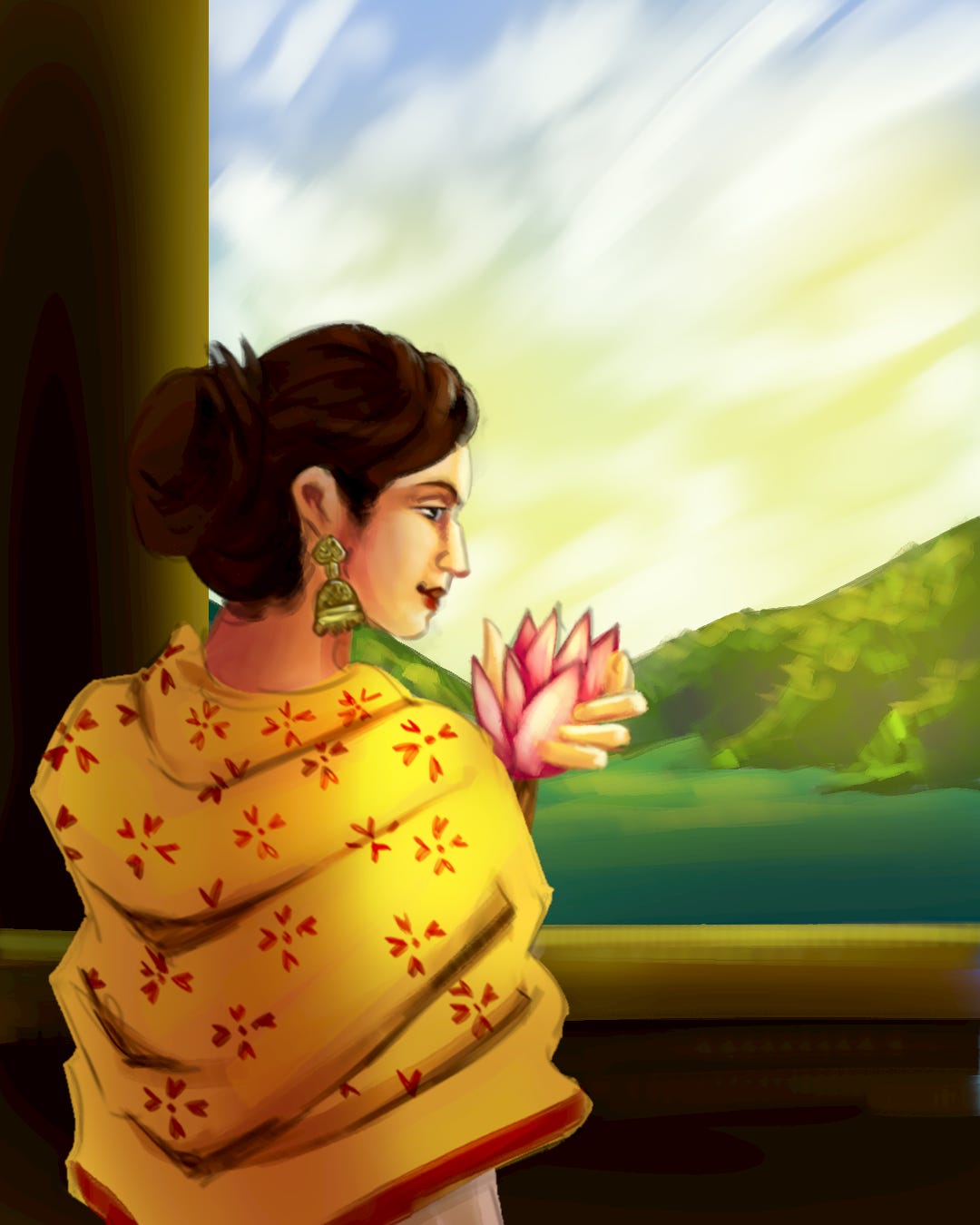
This transfer of power elevated Phuleswari to the status of the Chief queen with real authority. Under the strong influence of the Shakta Brahmin Parbatiya Gosain, Krishnaram Bhattacharya, she used her authority to promote Shaktism aggressively as the preferred tradition of the state.
Phuleswari’s aggressive propagation of Shaktism over the then-prevalent Shankara Vaishnavism (also known as the Ekasharan Namadharma tradition) that had gained prominence in the region, especially among the people belonging to the lower rungs of society because of Shrimanta Shankardeva’s preaching of an egalitarian social order, deepened the schism between the faith of the ruler (which was Shaktism or the worship of the Goddess) and that of a considerable section of the subjects (which was essentially centred around the worship of Krishna as an avatar of Vishnu).
A Tilak Of Blood
Phuleswari’s strong patronage of Shaktism placed her in direct opposition to the deep roots of Vaishnavism in the state. While the persecution of Vaishnava Gosains started from the time of Gadadhar Singha (1681–96), Phuleswari took a more aggressive approach and promoted the Shakti way of faith, centring around the Goddess.
The queen came under the influence of the Parbatiya Gosain, Krishnaram Bhattacharya, under whose guidance, she became a staunch Shakta Panthi.1 She started organising grand Pujas dedicated to the worship of Goddess Durga. It was at one of these Pujas in Rangpur that among the invitees, the Vaishnava Mahantas – including the head of the Mayamara Satra (Vaishnavite monasteries and socio-cultural centres in Assam central to the Ekasharan tradition), Chaturbhujdeva – were forced to bow before the Goddess, accept Prasad and wear Tilak from the blood of animals sacrificed during the Puja. This greatly hurt the sentiments of the already persecuted Vaishnava Mahantas.2
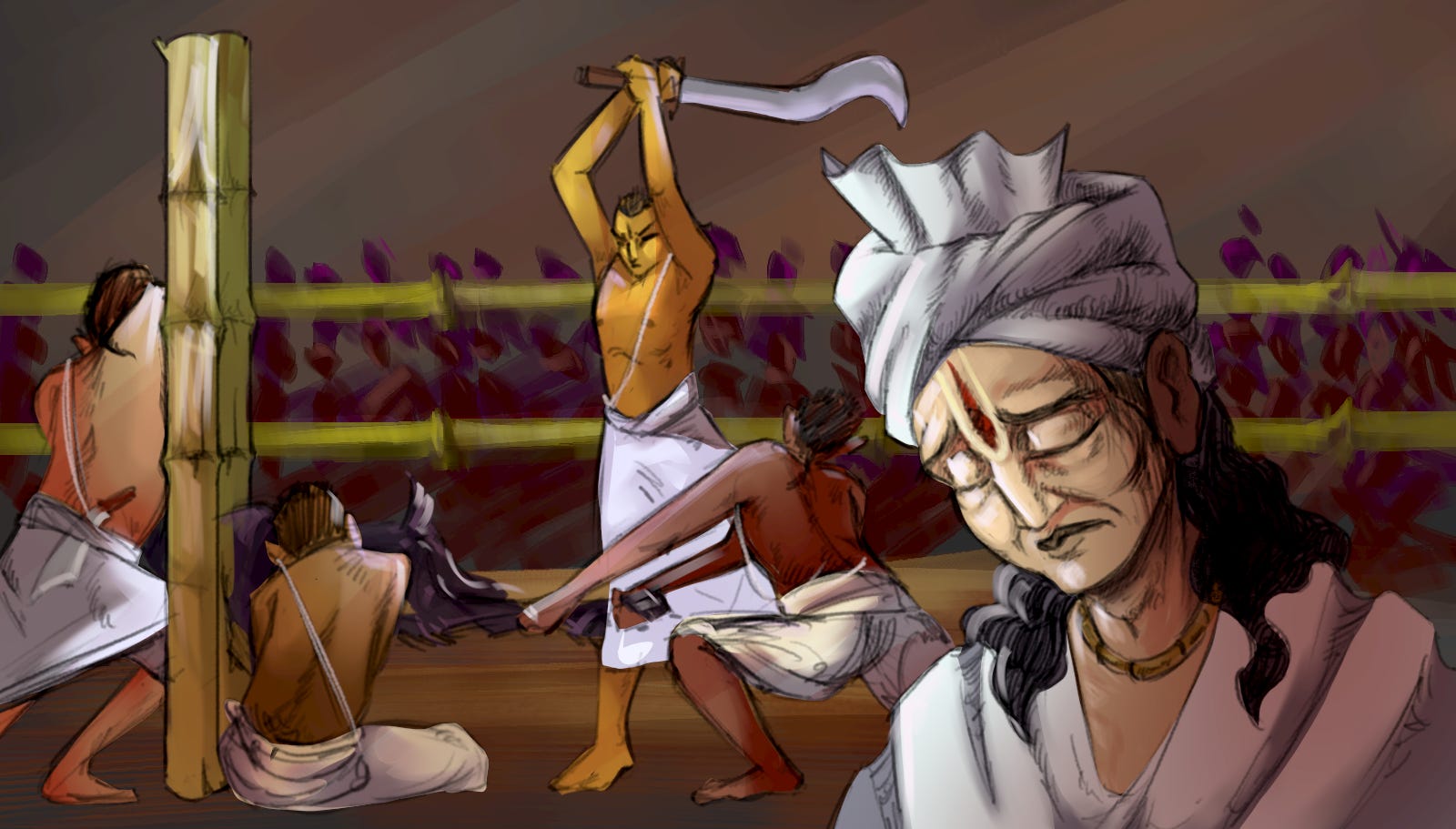
Later, in 1769, Ragha Moran and Naharkhora Saikia (key leaders of the Moran community) had to bear the brunt of the Ahom might. They were insulted, flogged, and paraded on the pretext of non-supply of war elephants. This was the immediate cause of the Moamaria rebellion. The faith of the Morans and Mataks (ethnic communities of Upper Assam) in the Ahom monarchy was long abraded due to the excesses imposed on them under the Paik system, which was aggravated by the religious persecution they were subjected to, as most of them were followers of one of the many orders (Sanghatis) that had mushroomed after the death of Shankardeva. The Paik system was a compulsory corvée labour and conscription system that formed the economic and military backbone of the Ahom kingdom.
Morans and Mataks were closely related socio-religious groups primarily inhabiting the eastern parts of Upper Assam, especially the forested and riverine tracts of present-day Tinsukia, Dibrugarh, and adjoining areas. They also constituted a good part of the peasantry, which, in turn, formed the backbone of the Paik system. The Paik system was the mainstay of the Ahom army, which depended on a sort of floating militia of foot soldiers known as Paiks. These Paiks were bound by a contract with the state whereby all able-bodied men aged roughly fifteen to fifty-five had to render compulsory military service to the state, in exchange for two Puras of land.
The great rebellion of the ‘Moamarias’, a name derived from the Mayamara Satra, was unprecedented. It laid bare the fact that the Ahom monarchy was perhaps not as invincible as everyone thought it to be, and it too could be challenged. The rebellion exposed and accelerated the internal fragility of what had long appeared a resilient monarchy.
It was the culmination of an array of grievances of the preceding decades that found expression after being provoked by the insult meted out to the Mahantas.
In the course of all of this, Phuleswari’s role in the entire conflict cannot be discounted. She became the flagbearer of Shakta worship during the time positioning herself as the emblem of the new Shakta orthodoxy that slowly became the norm of the state.
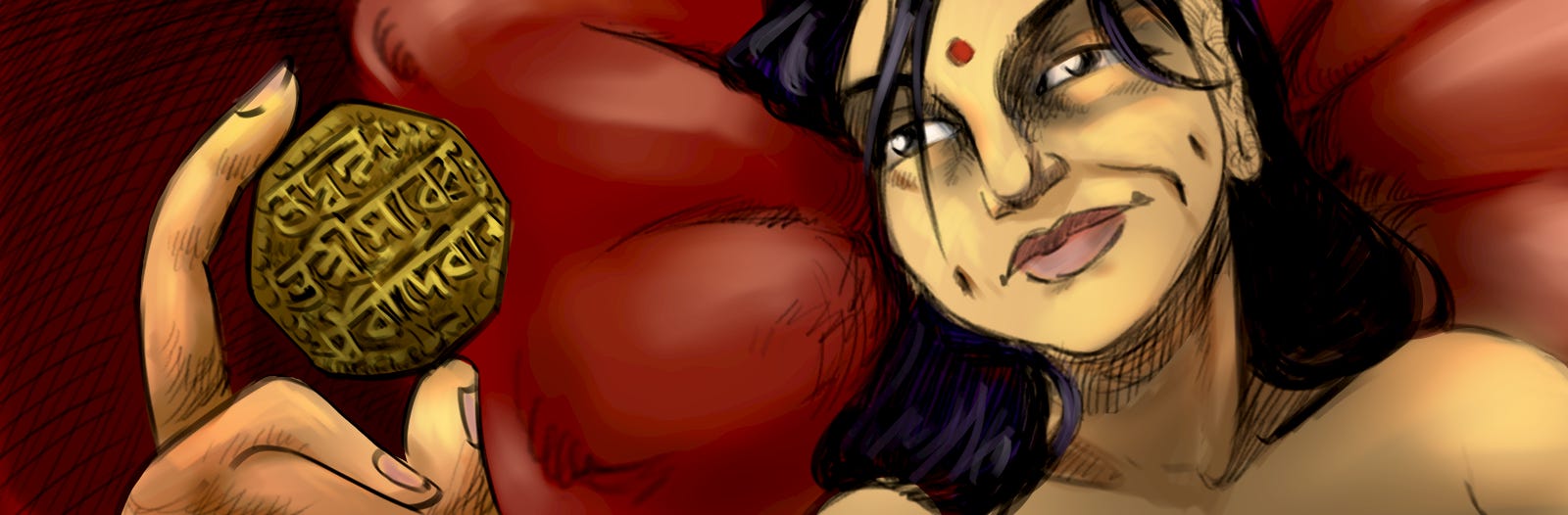
Now, as she lay paralysed against the upholstery of her bed, the comfort of the silken bedspread did absolutely nothing to ease her pain. But her mind wandered back and forth across the moss-covered terrains of memory. She was overcome by a whole matrix of emotions, ranging from pride to guilt – pride with regard to her achievements as the first great queen of the Ahoms who minted coins in her name and brought about a series of changes in the administrative machinery of the state, guilt about the part she played in the contestation between the two traditions of faith – court-sponsored Shaktism on one side and the egalitarian, popular Vaishnavism of the Satras on the other, which did not remain a purely theological dispute. It deepened existing social and political fissures.
But the list of her achievements was nonetheless too substantial to be just overlooked. She was aware of that, and she bowed before the Goddess once again, after whom she had named herself. One last struggle to draw breath, a sudden indescribable seizing of the chest — and it was over. Phuleswari would remain a pioneering figure whose name would be remembered for breaking new ground in Ahom queenship, yet she would also stand as a reminder of how religious zeal at the helm of administration could alienate the periphery and help prepare the ground for later upheaval.
Bar Raja Ambika
After the death of Phuleswari in 1731, her sister became Bar Raja or Chief queen. Phuleswari’s tenure as Bar Raja in a way presented the picture of a de facto co-regency in the kingdom, and to prevent any fuss over the power vacuum, Shiva Singha married her sister, Draupadi, and named her Ambika.
The coronation ceremony of Ambika was as splendid as that of her sister. The office-bearers of the kingdom bowed before the new queen, the formal investiture rites were performed, and the king proclaimed Ambika as the new Bar Raja and his co-regent.
Ambika’s aim was to create a niche for herself, so that people would remember her not as a shadow of the king or her late sister, but in her own right. She started meticulously analysing the various areas that required attention. She found that a large temple complex was among the most promising undertakings. This would help in propagating the Shakta tradition while also beautifying the region. She commissioned the construction of the temples of Shiva Doul, Vishnu Doul, and Devi Doul near Joysagar tank in Sibsagar. The Shiva Doul at 104 feet remains the tallest Shiva temple in the region. It has a multi-tiered Shikhara and a Kalasha at the apex of the structure. The temples reflect an assemblage of the Indian Nagara style and the Nilachal style architecture, peculiar to the region.
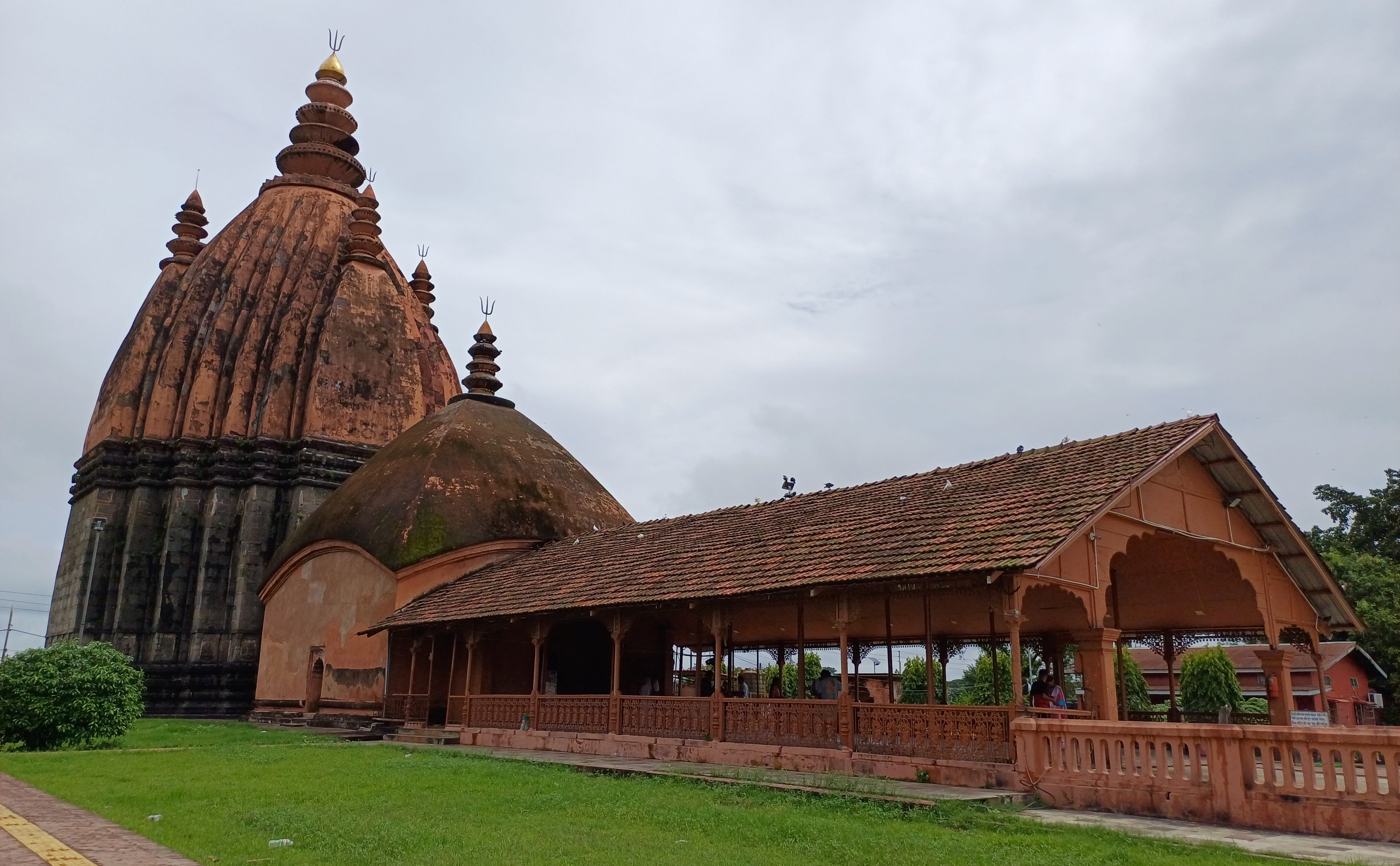
The construction of the temples used brick, stone, and lime-based mortar. The priests say the masons also mixed a paste of black lentils into the lime mortar; its adhesive properties are credited with the durability of the three-hundred-year-old complex. When she commissioned the temples, the queen could hardly imagine that hundreds of years later, the temple complex would still be generating revenue for the state, being a heritage site to reckon with.
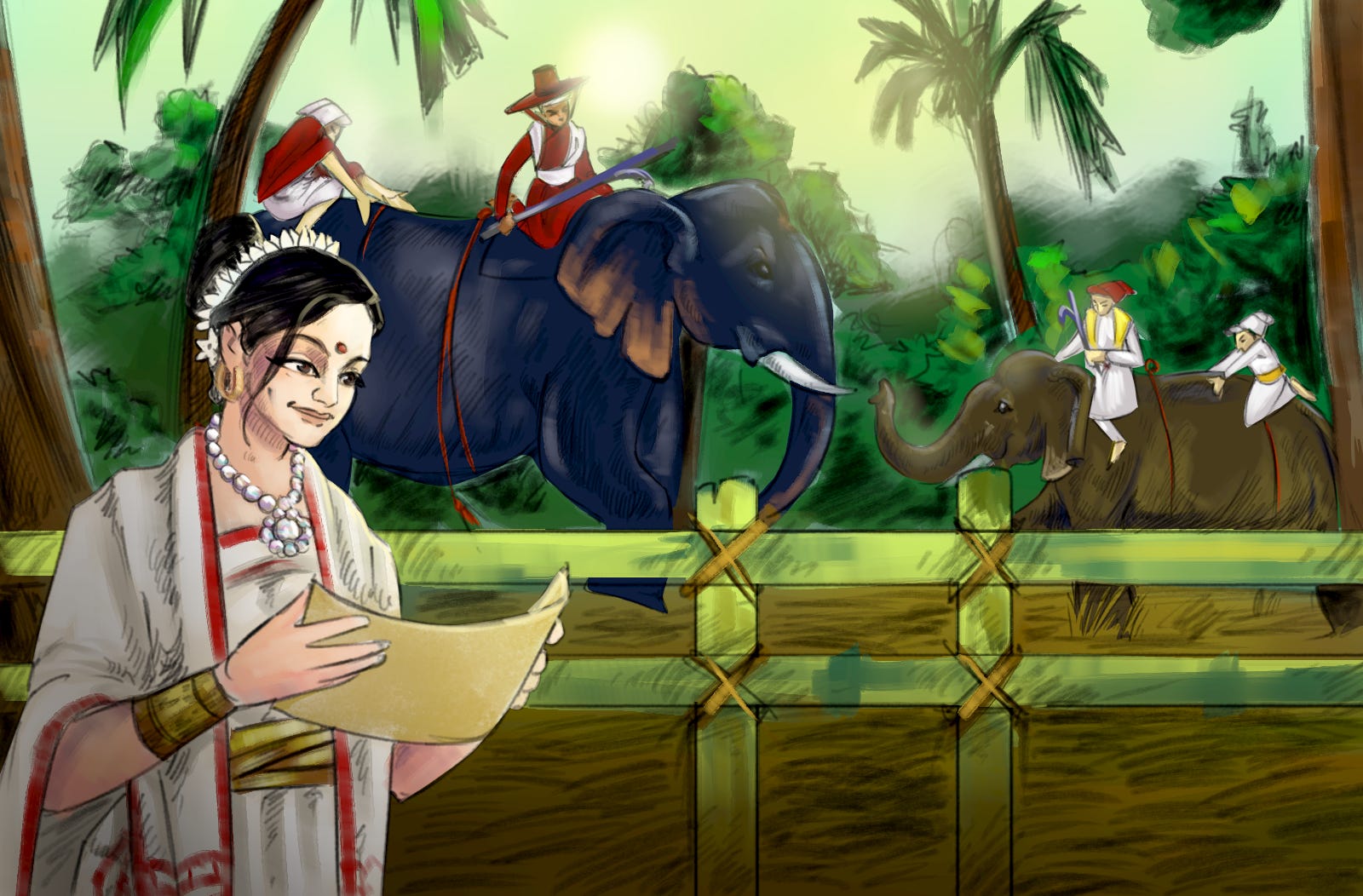
Ambika, along with her husband, also commissioned the writing of a significant work in Assamese literature known as the Hastividyarnava.
The text arises out of a disciplined and meticulous study of earlier Sanskrit treatises (such as the Hastyāyurveda of Pālakāpya, Mātaṅgalīlā of Nīlakaṇṭha, and other related works), coupled with a long and sustained practical observation of the behaviour of elephants in the Brahmaputra valley. It celebrates a long-standing tradition among the Ahoms and indigenous communities of elephant catching, training, and mobilising, with a sustainable community of Mahouts or elephant trainers existing in the region to this day. Sukumar Barkaith, the author of the text, synthesised Sanskrit theoretical knowledge with vernacular practices, tribal remedies, and terms drawn from Assamese, Tai-Ahom, and even Persian, producing a pragmatic manual rather than pure theory.
Ambika, in all her grace, carried on the administration and was as devout a Shakta as her sister. Despite the relative stability of her tenure, historians have repeatedly criticised the crown’s heavy patronage of one tradition of faith over another. This deepened the grudge of the Vaishnavas against the state.
The Queen Who Opened The Palace Gates
Ambika passed away in 1738 after a brief illness, the cause of which remains unknown. Ahom Buranjis have recorded her death without mentioning violence, poisoning, or intrigue, suggesting a natural death. King Shiva Singha then raised Enadori to the position of Bar Raja and gave her the name Sarbeswari. This maintained the institutional continuity of the powerful queenship that had characterised Shiva Singha’s later reign. Sarbeswari held the office until the king’s death in 1744.
Enadori commenced her rule with a different system of administration. She began to patronise the arts and crafts on an unprecedented scale. She opened the gates of the palace to accommodate young girls from nearby villages who had a knack for art, specifically weaving. She invited them into the very heart of the palace. There, under the guidance of skilled attendants and the queen herself, they learnt to spin fine yarn and weave the silks that clothed both royal and common households. One corner of the palace became akin to a grand workshop where girls belonging to all sections of society, irrespective of caste or birth, could develop their skills in weaving, spinning, art, and music.
Those with a gift for music and melody were taught the songs and instruments of the land, and learnt to strum and hum its tunes. Yet Sarbeswari’s vision stretched beyond the valley. She sent messengers far across the subcontinent to gather specimens of the richest brocades and the most delicate floral motifs then in fashion in distant courts and markets. Her aim was to enable local weavers to study, replicate, and creatively adapt these patterns in their own work. These patterns she brought home, placing them before the palace weavers so that they might copy, adapt, and invent anew, weaving foreign elegance into the living tradition of muga, pat, and eri — Three famous cultivated silk varieties native to the state of Assam.
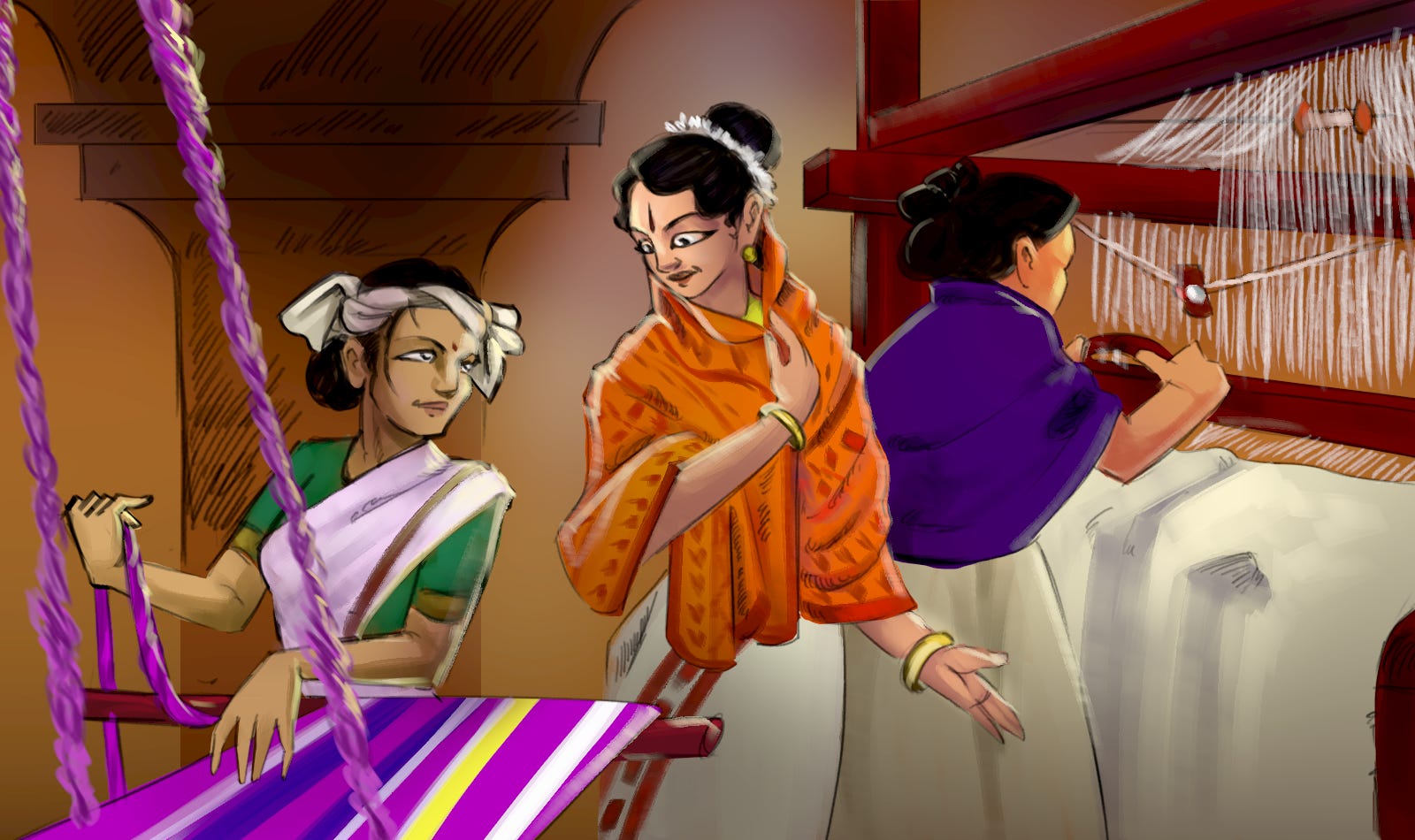
Historians such as S. K. Bhuyan would later call this an exemplary act, for it was uncommon in those days for a queen to draw ordinary women into the sacred space of the palace and place the tools of art and livelihood in their hands.
Under Sarbeswari’s care, the royal looms hummed with fresh energy, and the skill of Assamese weavers was enriched by designs that had travelled great distances. Even as she ordered the minting of distinctive octagonal coins and raised a temple at Sibsagar in memory of her mother-in-law, Keri Rajmao, her most lasting gift remained the quiet classrooms of the palace courtyard — where young girls learnt not only to weave cloth but also to carry forward a craft that would outlive kings and queens alike.
Three Crowns, One Kingdom
The queens left an indelible mark on the history of Assam, the legend and life of the community, if not so much on the pages of the Ahom Buranjis, where they are mentioned only in passing in the section celebrating the rule of Shiva Singha. The same is true of traditional writings on the period by scholars native to the land. However, tales and lore have kept their legend alive.
But the scanty references that we have to Phuleswari’s and Ambika’s contributions to the administrative structure of the Ahoms across tale and lore are generally replete with praise for the relative stability established during the period, especially with regard to their contribution to Hindu-Ahom cultural fusion as a source of religious stability and social cohesion.
However, more critical and realistic evaluations, including those of E. A. Gait, present a different picture. Gait, a British official and historian, wrote the classic A History of Assam, first published in 1906. Gait emphasised that the period under Shiva Singha, shaped in part by the influence of his queens, produced limited structural reform.
The long-standing Paik system of conscription, as has been mentioned before, continued to suffer from inefficiencies, and the lower strata of society experienced growing alienation, which, in turn, contributed to the uprising of the Moamarias against the state. At the same time, scarce resources were redirected towards elaborate constructions even as fiscal pressures mounted, leaving deeper administrative and economic weaknesses that were largely unaddressed.
But on the whole, the distinctive imprint left by the three queens cannot be overlooked. Phuleswari, the pioneering figure, broke convention by ascending the throne and issuing coinage in her own name, thereby asserting female sovereignty in a realm long dominated by male rulers, so much so that the historian S. K. Bhuyan compared her to the Mughal empress Nur Jahan.
Ambika followed as a builder of both stone monuments and sacred texts, embedding religious patronage into the physical and intellectual landscape of the kingdom. Enadori, or Sarbeswari, in turn, nurtured artistic expression and supported livelihoods, extending royal concern into the cultural and everyday spheres of Ahom life. Together they introduced a fresh strand into the historical fabric of the Ahom polity.
These women demonstrated that authority once reserved exclusively for kings could be claimed, refined, and enlarged by queens whose origins lay outside the traditional centres of power - one rising from the dancer’s floor, another from a sister’s supporting role, and the third from the ordinary setting of a village courtyard. They broke convention within the confines of the palace and ruled in their own right, in conjunction with but also independent of the dominant authority of the king. Hence their title Bar Raja, meaning ‘Great King’, implies that their authority stood structurally above the king’s and that he had little authority over them.
Their accomplishments endure not merely in the temples they raised, the scriptures they sponsored, or the coins that bore their names, but also in the collective memory of a people who continue to recall the Bar Rajas. In the popular imagination these queens are remembered as rulers who governed with purpose, created lasting cultural assets, and ultimately bequeathed a richer and more complex legacy than the one they inherited.
The ‘cornucopia’ (a symbol of endless abundance) they nurtured was not merely symbolic. It encompassed fertile lands, sacred rituals, culinary traditions, and a harmonious blending of local and pan-Indian elements, displayed in temple architecture, brocade patterns and textiles, which enriched Assamese society.

Dr Swaswati Borkataki is from Guwahati, Assam, India. She is a student of history and a researcher specialising in the socio-cultural and political history of North East India. She was awarded her PhD in 2025 from Jawaharlal Nehru University, New Delhi. Her research interests include orality, cultural history, food, Krishna Bhakti in Assam, and gender studies. She is currently a post-doctoral fellow at ICSSR. She regularly contributes opinion pieces to leading publications such as The Assam Tribune, East Mojo, Mainstream Weekly, The Sentinel, The Print, FII and the like.
Further Readings
Sharma, D. (2022). Buranji in Northeast India: A 13th century history project of Assam. Rupkatha Journal on Interdisciplinary Studies in Humanities, 14(2), 1–11.
Ghosh, S. (2022). "Two kings" in the Tungkhungia court? Love and courtly culture in early eighteenth-century Hindustan. Comparative Studies of South Asia, Africa and the Middle East, 42(2).
Baruah, S. L. (2005–2006). Sectional president's address: State, patriarchy and women in medieval Assam. Proceedings of the Indian History Congress, 66, 264–295.
Bhuyan, S. K. (Ed.). (1933). Tungkhungia Buranji: Or, a history of Assam, 1681–1826 A.D. Oxford University Press.
Laskar, I., & Ansari, S. (2021–2022). Illustrated manuscripts at Auniati Satra of Majuli Island, Assam. Heritage: Journal of Multidisciplinary Studies in Archaeology, 9, 1116–1139.
Gait, E. A. (1933). A History of Assam (3rd ed.). Thacker, Spink and Co.
Kuruvachira, J. (2013, July 12). The Hinduisation of the Ahoms. Neptune18.
The Shaktas worship the Goddess as the Supreme deity. For them, the Goddess is the source of everything in the universe and everything revolves around her. She is viewed as the Ultimate Reality, the manifestation of Prakriti or the dynamic element of the cosmos. The Shaktas practise blood sacrifices to the Great Goddess.
Gait, E. A. 1933. A History of Assam. Calcutta: Thacker Spink and Co., p. 189. : Edward Gait writes about the religious zeal of Shiva Singha and of his being under the profound influence of the Brahmin priests, so much so that in order to avert the predicted catastrophe, he not only gave out lavish gifts to the Brahmins and made hefty donations to temples, but he transferred the authority of the kingdom to his consort, Phuleswari, who was even more aggressive in her patronage of Shaktism. He mentions the incident where the queen ordered the Mahantas to be brought before the Goddess, bow before her and wear the sacrificial blood of goats offered to the Goddess on their foreheads. Gait says that the Moamarias never forgot the insult meted out by Phuleswari to their leader.