

Discovery Of An Empire
It was the spring of 1946. Jitamall, Babu and Tulsi, three children from the village of Nagla Chhela, set out on an expedition. They wandered through the sparsely populated settlement of Bayana, nearly 50 km south of Bharatpur in Rajasthan, often jostling one another as they eagerly searched the fields. They were looking for empty cartridges left behind after a royal hunting expedition led by Maharaja Brijendra Singh of Bharatpur had just concluded in the region; possessing empty cartridges was a symbol of prestige in children’s realm, and searching for them after a hunting party left the area had become a regular pastime.
However, the children stumbled upon something that would change the course of ancient Indian history forever. After pulling aside a shrub that concealed it, they unearthed an ancient copper vessel. To their astonishment, the vessel contained a large number of gold coins. Unaware of their true value, the children initially mistook the coins for copper and showed them to their parents, who, in turn, presented them to the villagers. The villagers, however, were quick to recognise that the coins were made of gold. As news of the discovery spread, approximately 285 coins were either fashioned into ornaments or distributed among the villagers.
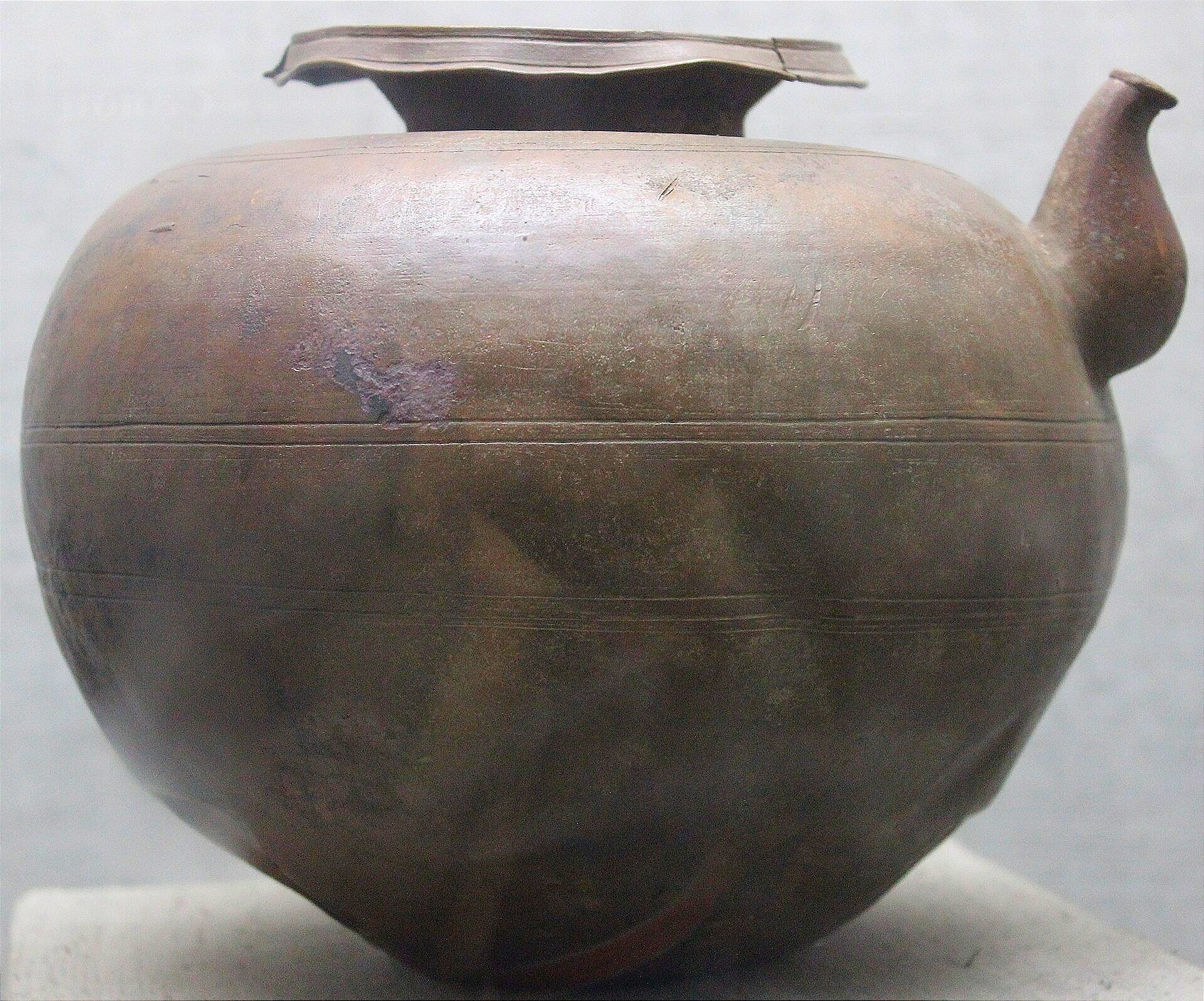
Fortunately, before any other damage was done, the Bharatpur State authorities got the news of this event and, under the orders of Maharaja Brijendra Singh, the police arrived at the scene, and the remaining 1,821 coins of the hoard were brought to Bharatpur. The villagers were fined Rs. 12,680 for the theft. The Maharaja was somehow cognizant of the significance of this marvellous find, and he invited the eminent historian, Anant Sadashiv Altekar, also a famous numismatist, to Bharatpur to estimate the value of the hoard and its history. For about four years, Altekar studied and wrote his observations about the hoard along with a photographer to capture pictures of different coins in this hoard for Altekar’s future work.
The Bayana hoard was enormously significant. Not only it was the biggest hoard of ancient Indian gold coins that was ever discovered and recovered in the history of Indian Archaeology because the previously discovered hoards like the Kalighata of 1783, the Jhusi hoard and about 13 such finds never reached more than 250 coins at once but here it was 1,821 coins, a monumental discovery but what emerged from this discovery of those children was not just a treasure, it was an extraordinary archive of Gupta history that gave tangible evidence of rulers and royal titles, their political claims and the paramount importance of gold in the Gupta economy and altered our perception of the scale of grandeur of the Gupta empire.
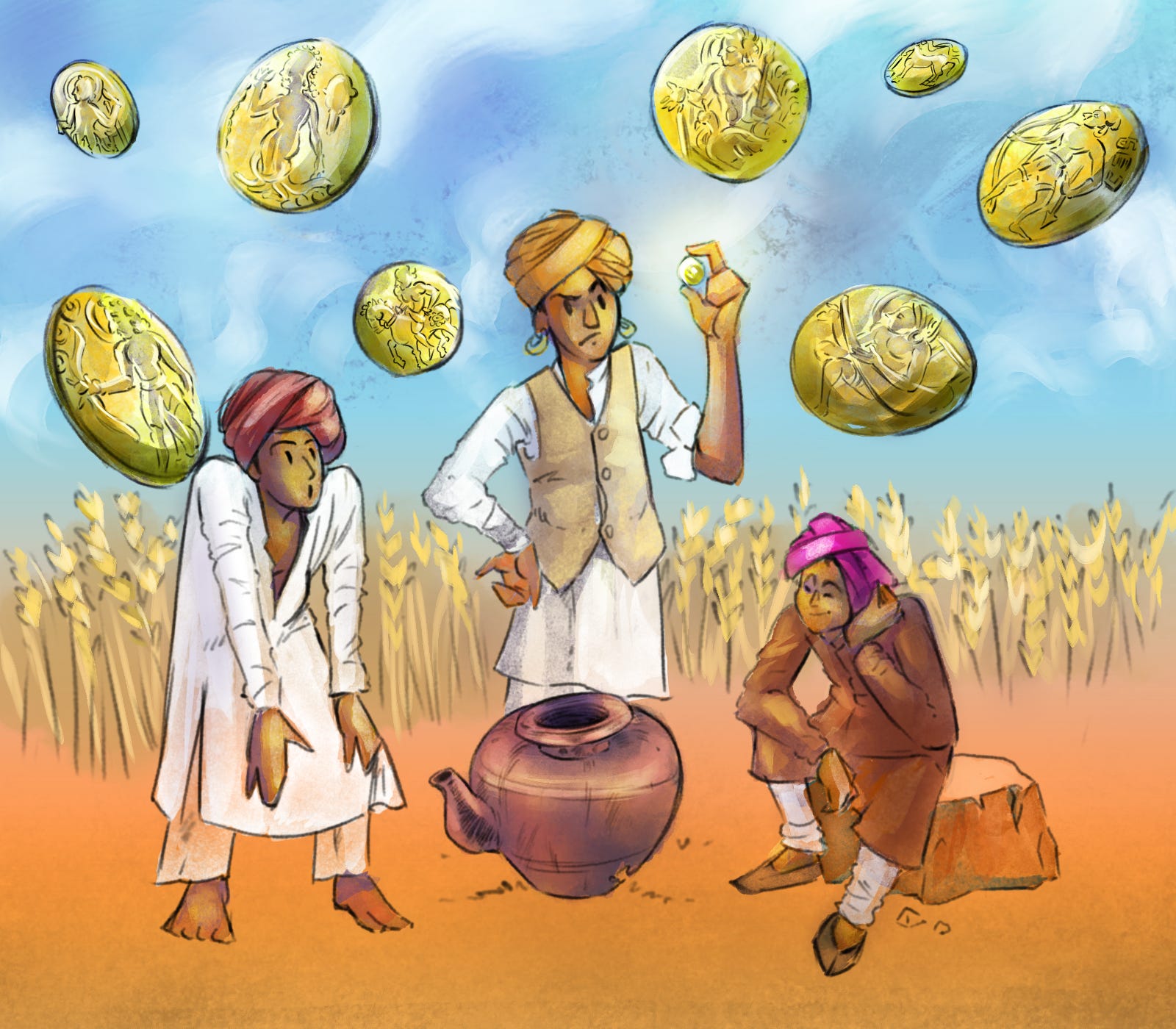
Those coins had images of kings performing rituals, embarking on hunting expeditions and fighting in battle. These images demonstrated how the Gupta imperial power was depicted and imagined. And the sheer number of the coins elucidated the constellation of their colossal wealth and exchange. There were found even those varieties of coins that were ‘so far unknown ’, and this astounded Altekar more. To him, the most interesting find was the Chakravikrama type coin of Chandragupta II.
However, as captivating as its contents are, the enigma of the hoard remains. Who gathered this fortune? Why was it buried? Was it concealed during a moment of political uncertainty or accumulated as savings or just never reclaimed? The field offered no answer. I remembered this story as I walked through Bayana. I imagined merchants and soldiers, landholders and priests, crossing the landscape, passing the Gupta Gold from hand to hand until one day it disappeared beneath the earth, waiting for centuries for those children, the children who had gone searching for bullets. The children who found the wealth of an empire.
Travelling Through Time
What inspired my journey to Bayana was this fascinating tale of the discovery of a treasure!
It was a torrid Wednesday in September 2026 when I reached the historic city. A modest railway station with auto-rickshaws waiting for me, narrow streets and small shops lay on my way as I ventured into Bayana’s roads. Having read many works on Bayana, a peculiar sentiment sprang up inside me as I marched forward: that I was travelling not towards a city but towards the reminiscence of one, into a lapsed, obscure memory. My sojourn to Bayana’s temporal and spatial existence started to feel surreal, like an enterprise into a forgotten past that dwells in seclusion, where the ancient time gazes at the present with lament.
Bayana is located in Eastern Rajasthan about 70 kilometres southwest of Agra and 160 kilometres south of Delhi. It is situated on an ancient route that connected Delhi with Gwalior and the Deccan. As I travelled along the hills of Bayana, the city gradually disappeared and a string of villages with small houses, running children and wandering animals passed my way. The hills often took me far from any road.
There are cities whose history survives more eloquently in their ruins and vestiges than preserved in chronicles. In Bayana, the survival of these chronicles is outdone by the eloquence of the enormous fort amidst the endless hills, the temples and mosques that dwell together, the stepwells and minarets, the unknown ancient buildings and inscriptions of queens and coins of kings that tell more profound tales of lost grandeur, of abandoned temples, stepwells and gardens, of kings whose soldiers lie in this sand, of architects and masons and craftsmen who created these structures.
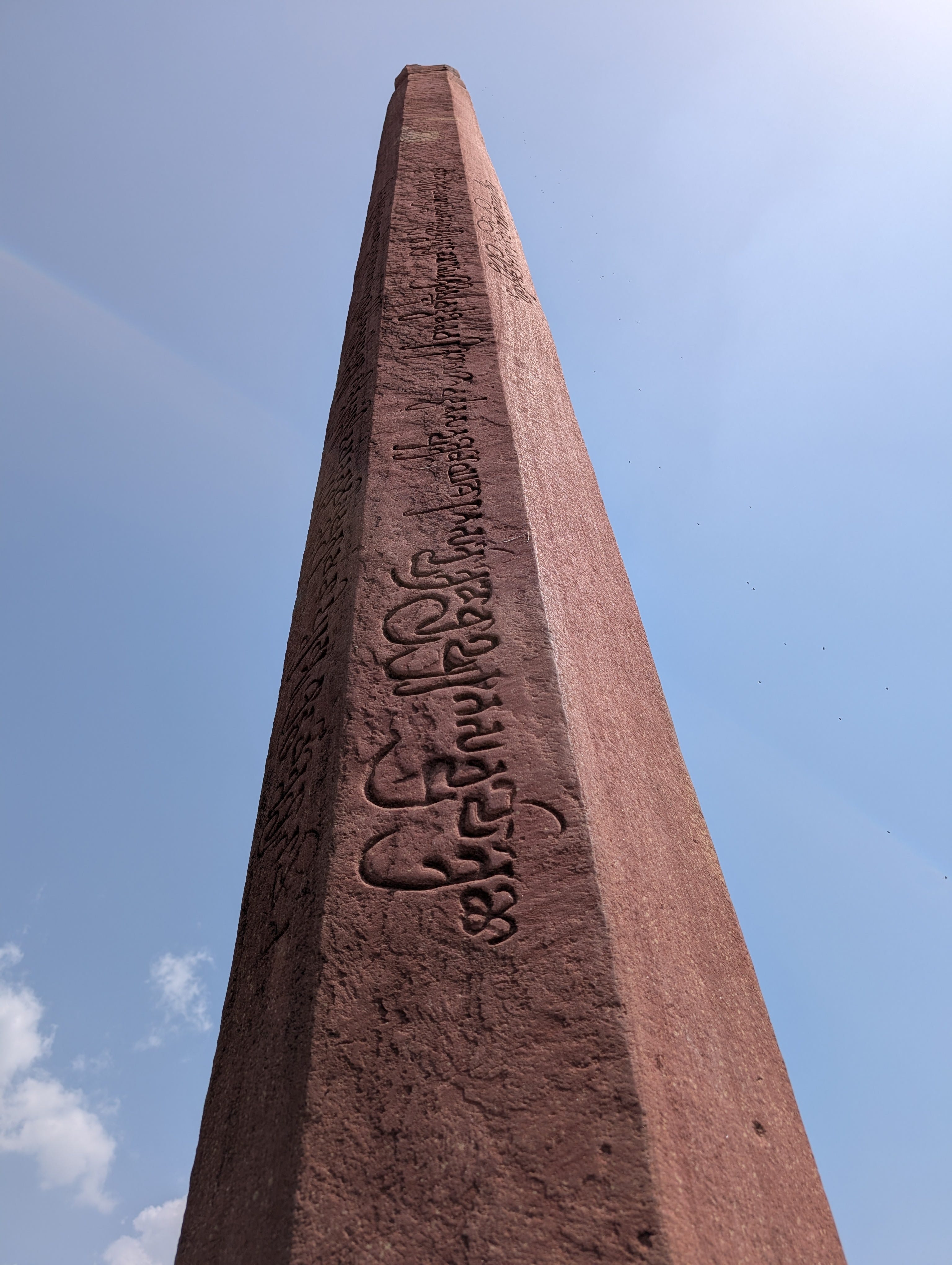
Bayana’s tale has an ancient inception. The oldest evidence available to the historians is a 300 CE fragmentary inscription that belonged to the fabled Yaudheya Republic, a political community known from inscriptions and coinage throughout North and North-Western India. Furthermore, the Gupta period renders prominent evidence for Bayana’s antiquity. A sacrificial post erected for the performance of a Pundarika sacrifice by Vishnuvardhana, a Varika ruler who might have been a subordinate of Samudragupta, is found here, dated 372 CE. Then, mired in darkness, lie the next few centuries until the inscriptions about the Kachchhapaghata rulers of Gwalior. An inscription found at the Ukha Mandir site in Bayana, dating to the reign of Mangalaraja, provides evidence of the Gwalior branch’s presence in the region. Based on an inscription discovered in an old Jain temple in Bayana, known as the Adhiraja Vijaya inscription and dated to 1043 CE, John Fleet identified Sripatha as the ancient name of Bayana.
But these tales are translucent, lying in the misty haze of history. The actual known history of Bayana was written in the red sandstone that abounds in it, with which was constructed the monumental Bayana fort that stretches endlessly towards eternity, striving to retain its glory to the present day, now lying in a slumbering village in Bayana. It was the first place I visited in Bayana.
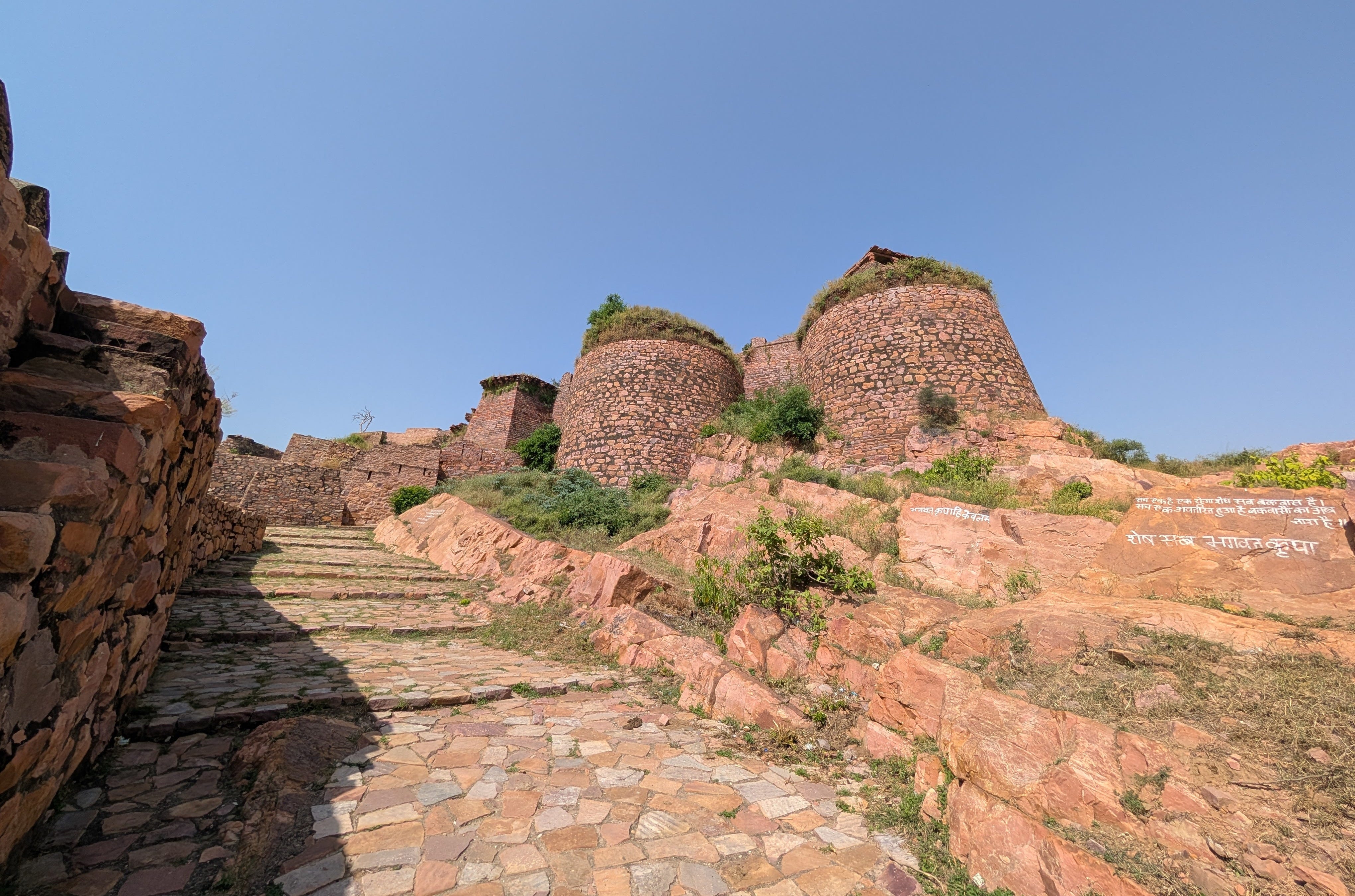
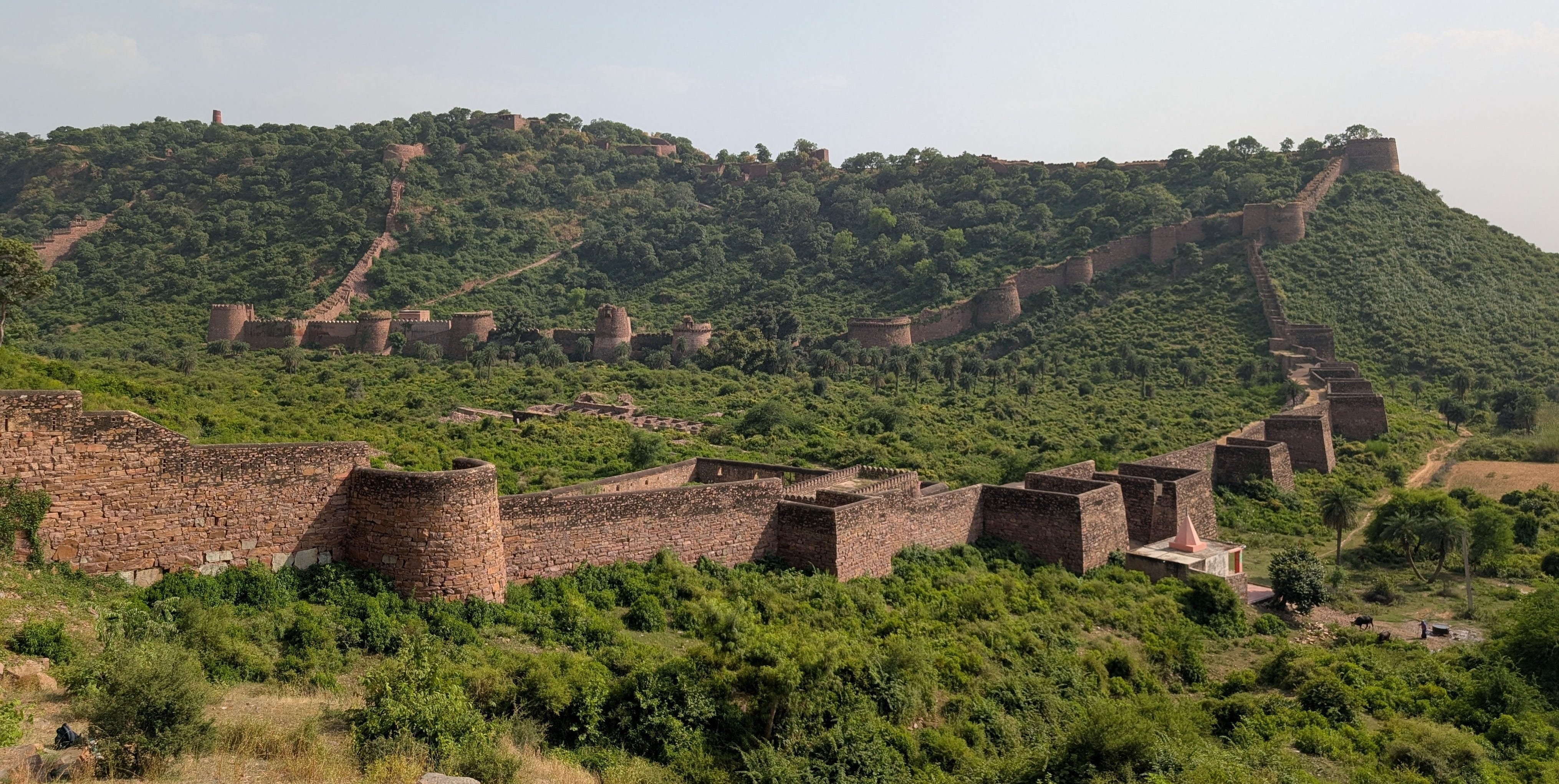
Through a road with endless hills on both sides, with bleating sheep and burdened camels, I came to Bayana fort in the Alagir Village. As I travelled these modern roads, I imagined myself travelling along the old road, and the ancient fort glistened on the horizon; the geography started appearing to me increasingly political. Every hill became a watchtower, every water source a strategic resource. I could see distant chhatris on top of the hill much before I reached there. This is the ancient Vijaymandargarh/Tahangar fort and now the Bayana fort located some six kilometres west of the present town.
But the fort was empty. There was no ticket counter, no queue of tourists, no guide to recount the triumphs of emperors, nobody to look after the fort. It lay aloof from the world, distant, bleak, forlorn. Sunlight glistened on a colossal fortified landscape, and the scorching gusts of wind assailed my face as I walked up the long stairs of the fort. The red sandstones seemed to reflect in the blazing gleams. Remnants of the fort lay in all their glory, but none to relish them.
The only people in the fort were me, my rickshaw driver, three cows, one of whom seemed determined to charge at us, two dogs who kept chasing us with inexplicable enthusiasm and a troop of leaping monkeys across the ruin. All sorts of human and animal waste lay scattered everywhere. The walls stood withered and alone under the fierce Rajasthan sun. Even during the day, the Bayana fort seemed almost spectral.
A Fort With No Ticket Counter
Italo Calvino, the Italian novelist, wrote in his novel Invisible Cities that you take delight not in a city’s seven or seventy wonders, but in the answer it gives to a question of yours.1 How can a city with such a glorious fort, many mosques and temples and other monuments and a rich history lie today desolate, sequestered and aloof from the world? This was the question that reigned in my head throughout my journey to Bayana.
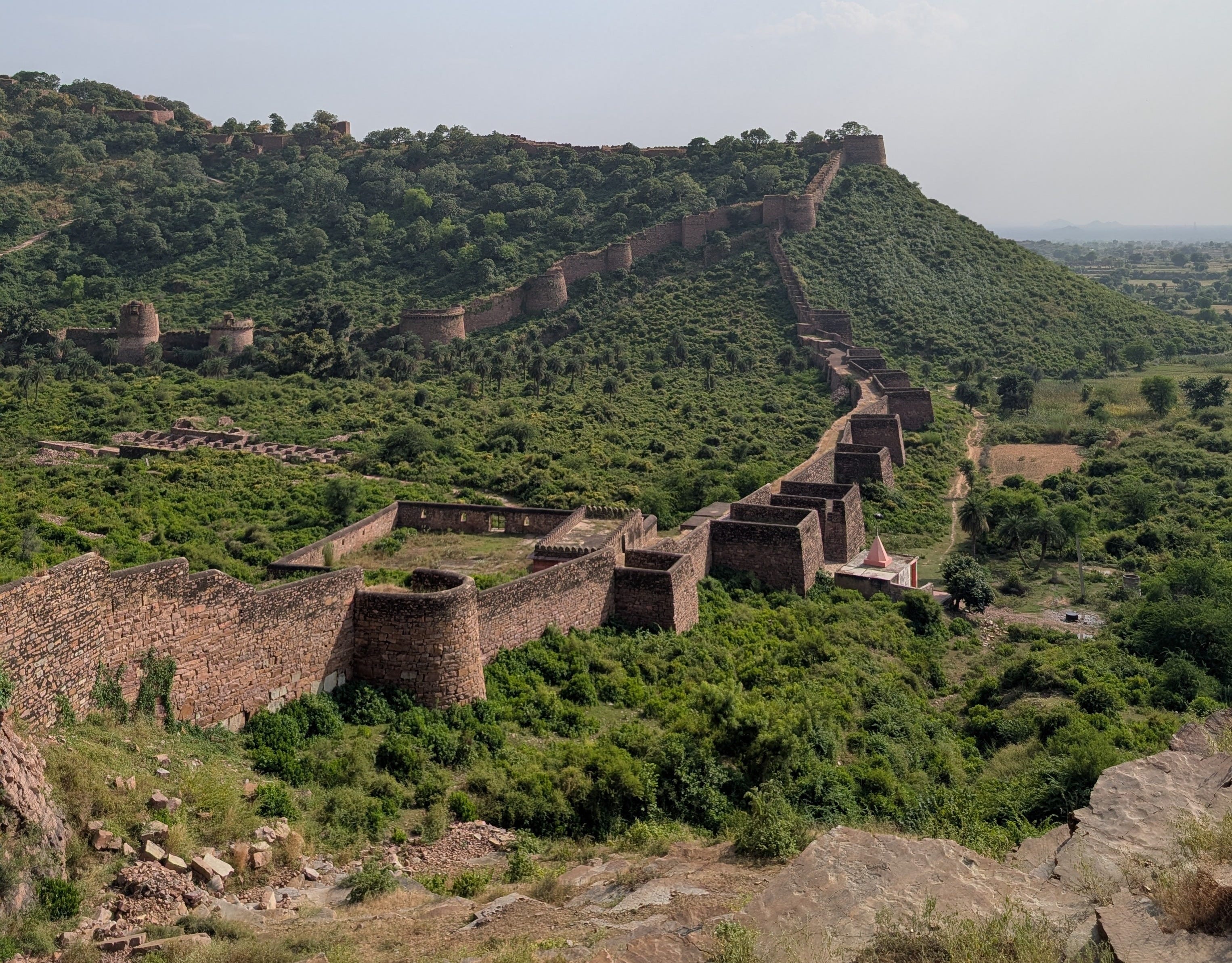
After climbing endless stairs to the fort’s citadel, which was really excruciating, I remembered reading Alexander Cunningham, the first chairperson of the Archaeological Survey of India, who wrote at the beginning of his account that he went to these places in winter. I started to understand why. The place was scorching, and dry winds burned my skin. It was a gruelling task climbing those long steps in the scorching Rajasthan heat. The stones seemed to be on the verge of combustion, and the secluded walls looked ghastly even during the day. The fort had broken palaces, havelis and minarets, and the large fortification area seemed to have once had a tremendous number of monuments.
The auto driver Ganesh told me that there is a huge fair organised on Mahashivratri here, the only time the fort has any commotion of tourists, as now there is a temple established there on top of the fort, Pahadeshwar temple. Cunningham did not talk about any temple on top of the fort. I could see a colossal landscape stretching below the fort with small homes and fields, and I envisioned soldiers marching towards the fort; artisans were building the now broken segments with deft hands striking the red sandstone.
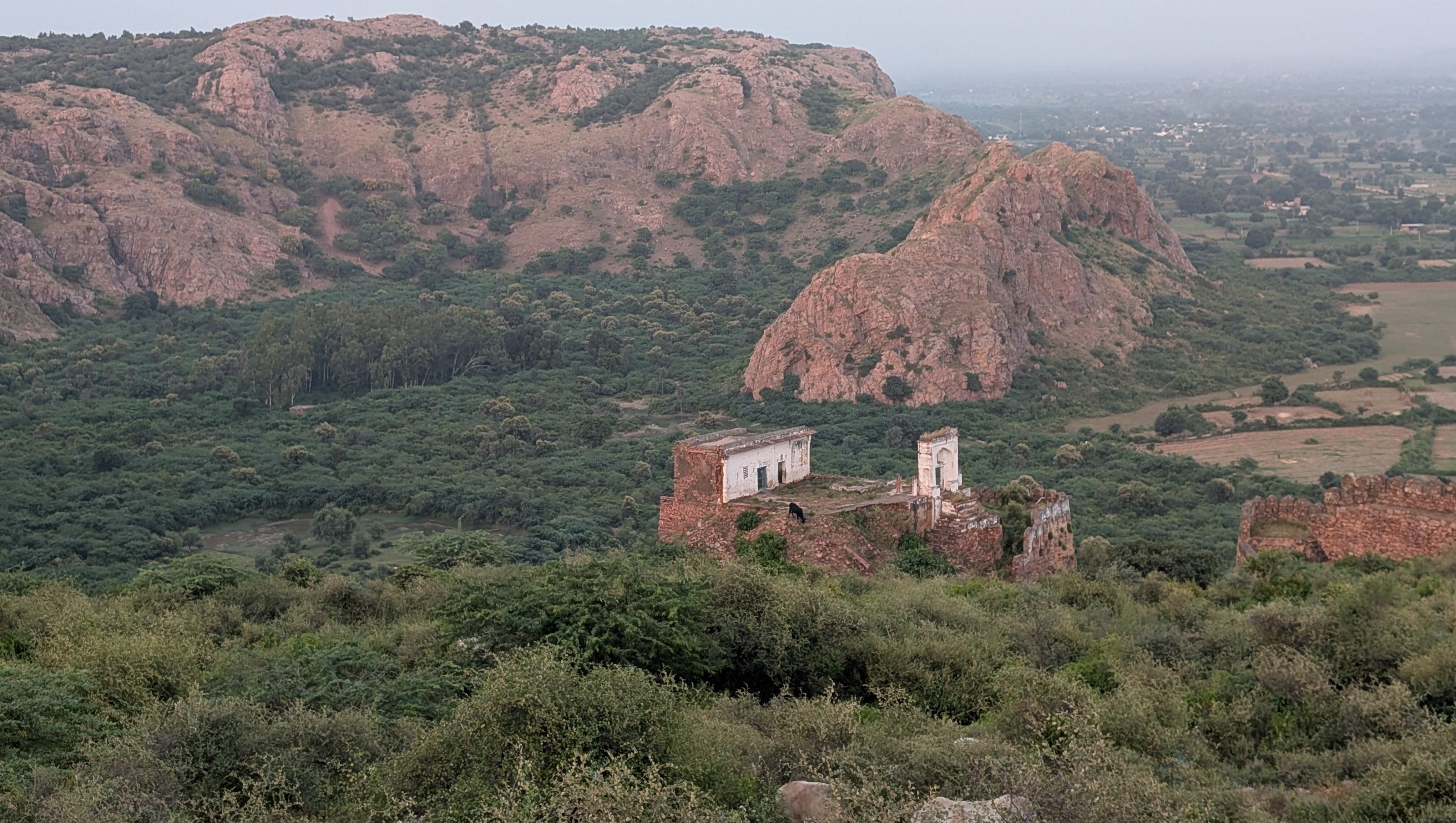
I saw a palatial hall with withered pillars standing in the citadel, and from the top of that I could see the entire slumbering town, unaware of the melancholia that loomed inside the fort. From the ramparts of the fort, I looked down at the vast sprawl of the immense fortified landscape. Broken pieces of ancient glory galore there. A massive cannon still rests on the fort’s ramparts, and from there the whole fortified area below looked massive.
Victory Is An Impatient Thing
Every fort has its inception in an ambition. Someone glances at a hill and envisions its walls and towers against the sky, huge gates and palatial buildings and a seemingly endless space for an army. Cunningham wrote that in 1043 CE, Vijayapala of the Yaduvanshi or Jadon dynasty had precisely the same ambition and turned it into an endeavour. Upon the hills above Bayana he raised this fortress and called it Vijaymandargarh or Vijayagarh, the Fort of Victory.2
Victory, however, is an impatient thing. It does not stay where men put it. Vijayapala’s ambition was sustained by his successors through the twelfth century. But by the final decades of the century the political weather of northern India began to darken. Armies stormed from the west, and the death knell of the dynasty echoed in the fort in silence.
In 1194, Muhammad Ghori’s forces reached Bayana! The ruler of the place retreated to the fort to handle the forthcoming carnage. Who conquered the fort first is a story that has been much debated. As with so much of Bayana’s past, the story refuses to settle into a single version.
Another misty memory lingers on from the old traditions of the place about a conqueror, Abubakar Qandahari, a military general from the North West. Some accounts place his conquest in the mid-eleventh century and state that Qandhari was a general from Ghazna in Qandahar associated with Mahmood of Ghazni. Some dispute this rendition and state that Abubakr Qandhari was instead among those who came with Muhammad Ghori and Qutb-ud-din Aibak when Bayana was conquered in 1196. But the story, with all its iterations, is shrouded in the midst of history.3
To this story, the bards have added a tale of a Jauhar, a rather unattested figment of the historical imagination that I came across in Bayana. Local tradition remembers Vijaypal being attacked by Abubakr Qandhari in the eleventh century. 360 women of the fortress committed a tragic Jauhar, which many people that I met in Bayana called the first Jauhar in Indian history, in which the women, believing that their men had been defeated, entered the flames, only to discover that the battle had not been lost. This episode, whether true or not, belongs to Bayana’s historical memory, although there are no records of this jauhar.
These multiple narratives of history wandered through my mind as I walked on the ramparts of the fort amidst the afternoon sun that breathed fire. I stood at the gate of the deserted landscape of the fort and imagined Muhammad Ghori coming to Bayana, accompanied by Qutb-ud-din Aibak, chasing the ruler of Bayana, Kunwar Pal, to this fort. I saw Baha-ud-din Tughril arriving here soon as the new governor.
But as the tale goes, Vijayagarh did not quench his desires. Baha-ud-din instead founded a new town nearby called Sultankot and wrought a new seat of power at a distance from the old fortress. As I descended from the citadel, that new town took shape in my thoughts. The landscape that now seemed sparse and sleepy would once have been full of movement. Houses would have appeared along the roads, animals would have crowded the streets, traders would have brought their goods, soldiers would have passed through with horses and equipment, and artisans would have worked beneath the sound of hammer striking stone.
Minhaj-i Siraj, a thirteenth-century historian, tells us that Tughril encouraged people from different parts of Hindustan and Khurasan to settle in the area. He bestowed houses and resources on men of distinction and attracted merchants to his new centre.4

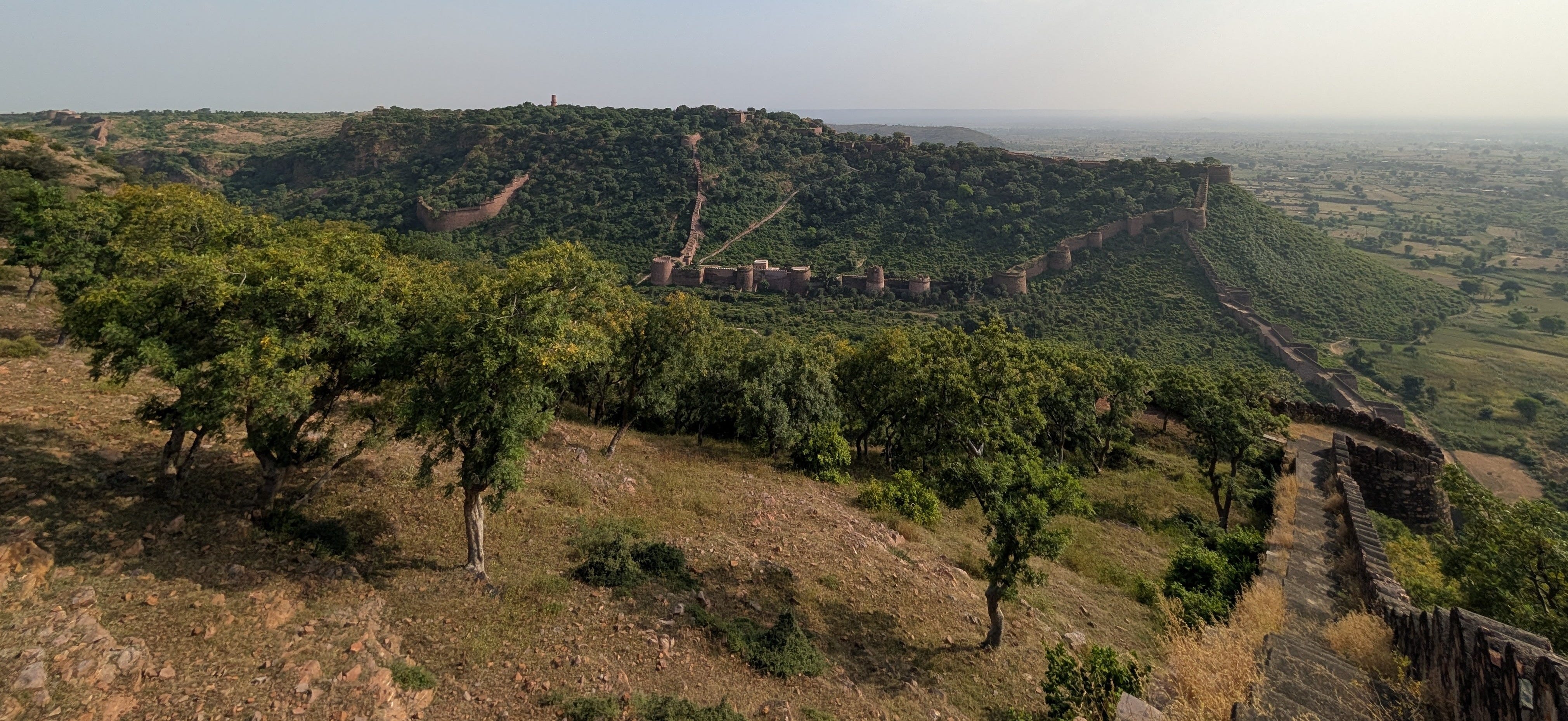
Till now I had been walking through the remains of an ancient Rajput stronghold, thinking about Vijayapala, Tahangarh and the legends that had gathered around the fortress over centuries. But as I stood upon the ramparts and looked down towards the scattered houses of Alagir, I began to imagine another Bayana emerging beneath me, a Bayana of Turkish soldiers and Persian-speaking officials, merchants from distant lands and Sufi saints, craftsmen and ambitious governors. The ensuing Delhi Sultanate remade the earlier Bayana, and while the fortress remained perched upon the hill, power altered around it, and it built new institutions and settlements and new connections with the Islamic world.
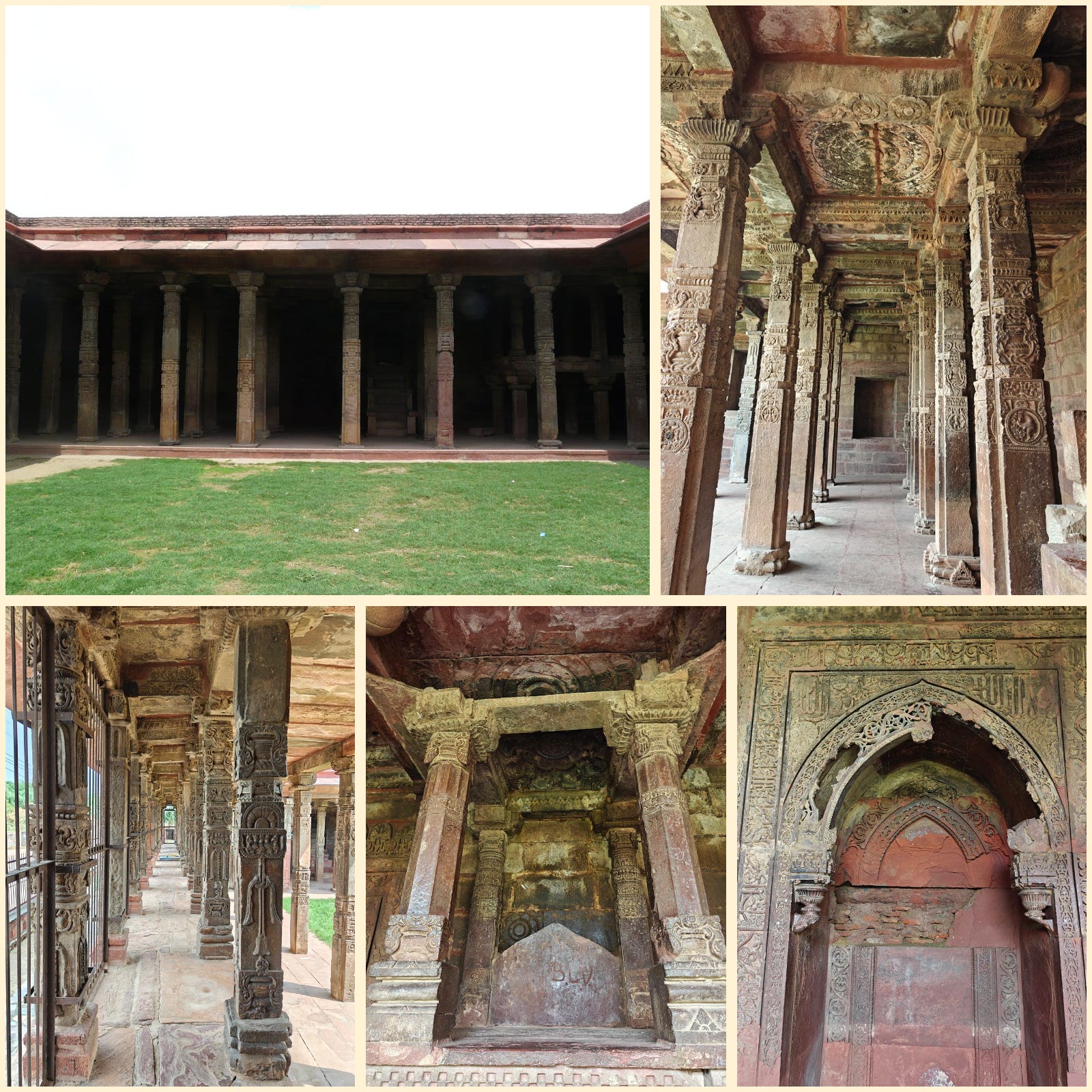
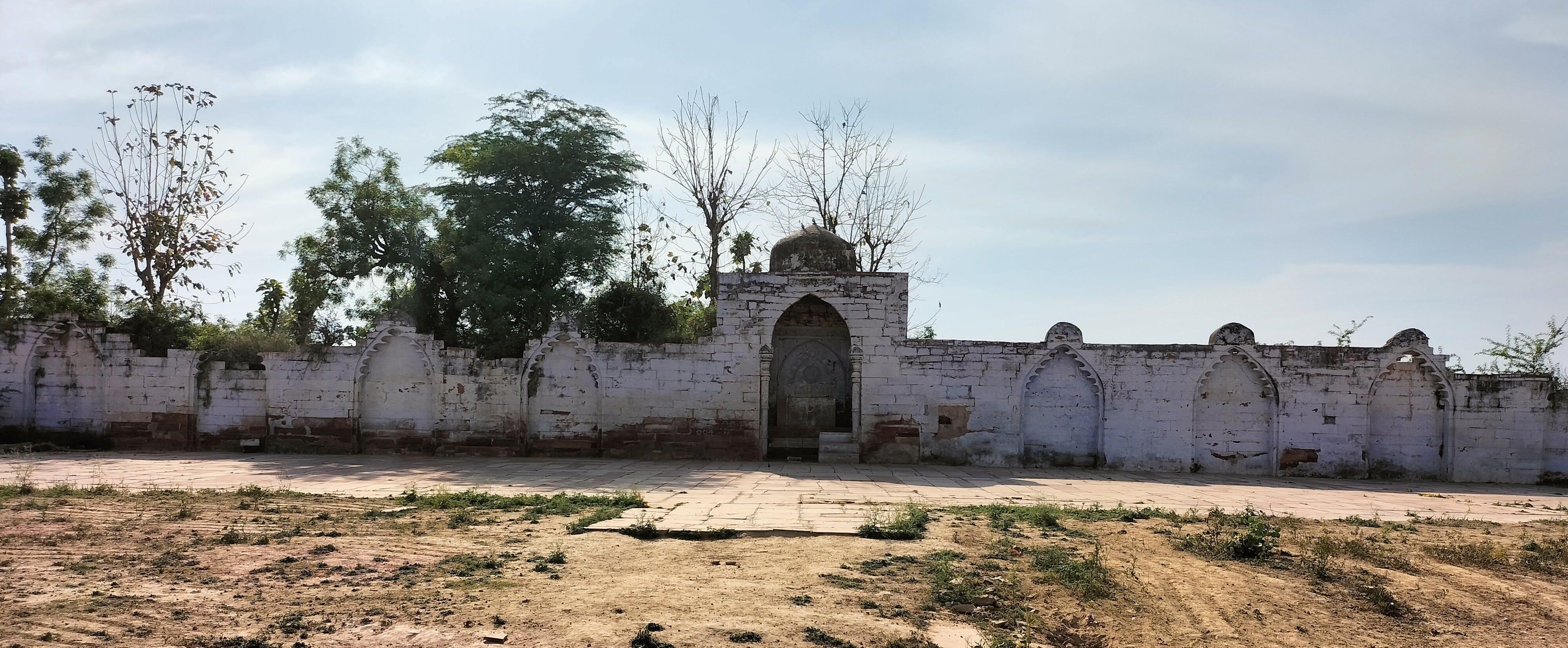
I walked through the heat thinking about what it must mean to build a city almost from political ambition. The fort above was the old statement of power. Sultankot below was the new one. Tughril established a mosque and an Eidgah, giving the settlement the architectural institutions of an Islamic urban centre. The surviving Eidgah is particularly remarkable. Its great prayer wall still stands as one of the most important surviving monuments associated with the earliest phase of the Sultanate in Bayana.
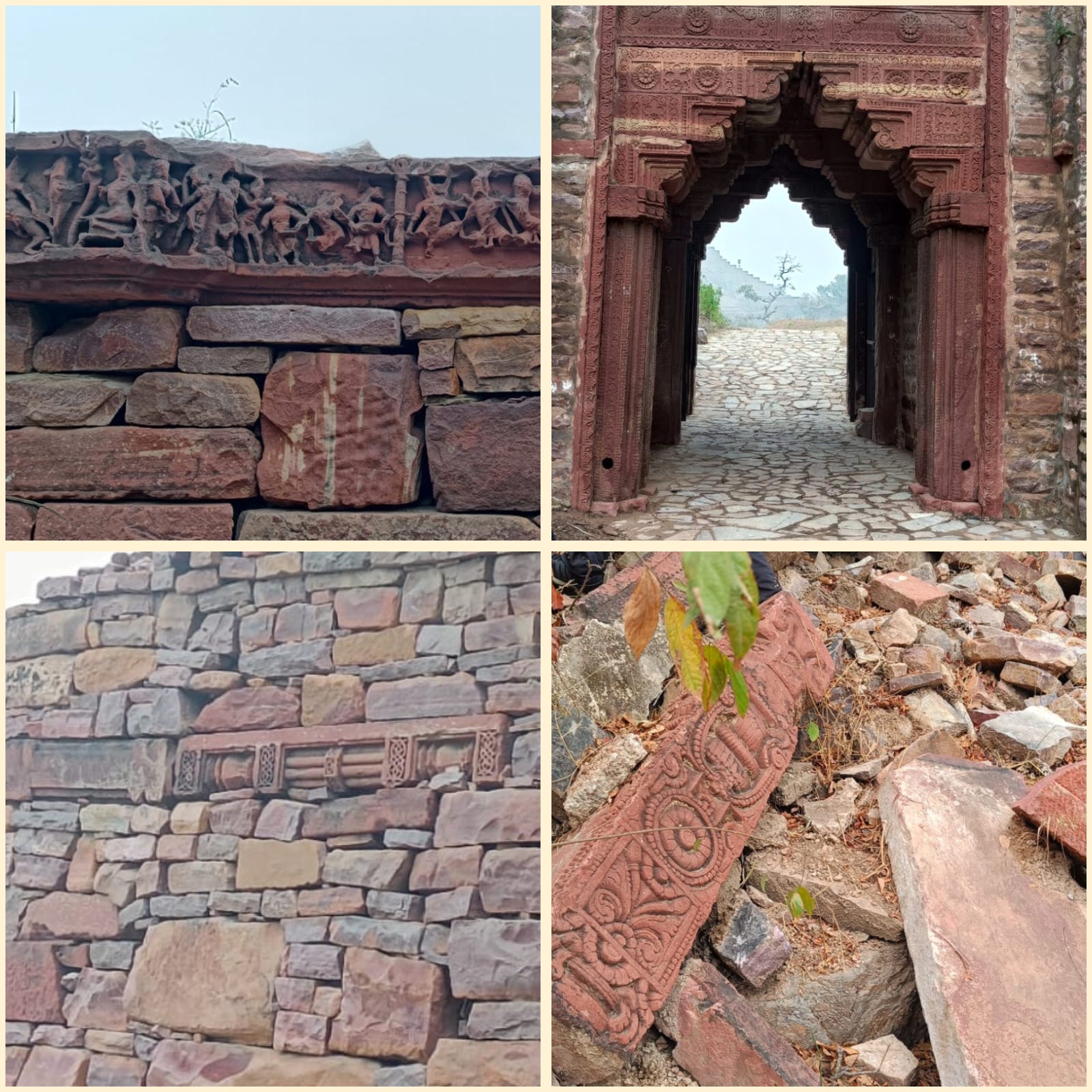
His reign, though, was not bereft of darkness. Tughril became famous as the Islamic Ghazi as he destroyed many temples there and then had the broken parts of the temple reused in constructing his monuments.
Eventually, the consolidation of the Sultanate under Iltutmish brought the region more firmly into the political circumference of Delhi. As I continued walking along the walls, the fort seemed to me like an enormous watchtower overlooking the frontier. The landscape itself explains much of Bayana’s history. From the hills I could see how the routes ran towards the northern plains, towards Agra and onward towards the territories of central India and Rajasthan.
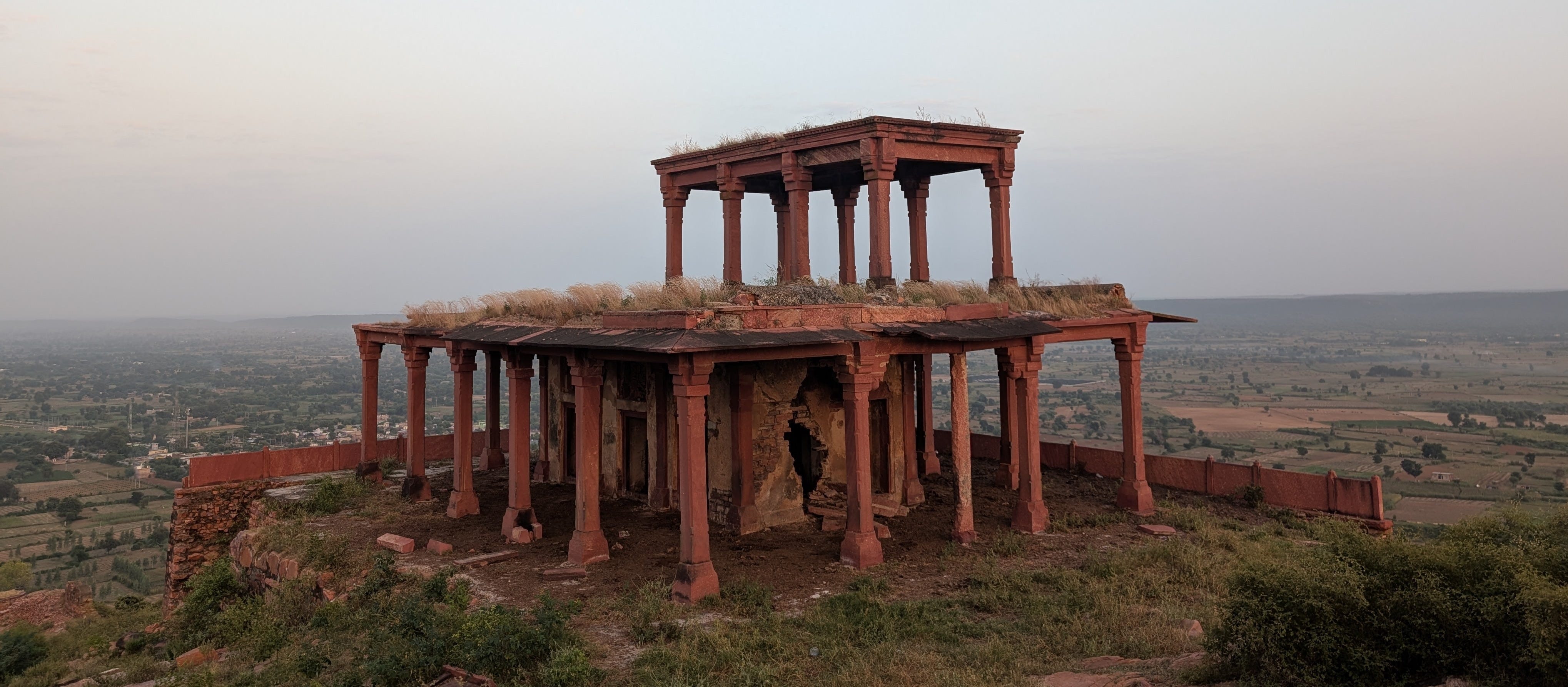
The Khalji period brought another transformation. Alauddin Khalji’s blood-stained ambitious expansion into Rajasthan turned Bayana into an even more significant strategic position. Ranthambore fell in 1301. Chittor fell in 1303. The Delhi Sultanate pervaded deeper into Rajasthan, and Bayana was incorporated into the military infrastructure abetting this expansion.
The thought of those campaigns made the quietness around me almost surreal. The same hills that now hold only scrub and scattered buildings must once have watched armies moving across the horizon. Soldiers would have carried supplies along the roads. People must have shuddered with fear for their lives. Horses would have kicked up clouds of dust. Messengers would have ridden between forts.
The Great City Of Ibn Battuta
Yet the great irony of empires is that their expansion often contains the seeds of their difficulties. The Tughlaqs inherited an enormous territory and attempted to govern it from Delhi. Under Muhammad Bin Tughluq, the Sultanate reached an extraordinary extent, and extraordinary was the difficulty of governing such a vast empire. The distance between Delhi and Bayana mattered. Orders from Delhi took days to reach Bayana, so a rebellion could gain traction before the information reached Delhi. A governor stationed in Bayana could harbour dynastic ambitions due to this.
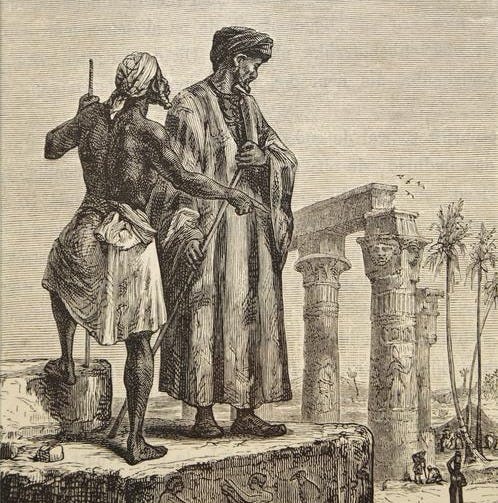

During Muhammad Bin Tughlaq’s eventful reign, a traveller from Morocco arrived in Delhi and later Bayana: Ibn Battuta, who had travelled to Beijing and Baghdad and many other great cities of the world.
Mehrdad and Natalie Shokoohy write in their study of Bayana:
“Ibn Battuta, who had seen many fine mosques and great cities of the world from Cordoba to Cairo, Delhi and Khanbaliq (Beijing) visited Bayana in 1342 and found the built area so impressive that he called Bayana a ‘great city’ and its congregational mosque ‘one of the finest’.”5
As I walked through those travelled streets that echo with ancient memories, his words acquired a haunting force. The great mosque he praised still exists; the fort still glares at the plain; markets and streets of the fortified settlement are still traceable; fifteenth and early sixteenth-century houses still cling to the hill; stepwells and old reservoirs are witnesses to generations of people negotiating with droughts. But all of it lies dilapidated after a long life of suffering from the ravages of time.
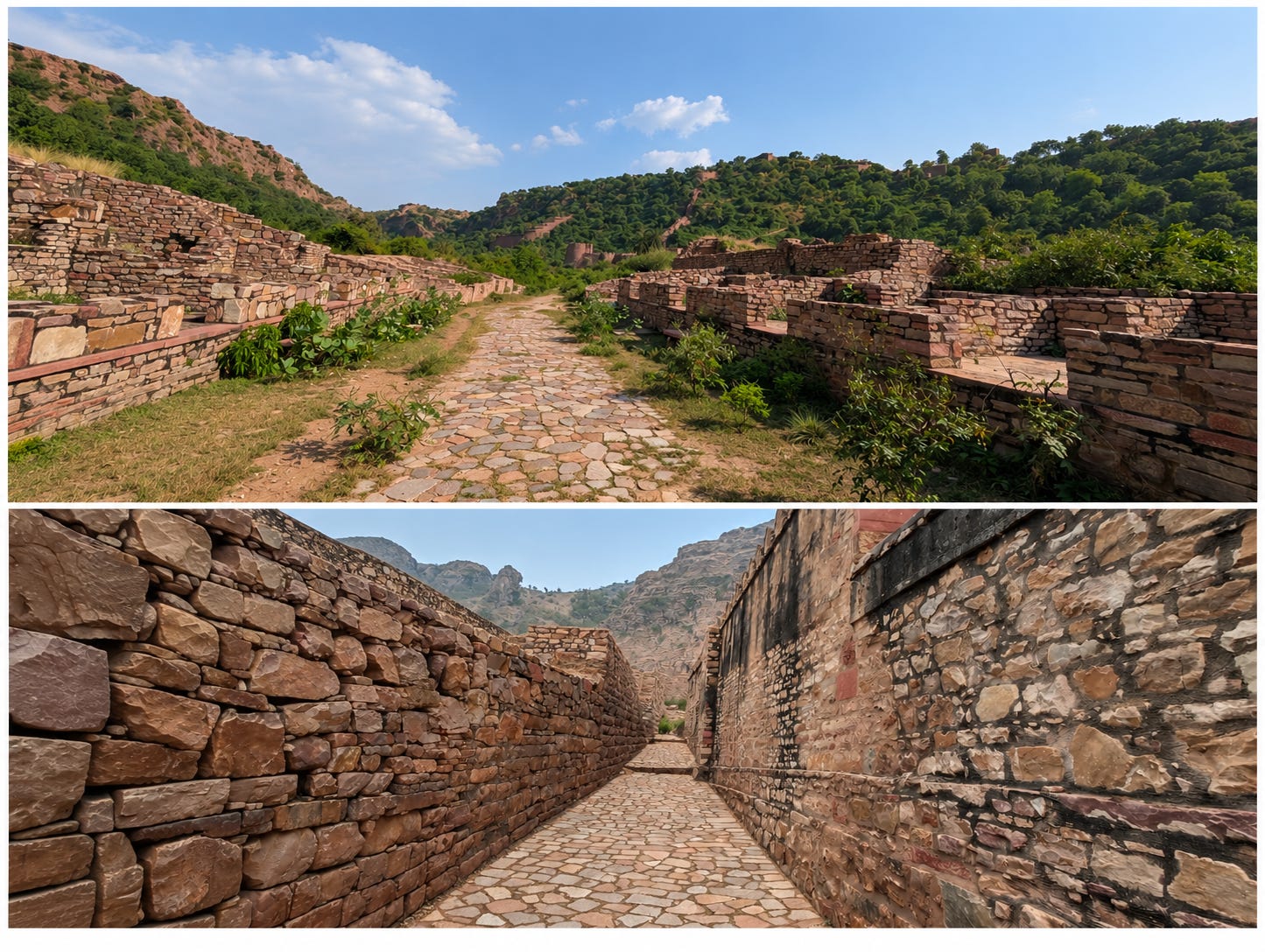
However, in 1342, when Ibn Battuta arrived at Bayana, the city, along with the grandeur of the broad bazaar, great mosques and buildings, bore to him scars of a harsher world.
He saw a man sitting in the colonnade of a house. His arms and legs had been cut off. His eyewitness account is harrowing. The man was among the victims of Malik Mujir, a powerful governor whom Ibn Battuta describes as immensely cruel. He had murdered and mutilated many inhabitants of Bayana. But as Bayana’s story tells us. Power does not last forever.
When the Sultan Muhammad Bin Tughlaq arrived in Bayana, the people complained to him. Malik Mujir was arrested, and a chain was fastened around his neck. The Sultan ordered him to compensate them with his wealth. Then he ordered his execution.6
In 1351, nine years after this incident, Muhammad Bin Tughlaq died. His cousin, Firuz Shah Tughluq, brought more substantial stability to the Sultanate, but the political order remained precarious, and by the conclusion of his reign in 1388, it was rampant.
And then a ghastly shadow, a ruthless spectre, loomed over the Indian sky. In 1398, Timur, the Turco-Mongol conqueror, arrived in Delhi. The reverberation of the steps of Timur’s armies was enough to spread fear across northern India. When the conqueror invaded Delhi and massacred its people, the inhabitants of Bayana did not want to succumb to the same fate. They fled. Bayana became deserted, and its inhabitants sought refuge inside the fort.
Yet there was an irony to their terror. Timur never attacked Bayana. His army stormed across the wider region but not into Bayana. The Shokoohys suggest that Timur’s reputation was horrific enough for this desertion.
The Governor Who Kept Escaping
After the dust settled, the Sayyid dynasty took the throne of the Delhi Sultanate. Simultaneously, a family in Bayana was being elevated that challenged the authority of the Sultanate and defied it for almost half a century: the Auhadi family. They defied the Delhi Sultanate while being just a relatively small regional house.
In 1426 CE, Mubarak Shah, the Sayyid ruler, marched to Bayana, but Muhammad Khan Auhadi resisted for sixteen days before submitting. With the support of the local zamindars, Muhammad Khan escaped and returned to Bayana and recovered the town. Mubarak Shah, disgruntled, appointed Mubariz Khan, his general, against the Auhadis. Nobody knows how, but Muhammad Khan escaped again! He was good at it.
Exasperated, Mubarak Shah marched himself against Bayana, but before that he received the news of Ibrahim Shah Sharqi, the Jaunpur ruler, advancing towards Bayana as well. Mubarak had to divert his army near Chandawar in 1428, and a battle took place there.
The audacious Auhadis had allied themselves with Ibrahim Shah Sharqi of Jaunpur against Mubarak Shah, the Sultan of Delhi. However, they did not surrender Bayana to Jaunpur. Rather, tactically, they played Delhi and Jaunpur against each other, exploiting the existing rivalry. Sharqi retreated after some strife, but the Auhadi rule reigned supreme, and by 1434, Yusuf Khan Auhadi was the master of Bayana, and he even won a battle against the forces sent by the Sayyids! The Auhadis now became recognised local rulers.
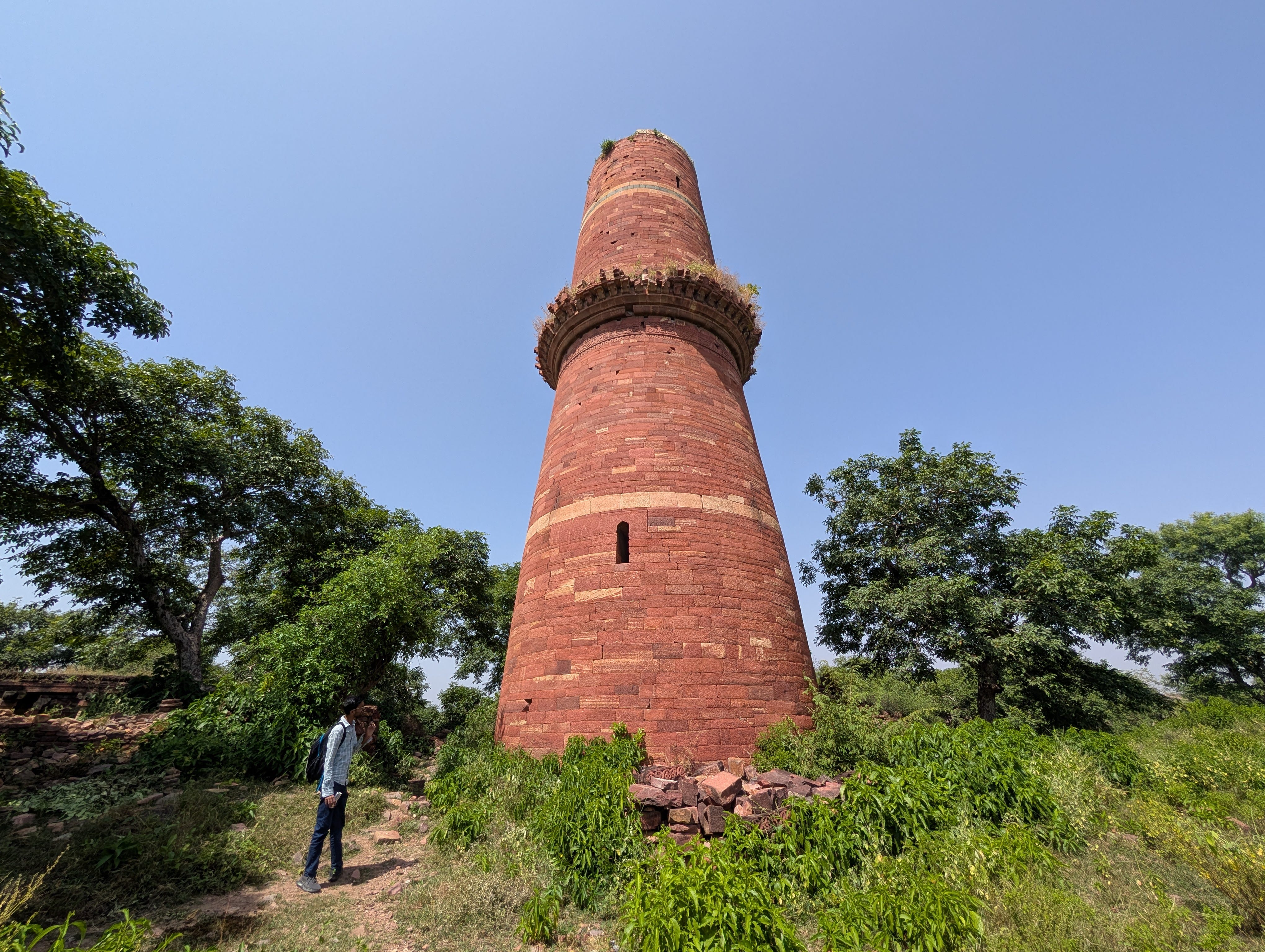
The Auhadis gradually deteriorated, but I could see their resilience remaining alive in the form of a massive minaret in the citadel of the Bayana fort built by Daulat Khan Auhadi in about 1456. After the ascent of Bahlol Lodhi, who defeated and ended the Sharqi dynasty at Jaunpur, the Auhadi family’s power crumbled. They were superseded by the Jalwani family during the latter half of the fifteenth century. This concluded a fascinating story of resistance and rebellion. A very small dynasty casting a large shadow on the empire.
I find the Auhadi episode rather compelling because it complicates the conventional march of centralisation of the Delhi Sultanate. It demonstrates that political power travels and becomes localised. Governors may become rulers and military commanders may dream of becoming dynastic founders. I consider this Bayana’s attempt to produce its own history again and not just be puppeteered by Delhi.
The Architectural Legacy
Along with these political developments, another thing developed that remains, which I witnessed during my journey, unlike the political turmoil that fell down the abyss of history. The architecture of Bayana developed its own style in stone. The architects of Bayana took Persian concepts and Indian structural systems. They mingled Islamic spatial requirements and local craftsmanship, desert ecology and monsoon engineering, political ambition and provincial resources and forged from this a form inherent to them that inspired future generations and became their legacy.
The chhatri (domed pavilion) became stone, the Persian canopy became Indian, the stepwell became a subterranean palace of water, the mosque became a laboratory of spatial invention, the red sandstone of a provincial quarry became the material of Mughal imperial splendour.
The Taleti Masjid of 1420 demonstrates an architectural shift, and an unconventional plan is visible in this monument. The prayer hall is an independent architectural body from the surrounding structure. This creates a distinct effect, as the prayer hall looks like an autonomous element in the mosque. This appears later in many Mughal mosques. The Taleti Masjid is not isolated in this experiment, as the Idgah Masjid at Barambad and the mosque at Sikandra seem very similar to the Taleti Masjid.7
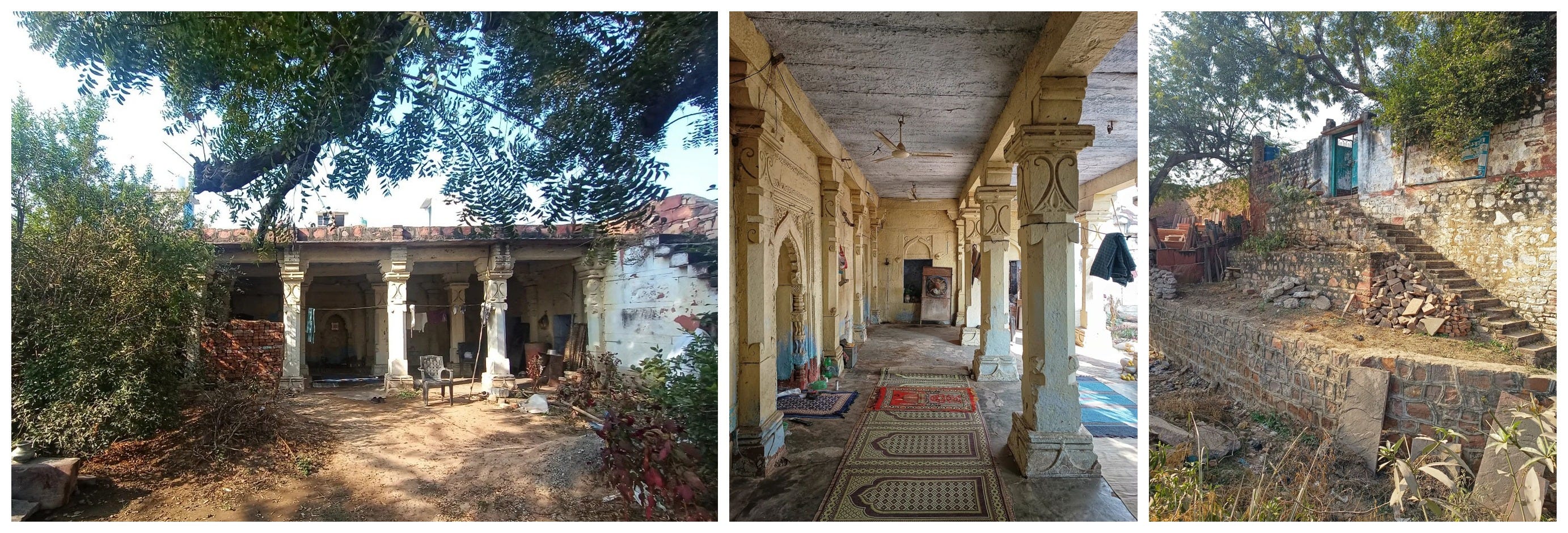
Mehrdad and Natalie Shokoohy argue that the builders of Bayana did not merely copy the architects of Delhi, but they were working independently in relative isolation and had enough confidence to experiment with structural solutions. Their innovations also included unusual treatments of domes and roof structures.
They contend that this legacy is visible in the Mughal period monuments. Akbar’s mosque for Sheikh Salim Chishti at Fatehpur Sikri reflects this Bayana principle. A generation later, the concept appears in greater completion in Shah Jahan’s great mosques, including the Agra Eidgah and the great Jama Masjid of Delhi. I have been to these monuments in Agra and Fatehpur Sikri. And indeed this claim seems true as I look at the buildings in Bayana. They do seem like a prototype of those later grand structures to me, albeit on a smaller scale.
If this is indeed true, then here lies a beautiful paradox. Bayana lost a city but vicariously gained a life in another city. Its builders disappeared in the sands of Bayana, but their forms survived as the legacy of their hard work and skill.
Then came the reign of Sikandar Lodhi and the genesis of his unrealised dream, Sikandra, a city he desired to build in Bayana near the fort, but geography’s consanguinity with history never let it materialise. But as the Lodi period was concluding, making way for the Mughals, a catastrophe was to alter Bayana’s destiny forever.
The Earthquake That Built Agra
An earthquake hit Bayana in 1505 and brought tremendous devastation with it. It caused a migration of craftsmen, artisans and architects towards Agra, a developing centre that was earlier a village under Bayana. Behold the glaring irony! I find it tremendously ironic that a settlement that was once a village under Bayana became the capital of India for a while and still has immense glory, while Bayana lies distant from the world, and people barely know about it.
The catastrophe also led to the destruction of many buildings at a time when its fortunes were ascending, and Bayana was never the same. The Bayana fort also suffered great structural losses, and many buildings that I could see crumbled inside the fortification owe their fate to this earthquake. A city that withstood centuries of political turmoil stood helpless amidst the wrath of nature.
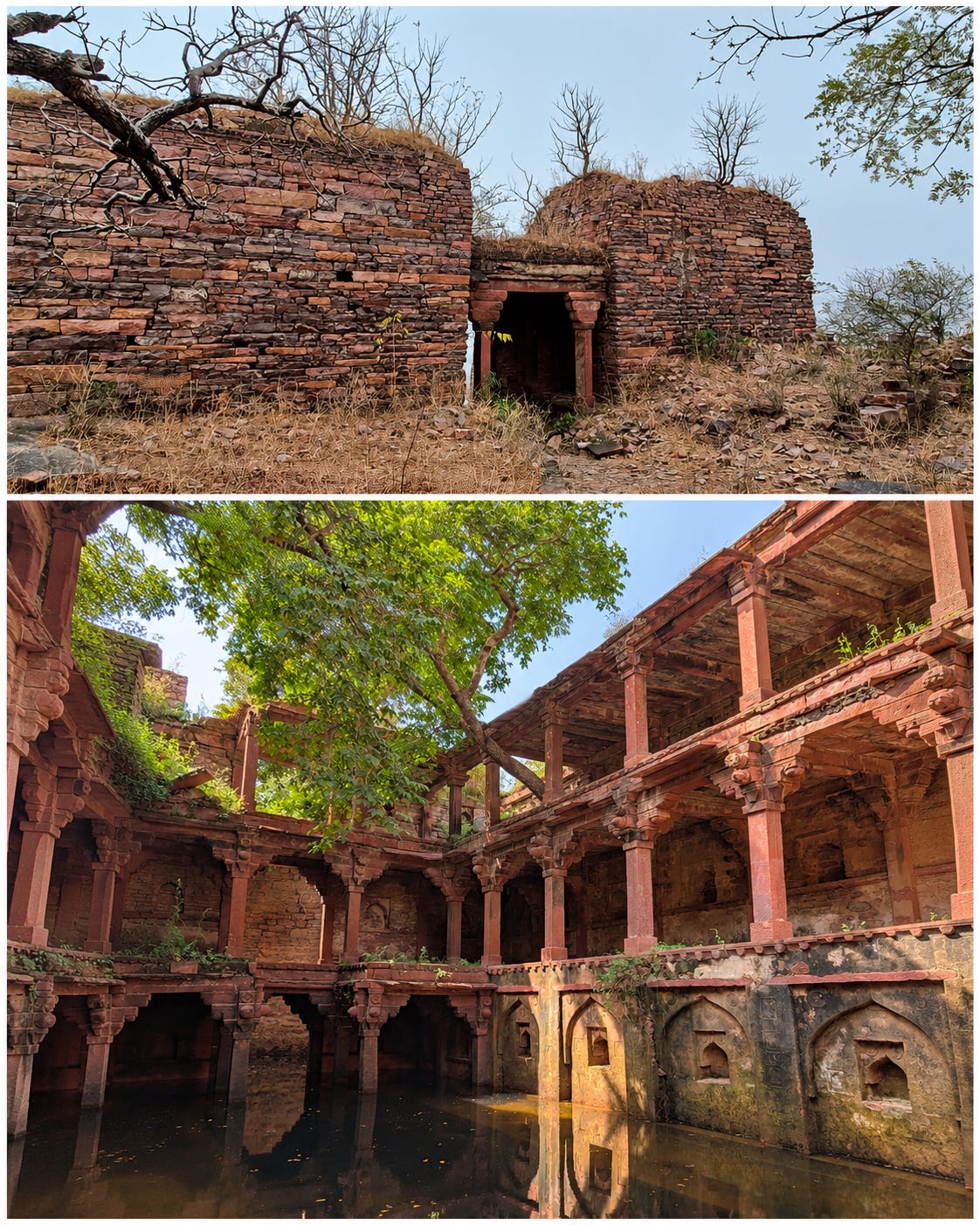
I consider Sikandra to be the most poignant part of the three parts of Bayana. It is between the fort and the old town. It was planned as a garden city. However, the Sikandra I visited did not have the gardens, reservoirs and residential landscapes that belonged to the Sultanate vision of cultivated royal life. It was a scant, scattered village with wandering cattle and children chasing dogs. Clouds of dust rose up around the village, and within that I could see the people escaping the earthquake, running away to safety, in dire urgency to live. Sikandar Lodi then laid the foundation of Agra and Sikandra near Agra, and the town of Bayana was abandoned.
After the fall of the Lodi dynasty came the mighty Mughal Empire to the throne of Delhi. After his ascent in 1526, Babur naturally wanted to secure Bayana because of its strategic position west of Agra. The fortress was held by an Afghan commander, Nizam Khan, at that time. Babur sent the Mughal force, but they were defeated by the Khan. Ergo, Bayana was still a force to be reckoned with.
Then, Rana Sanga’s army marched from the other side against Bayana. Nizam Khan couldn’t withstand the continuous invasions, and he surrendered the fort to Babur, who left him in charge of Bayana. Therefore, the fort was still a stronghold during the Battle of Khanwa.
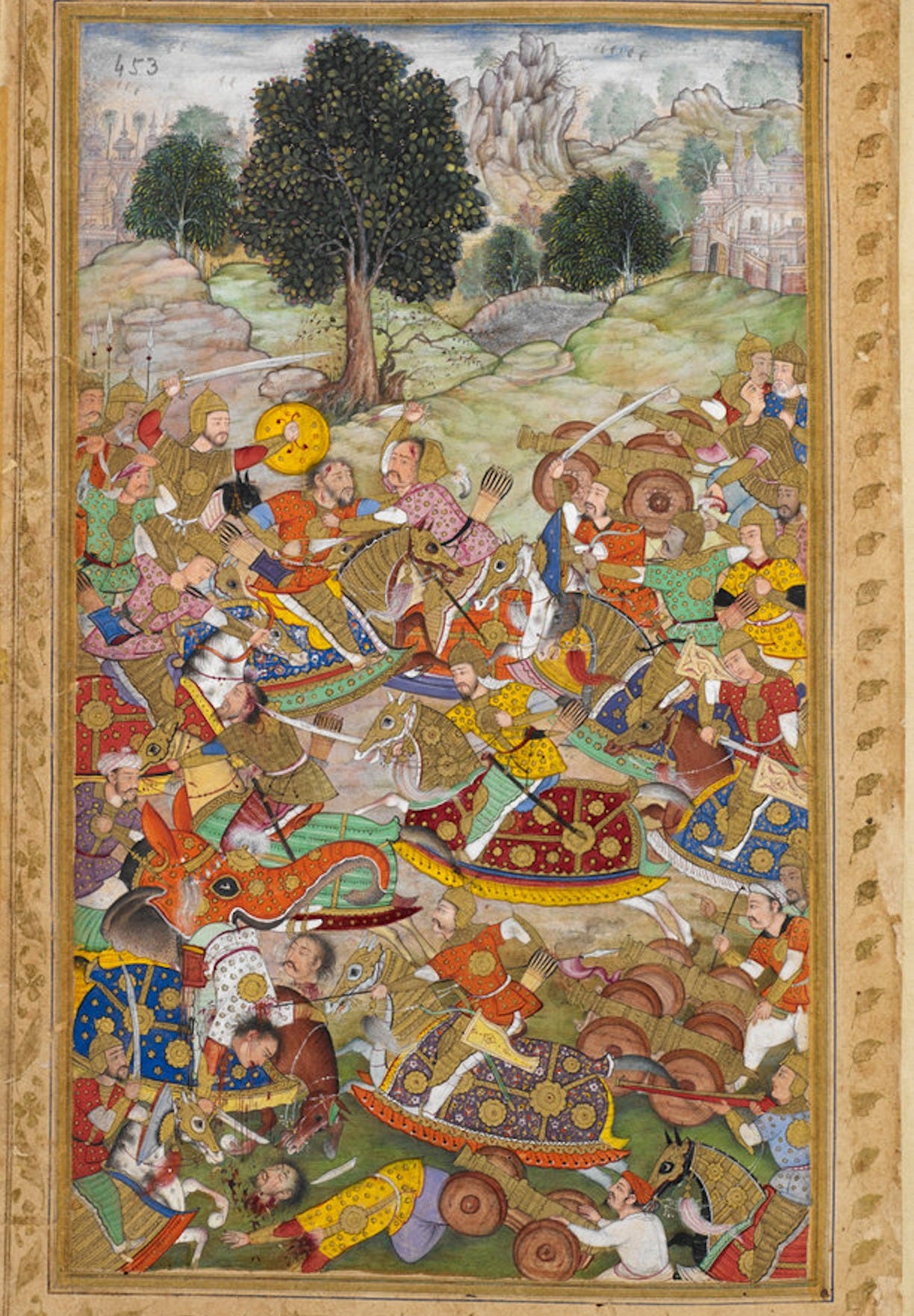

In Baburnama, Babur wrote that when he marched towards Khanwa, his army was camped near Khanwa village, which he explicitly describes as a dependency of Bayana.8 Babur also makes an observation that I find particularly interesting. He described Bayana’s irrigation method, explaining that people drew water from wells utilising a large bucket operated by a bullock. I find this to be one of those wonderful little details in the Baburnama where the emperor momentarily stops being a conqueror and becomes an observer of everyday life.9
Bayana Under The Mughals
During Humayun’s reign, too, Bayana appears to have remained an important Mughal possession. Interestingly, Humayun’s cousin Muhammad Zaman Mirza was imprisoned at Bayana. I consider this as Bayana still being strong enough that it was a trusted place of political confinement and not merely a provincial outpost fortress. Sher Shah Suri stationed a garrison of about 500 matchlock men in the fort. Later, his son Islam Shah granted Bayana to his elder brother Adil Khan. Then came the half-century rule of Akbar.
Describing Bayana during Akbar’s time, Abul Fazl wrote in Ain-i-Akbari:
“In ancient times Bayana was a great fortified city. It has a fort, within which there are many mansions and cellars. People still find therein weapons of war and copper utensils. Therein is a lofty minaret. Choice mangoes are produced there, some of which are over one sīr in weight…..Excellent indigo [is also produced there], each man of which is worth between ten and twelve Rupees. Also choice henna is produced. It is the resting place of many eminent men.”10
Under Akbar, Bayana became a Mughal-controlled town. The Akbarnama still remembers its strategic importance, but the Ain-i-Akbari reveals a different Bayana, which it measures in parganas, revenues and imperial regulations. Once powerful enough to negotiate with Delhi and Jaunpur, the old fortress-town was now folded into the sarkar of Agra. Yet underneath this administrative rationality, Bayana still breathed, as Abul Fazal elucidated. Its indigo rendered its hue to the markets; its mangoes, sugar and henna travelled beyond India.
In 1560 another imperial drama took the stage. Bairam Khan, once the emperor’s regent, sought refuge in the Bayana fort after falling out with his sovereign. Within the walls lay some prisoners whom he set free to gain men to strengthen his rebellion. However, it was for nought. He was captured and brought back to Delhi and later exiled. For the next half century, Bayana’s fate remained the same.
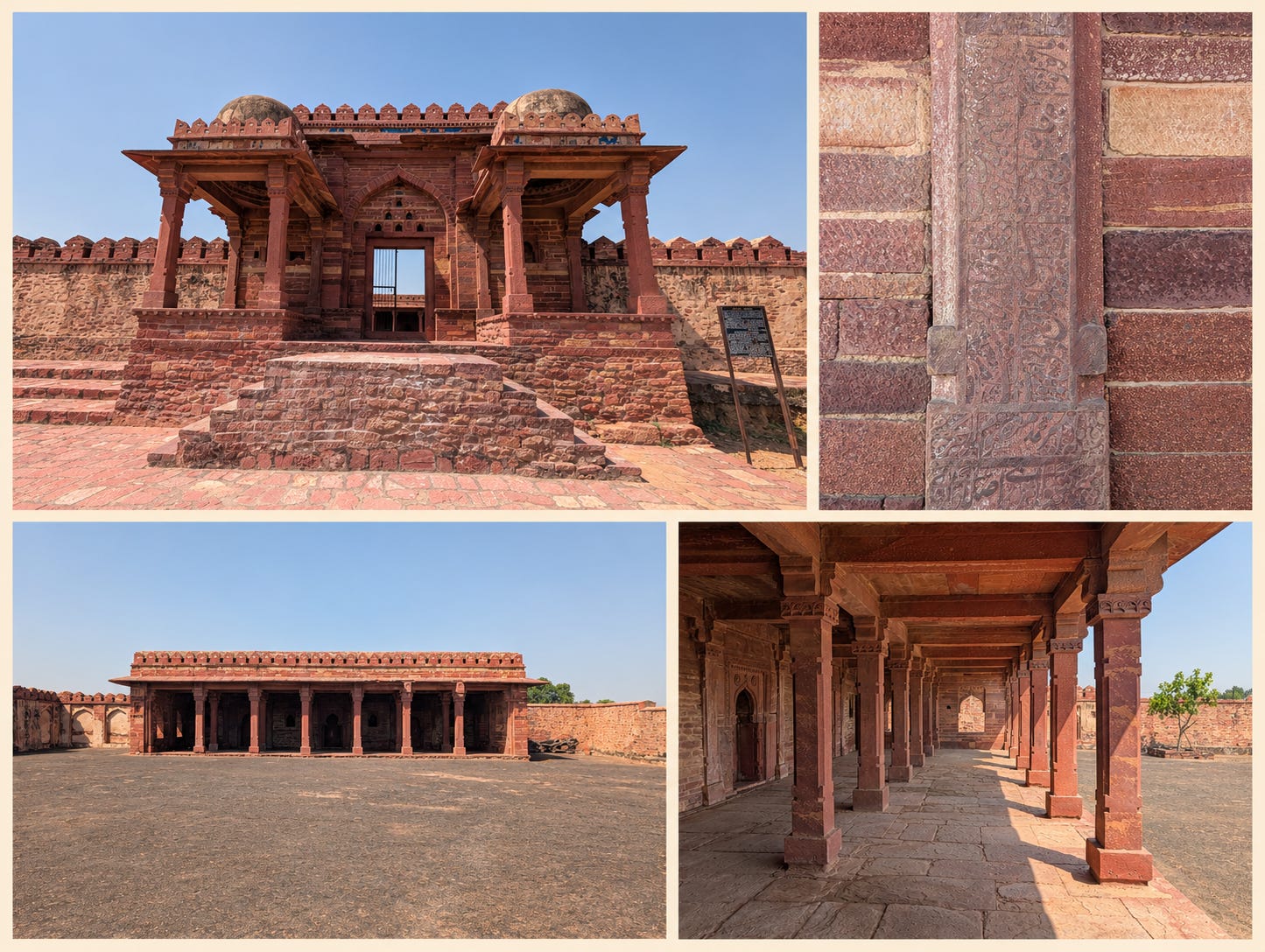
Later, in the twilight of his reign, Akbar visited Bayana in 1601-1602 CE when he was returning from his Deccan campaign after conquering Khandesh and before his eventual destination in Agra. His visit is commemorated by a small pavilion known as Akbar’s chhatri that still exists in Bayana. Mir Muhammad Maʿsum Nami Bakkari, a Mughal courtier, writer and calligrapher, recorded this visit in an inscription. This visit demonstrates both Bayana’s continued importance as a route and its altered place in the imperial administrative landscape. This exists in Brahmabad, a village located about 6-7 miles east of the Bayana fort.
Furthermore, around 1612, Mariam-uz-Zamani, Akbar’s wife and Jahangir’s mother, commissioned a magnificent Baoli (stepwell) and garden in Brahmabad in Bayana. The Baoli, with some vestiges, remains. Like me, Jahangir visited the structure and admired its construction, recording its cost as 20,000 rupees, a colossal amount at that time. The English traveller Peter Mundy, who saw it later, was equally struck by the monument and describes it as exceptionally elaborate.
I find something fitting in the fact that one of Bayana’s most enduring Mughal monuments was commissioned by a woman. Beneath the red sandstone, four flights of steps descended towards the dark, cool water. Above, the garden opened towards the sky. The old fortress had spent centuries witnessing armies arrive, and kingdoms disappear. Here, Mariam-uz-Zamani left Bayana something gentler: a monument to water, beauty and imperial presence.
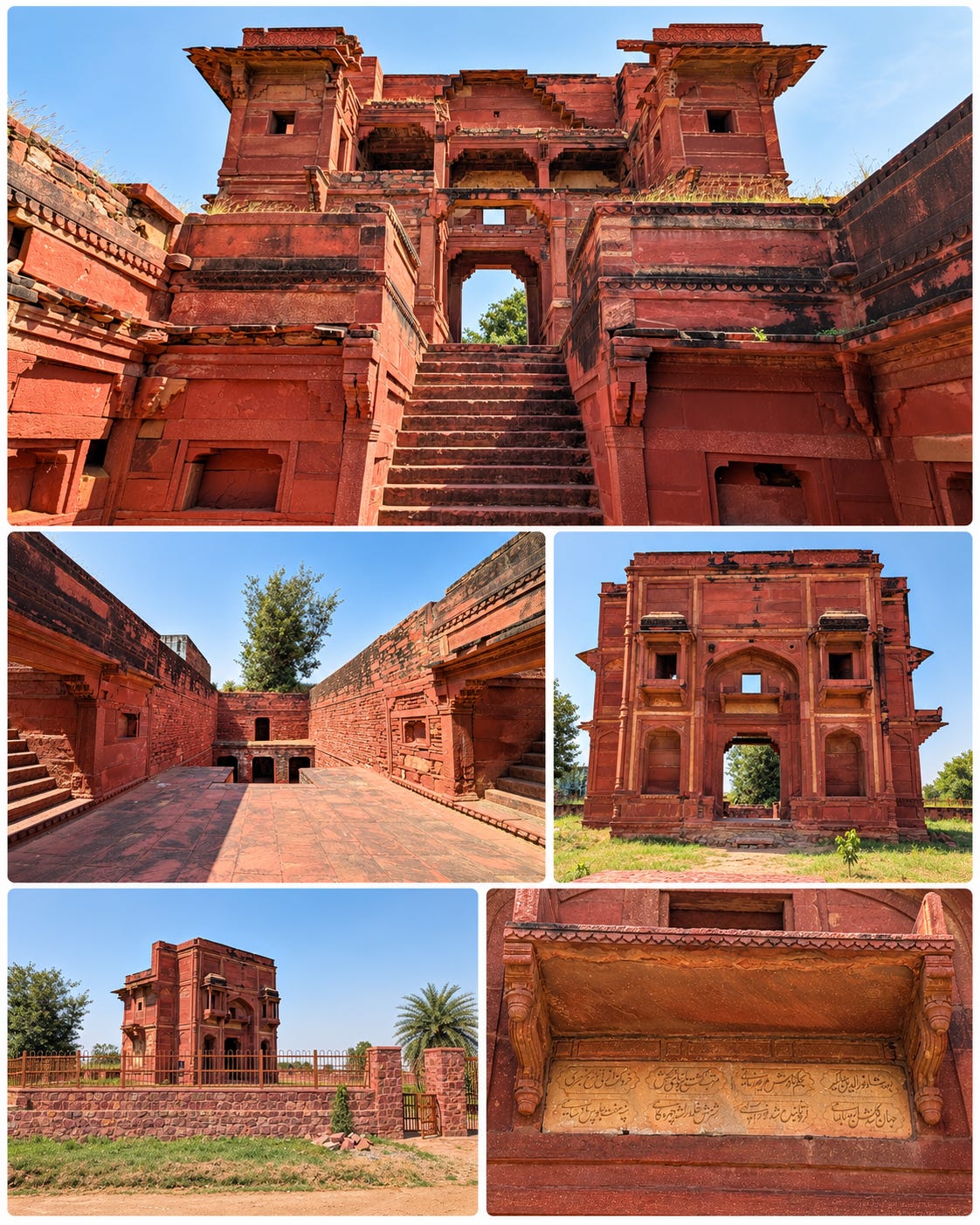
During Shah Jahan’s reign, Ghulam Husain, son of Muhammad Husain Sistani, a noble, constructed a well. Hasan Baig, another noble, built a mosque there. These were modest monuments compared with the imperial architecture of Agra or Delhi, but perhaps that was precisely what made them poignant to my eyes.
I believe that the theme most common in most of the poetry, literature and history in the world is the distance between potential and reality and in Bayana this theme abounds everywhere, in the broken fort and the meagre mosques and minarets in Bayana.
Under Aurangzeb, gradually the hues of Bayana became monochrome. Its importance was overshadowed by Agra and Fatehpur Sikri already. The wars waged by Aurangzeb in distant lands further crumbled its prominence. As I walked among its ruins, I felt that this was perhaps the quietest chapter of Bayana’s Mughal story. Empires rarely disappear all at once. Sometimes they simply become ordinary, leaving behind a well, a mosque, an inscription, and stones slowly surrendering themselves to dust.
A Fort With No Enemies
History, with its vicissitudes, kept altering. The eighteenth century brought Bharatpur Jats to Bayana. From Mathura to Bharatpur, the Jats were leading an uprising against Delhi. Under Churaman Jat, a prominent leader, in the early eighteenth century, this scattered resistance began to acquire a political manifestation. Badan Singh received recognition from the Mughal court in 1722, and the Jat State of Bharatpur became an increasingly powerful kingdom by the mid-eighteenth century. Bayana, lying between Bharatpur and Agra, was mired in this imperial altercation, this ever-expanding sphere. It was no longer a prize in the Sultanate, Mughal and Rajput contests but a frontier stronghold of the Bharatpur State.
Under Suraj Mal, who even conquered Agra in 1761, Bayana stood at the heartland of the Jat political landscape. But after his death, another age of uncertainty began. Mughals gained Agra back in 1774, and the Jat empire segregated and segregated with it, the importance of Bayana.
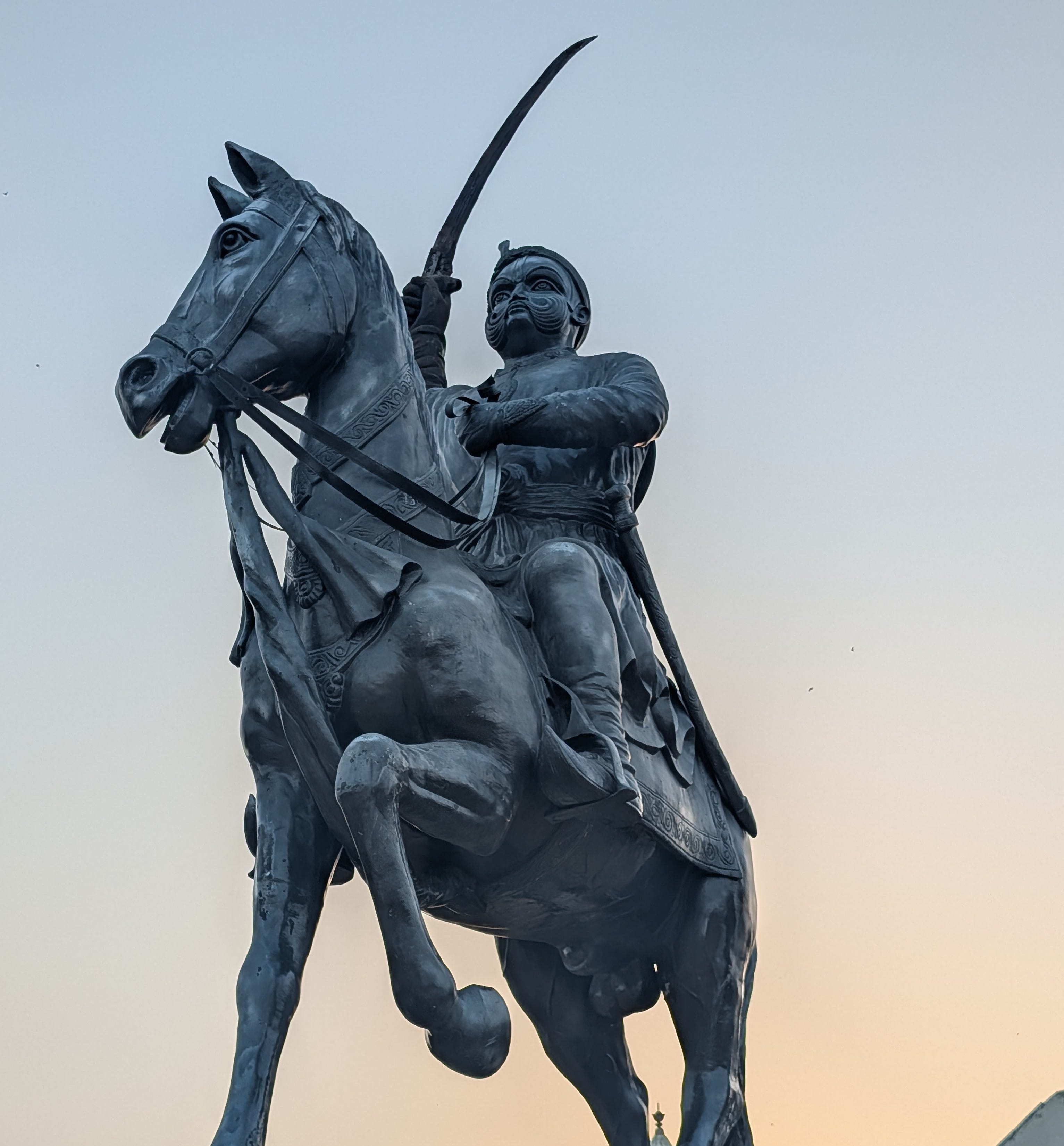
Standing before the ruined fortress, I could see the strange irony of it. Bayana had survived every empire by becoming useful to the next one. Under the Jats, it was no longer the centre of history. It was a sentinel on its edge.
On the crimson historical horizon now loomed the British Empire. Maharaja Ranjit Singh of Bharatpur (son of Suraj Mal) was caught in the battles between the Marathas and the British. General Lake of the East India Company army defeated the Maharaja. Still, the stubborn Maharaja showed support to Yashwantrao Holkar, the Maratha ruler. In retaliation, the British laid siege to Bharatpur in 1805. However, the Maharaja pleaded, and a treaty was signed. But history has its snares. A succession dispute brought the British army once more to Bharatpur in 1826 after weeks of siege, and a man named Balwant Singh was now installed under British protection.
In the 1857 revolt, Bayana remained largely aloof from the reverberations of the major theatres of the revolt. Afterwards, its history became quieter. The fortress lost its military importance as roads, markets and princely administration reshaped the town. The town gradually morphed into a landscape of historical memory. By 1945, Bayana was no longer a frontier coveted by emperors, but an old town living among the ruins of its many pasts. In 1946, the discovery of the aforementioned treasure again rendered it some traction, although not enough.
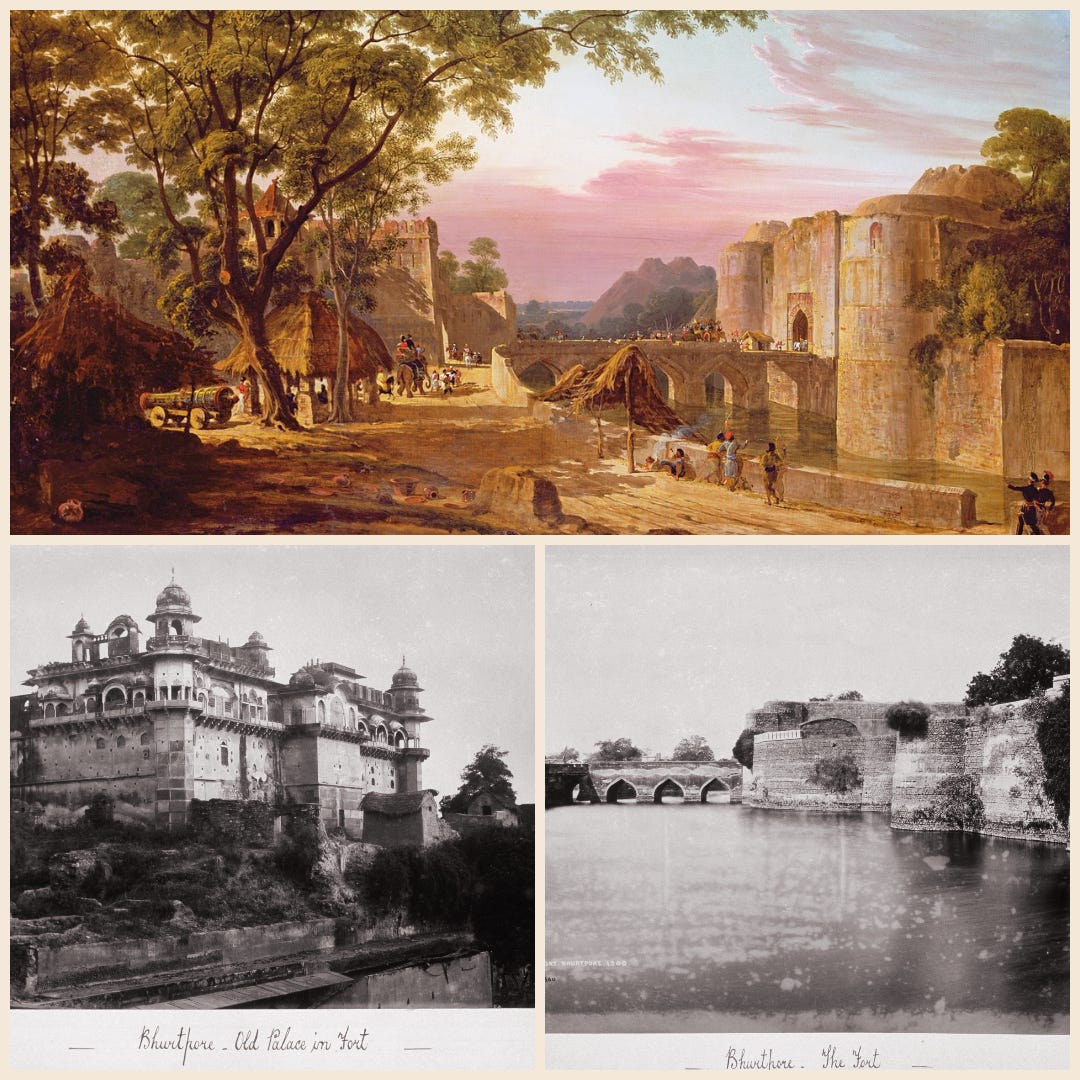


After independence in 1947, Bayana altered in manifold ways that were quieter than the collapse of any fort, but perhaps more profound. The princely court was replaced by democratic India. Bayana became a part of the Matsya Union in 1948 and of Greater Rajasthan one year later. Ultimately, it became a part of the Rajasthan state in 1956, and gradually everyday life in Bayana veered away from the commotion of the palace and steered towards the relative slumber of the modern town.
This towering fort that once hovered over the entire Bayana consequently became a historical artefact. Children travelled to school beneath the walls where soldiers marched. Farmers ploughed the surrounding fields while the monuments became nothing more than an acquainted landmark. On a silver lining, Bayana once again became famous for red sandstones, the same red sandstones that created Agra and Fatehpur Sikri. The Archaeological Survey of India has repaired a few buildings inside the citadel of the fort, and they have been painted. A shrine dedicated to Lord Shiva, known as the Pahadeshwar temple, has now been built, where there is a lot of commotion during Mahashivratri. But the fortress no longer remains where substantial power resided and battled; it has become a resting place for the past, which dwells in reclusion.
With these cogitations colliding in my head, I descended down the Bayana fort and peered through the villages along the way back to witness the present life of Bayana, its rhythms and sounds, its music and magic and silence, its loneliness and abundance. Small houses and small shops, relatively quiet markets of multifarious kinds abound in the city with serpentine streets having no semblance of any planning to them. The city seemed devoid of grand dreams and ambitions. Housed in a historical hollow, it looked different from my imagination, mundane and uneventful.
As I walked across the dry earth beneath the Rajasthan sun, I wondered how people survived this heat so long ago. Bayana’s water deprivation must have created a necessity for myriad water sources. It required wells, seasonal ponds, dams, reservoirs, tanks and stepwells, each adapted to a particular condition. The River Gambhir, which passes through the east of the town, irrigates some of the fields, but the river is seasonal and has little or no water in the drier years. The river was barely there when I went to it, and its unreliability, more than anything else, probably helps explain Bayana’s fate.
A Temple Rebuilt From the Mosque Rebuilt From It
The last place I travelled in Bayana early in the morning was a rectangular red sandstone monument, a shrine adorned by the gleams of legends, the Usha temple of Bayana. Situated down a hill, the temple seemed not one structure but a cornucopia of monuments. The priest of the temple told me the legend of Aniruddha, the grandson of Krishna and his wife Usha, the beautiful daughter of Banasura.
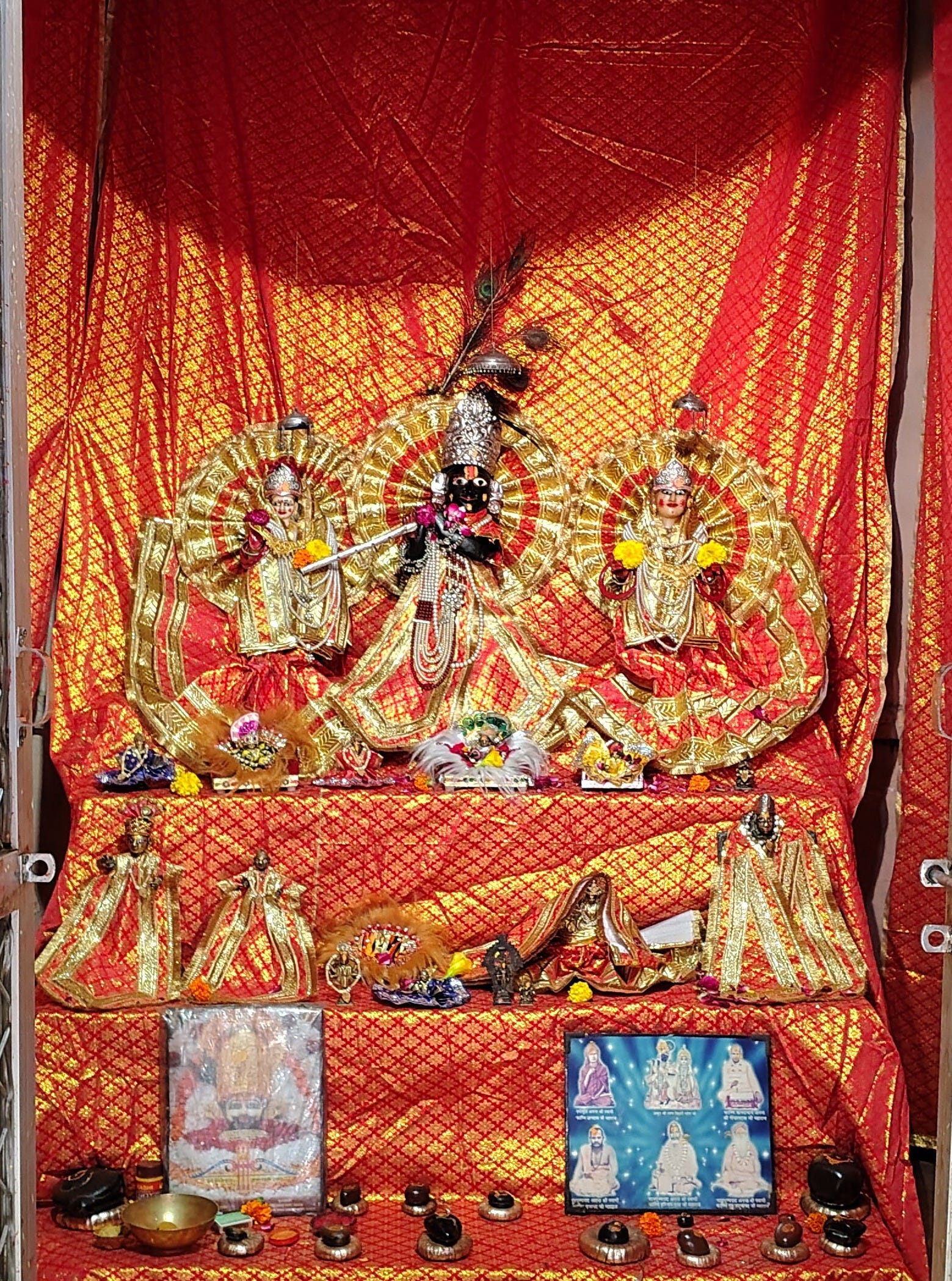
The tale, like most tales, began with a dream. The Bhagavata Purana details a dream in which Usha saw an enigmatic young man and awoke consumed by longing for him. Her companion Chitralekha, who was an artist of extraordinary flair, painted many faces of princes until Usha recognised her dream lover as Aniruddha. By her magical powers, Chitralekha carried the prince to Usha for a rendezvous. But this flame could not stay hidden, and the smoke reached Banasura.
Banasura captured and imprisoned Aniruddha, inciting the wrath of Krishna. Banasura was the devotee of Shiva, and it became an armageddon between the two deities. At the end of the battle, however, their love prevailed, and Aniruddha and Usha were united. The priest said that centuries later, this temple ascended from earth at Bayana, called the city of Banasura locally, bearing Usha’s name. Of course, there is no historical evidence for this.11
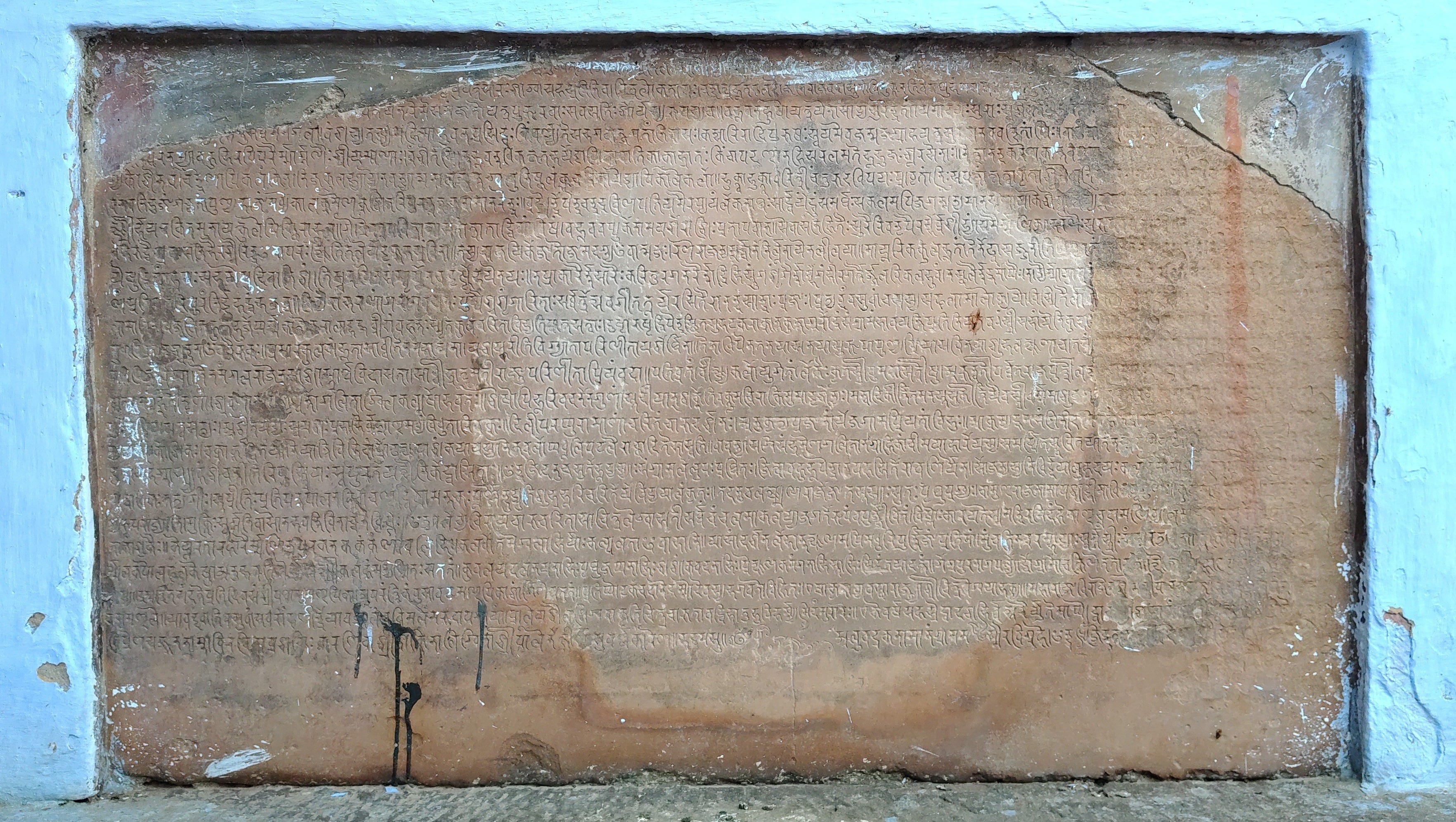
A Sanskrit inscription associated with Queen Chitralekha still lives on the temple wall. It records the establishment and endowment of a temple dedicated to Vishnu/Narayana and the dedication of villages to this temple. A legendary tale of two fateful lovers lingers on in time through this temple. In beautiful serendipity, a place remembered through the mythical Usha and Chitralekha also preserves the historical name of a tenth-century queen named Chitralekha. It also tells of a King named Phakka of the Surasena lineage and his son Rajayika, who married Princess Sajjani of the Mayurika family. Chitralekha was the granddaughter of Princess Sajjani.
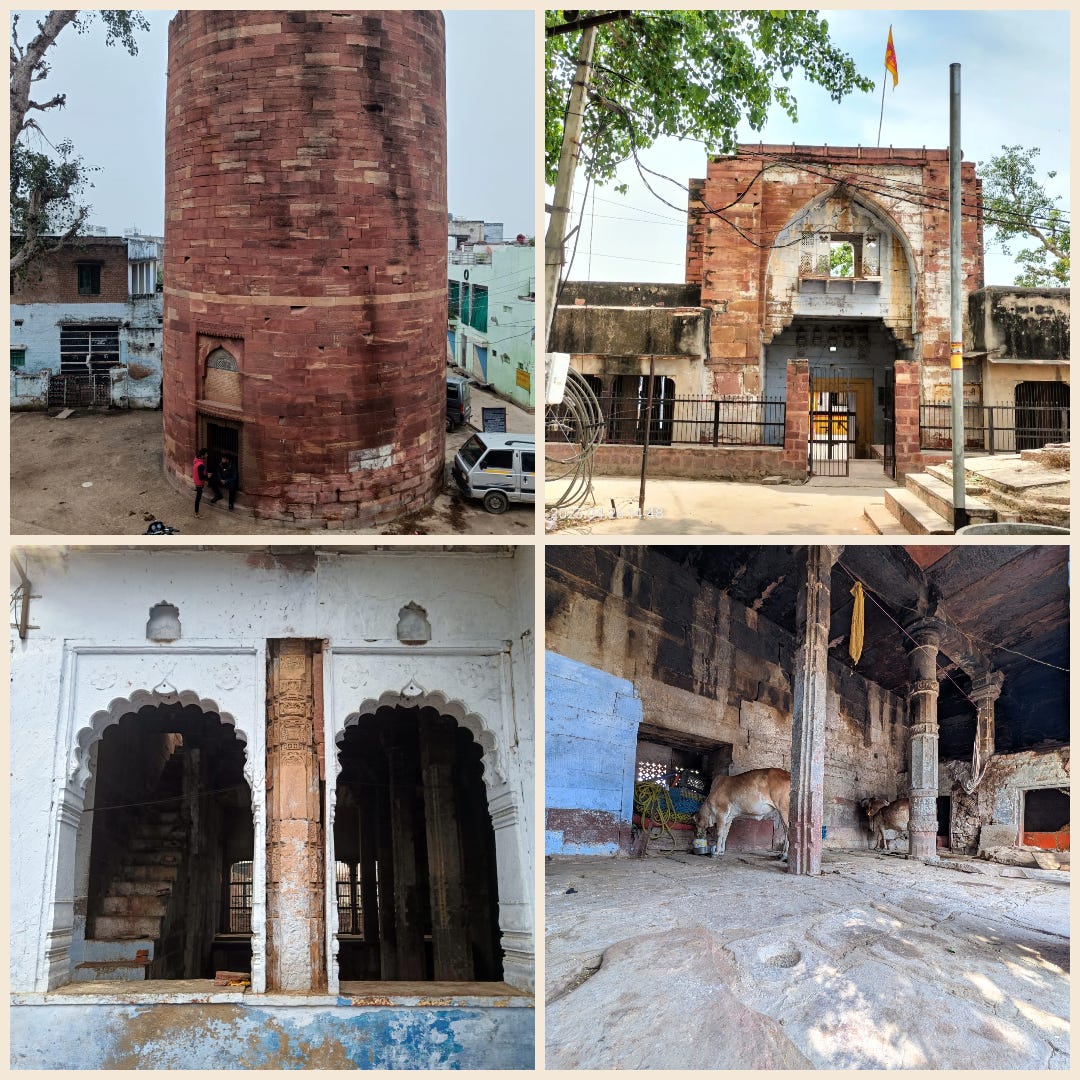
Adjacent to the temple are a mosque on one side and a Minaret on the other side, both with inscriptions. The Nohara, or Ukha Masjid, retains its original Arabic inscription over the entrance doorway of the court. It is still generally legible, although in bad condition, and records the erection of the masjid during the reign of Qutb-ud-din Mubarak in 1320. The building is now locked, and I was not allowed to go inside. I could see the rows of magnificent temple pillars reused in the mosque, standing inside the building with a towering gate. The mosque and the temple looked very similar to me in their structure.
On the other side of the Usha temple, there is a minaret with an inscription which states that it was built during the reign of Ibrahim Lodi and records Nizam Khan as the governor of Bayana. It was the same Nizam Khan from the Baburnama story! It is a closed minaret housed now next to a cowshed and is one of the last structures of the Delhi Sultanate.
According to local tradition, the surviving structure that is now called Usha Mandir was reconstructed or established as a Hindu place of worship again under the Bharatpur State, apparently by a local Thakur called Balbhadra Singh, using parts of the earlier mosque structure. This makes the history of the temple circular, as it is said that the masjid was built from the remains of the erstwhile temple. Although this reconstruction does not have any substantial evidence, it is a wonderful nugget in the traditional lore of the Usha temple at Bayana.
Within the courtyard of the Usha temple, a Jain sculpture was found, which might hint at a variegated history of the temple, whose evidence reveals a cornucopia of Indian traditions and the Mohammadan religion existing there. Recorded by Chhote Lal Jain, this weathered remnant whispers of a multifaceted sectarian landscape that contains within it semblances of everything that its history has made it go through.12
Nevertheless, the driver and the temple priest both told me that there is a tunnel from the top of the fort to this temple through which the queens used to come and worship the deity, which is now closed. I did not find or read about any such tunnel, which abounds in the imagination of people.
The Inscription “Nobody Can Read”
This imagination does not stop here. The historical consciousness of the people in Bayana further dejected me. The temple priest looked at the Sanskrit Chitralekha Inscription and told me that the mystery of this temple is that nobody knows who built it. The key to the mystery lies in this inscription, but nobody has been able to say what language this inscription is written in! Let alone decipher its contents! I could clearly see the Devanagari script and the Sanskrit engraved on the walls! I was astounded by the lack of historical awareness in this historical town.
However, the temple priest did raise a significant issue. He lamented the neglect of the authorities regarding the state of the temple as he took me to see the bats that roamed behind the sanctum sanctorum and the pillars and walls that were in a terrible condition.
It is not a magnificent temple, but the fragrance of history does linger here in the red sandstone pillars and the halls, filled with the incense of the temple that is lit by the temple priest every day. As I walked along its pillars, it felt as though the centuries themselves had left their perfume behind, still breathing in the stone.
With this visit to the Usha temple, my exhilarating journey to Bayana concluded. The poetry of its vestiges gave me a mystical experience. I have always loved ruins more than the standing monuments. There is an enigma to them, a lore from inception to destruction. Isn’t that more fascinating!
The Song of Stone and Water
Bayana isn’t important merely because it was once an important location. It is important because it allows us to rethink how we construct historical importance in the first place.
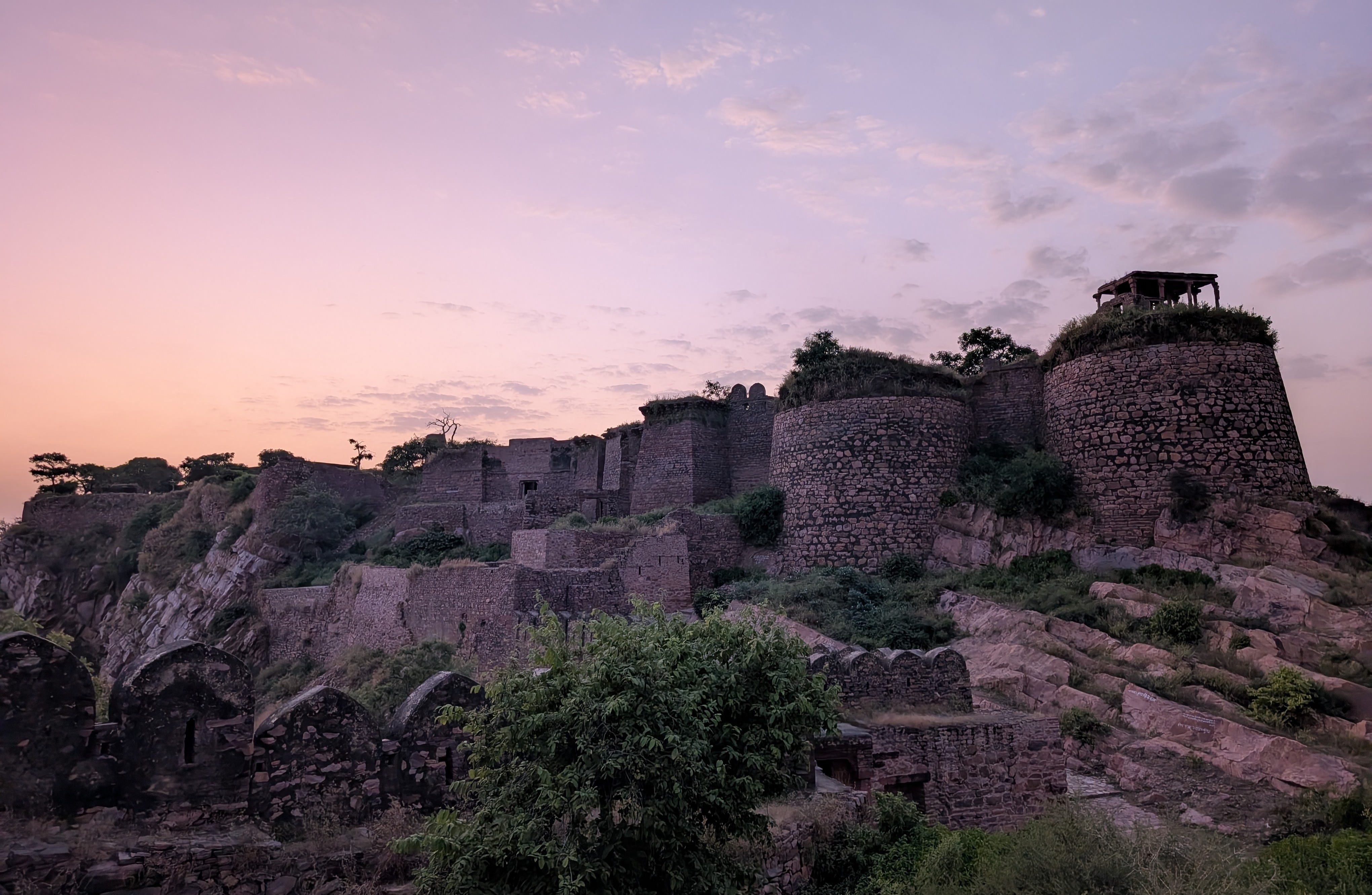
Wandering in Bayana, it seems that these streets and roads are lost in an age long gone, buried inside the sands, looking up at the hills. What survives is fragmentary, but the fragments tell a poignant tale. A fallen lintel, a half-preserved inscription, a chhatri bereft of a dome, a dry stepwell, a house whose roof still rests upon its ancient columns: each is an argument against oblivion, each telling a poetic tale of resilience against time, each singing Bayana’s tale, the song of stone and water.

Sunny Pandey has completed his Master of Arts in Ancient History from Jawaharlal Nehru University, New Delhi. His interests include History, Sociology, Philosophy and world literature. He is a writer and a poet in English, Hindi and Urdu.
Acknowledgements: The Long Memory team and the author thank Dr Jay Vardhan Singh and Satendra Thakur, who accompanied the Editor to Bayana and photographed the fort and the other monuments that appear in this article. We owe particular thanks to Dr Jay Vardhan Singh, who took most of these photographs.
References:
Primary Sources:
Elliot, H. M., & Dowson, J. (Eds.). (1869). The history of India, as told by its own historians: The Muhammadan period (Vol. 2). Trübner and Company.
The Bhāgavata-Purāṇa, pt. 4, trans. G. V. Tagare, Ancient Indian Tradition and Mythology, vol. 10 (Delhi: Motilal Banarsidass, 1955).
Minhaj us Siraj, Tabaqat -I Nasiri, Vol. I, ed. by Abdul Havy Habib, Kabul, Afghanistan, 1864.
Annette Susannah Beveridge, trans., The Bābur-nāma in English (Memoirs of Bābur), vol. 2 (London: Luzac & Co., 1922).
Francis Gladwin, Ayeen Akbery; or, The Institutes of the Emperor Akbar, vol. 2 (London: J. Swan & Co., 1800).
Elliot, H. M., & Dowson, J. (Eds.). (1869). The history of India, as told by its own historians: The Muhammadan period (Vol. 2). Trübner and Company.
Secondary Sources:
Bargoti, R. (2003). Bayana: A concept of historical archaeology: The pre-modern urban centre. Publication Scheme.
Calvino, I. (1974). Invisible cities (W. Weaver, Trans.). Harcourt Brace Jovanovich.
Cunningham, A. (1885). Report of a tour in Eastern Rajputana in 1882–83 (Archaeological Survey of India Reports, Vol. 20). Office of the Superintendent of Government Printing, India.
Erskine, W. (1854). A history of India under the two first sovereigns of the house of Taimur, Báber and Humáyun (Vols. 1- 2). Longman, Brown, Green, and Longmans.
Government of Bombay. (1921). Progress report of the Archaeological Survey of India, Western Circle, for the year ending 31st March 1920. Baptist Mission Press.
Gupta, K. B. L. (1969). The evolution of administration of the former Bharatpur State, 1722- 1947. Vidya Bhawan.
Habib, M., & Nizami, K. A. (Eds.). (1970). A comprehensive history of India: Vol. 5. The Delhi Sultanate (A.D. 1206- 1526). People’s Publishing House.
Hooja, R. (2006). A history of Rajasthan. Rupa & Company.
Kumar, S. (2002). The present in Delhi’s pasts. Three Essays Press.
Shokoohy, M., & Shokoohy, N. H. (1987). The architecture of Baha al-Din Tughrul in the region of Bayana, Rajasthan. Muqarnas, 4, 114–132. https://doi.org/10.2307/152309
Shokoohy, M., & Shokoohy, N. H. (2022). Bayana: The sources of Mughal architecture. Edinburgh University Press.
Wink, A. (1991). Al-Hind: The making of the Indo-Islamic world (Vol. 2, The slave kings and the Islamic conquest, 11th- 13th centuries). Brill.
Italo Calvino, Invisible Cities, trans. William Weaver, ,(New York: Harcourt Brace Jovanovich, 1974), p. 44,.
Alexander Cunningham, Report of a Tour in Eastern Rajputana in 1882- 83, vol. 20 (Calcutta: Office of the Superintendent of Government Printing, India, 1885),p. 81
Ibid., p. 77
Minhaj us Siraj, Tabaqat -I Nasiri, Vol. I, ed. by Abdul Havy Habib, Kabul,
Afghanistan, 1864, p. 311.
Mehrdad and Natalie Shokoohy, Bayana: The Sources of Mughal Architecture, Edinburgh, Edinburgh University Press. p. 1
Mehrdad and Natalie Shokoohy, Bayana: The Sources of Mughal Architecture, Edinburgh, Edinburgh University Press, p. 4,4
Shokoohy and Shokoohy, Bayana: The Sources of Mughal Architecture, 256.
Annette Susannah Beveridge, trans., The Bābur-nāma in English (Memoirs of Bābur), vol. 2 (London: Luzac & Co., 1922), p. 577
Annette Susannah Beveridge, trans., The Bābur-nāma in English (Memoirs of Bābur), vol. 2 (London: Luzac & Co., 1922), p. 487
Francis Gladwin, Ayeen Akbery; or, The Institutes of the Emperor Akbar, vol. 2 (London: J. Swan & Co., 1800), p.37.
The Bhāgavata-Purāṇa, pt. 4, trans. G. V. Tagare, Ancient Indian Tradition and Mythology, vol. 10 (Delhi: Motilal Banarsidass, 1955), 10.62.1-10.
Jain, C. L. (1945). Jaina bibliography. Bharati Jaina Parisat. p. 75
First of all, congratulations for such a remarkable piece of historical writing!!! The way you weave together the Bayana hoard of Gupta gold coins, the layered history of its fort, and the haunting neglect of its monuments makes the past feel vividly present. I especially admire how the physical landscape becomes a means of historical inquiry, revealing the rise and transformation of successive political worlds. This is not merely a journey to a forgotten town, but a compelling meditation on how history survives in places we have ceased to notice. Looking forward to read more works from you!! ✨✨
What I loved most about this article is how you made me curious about a place I might not have thought much about otherwise. It takes effort to learn about a place and then put everything into words in a way that makes others want to know more about it. I genuinely enjoyed reading this and learning things I probably wouldn’t have come across on my own. It’s always nice to read something that not only teaches you something new but also makes you see a place a little differently.